
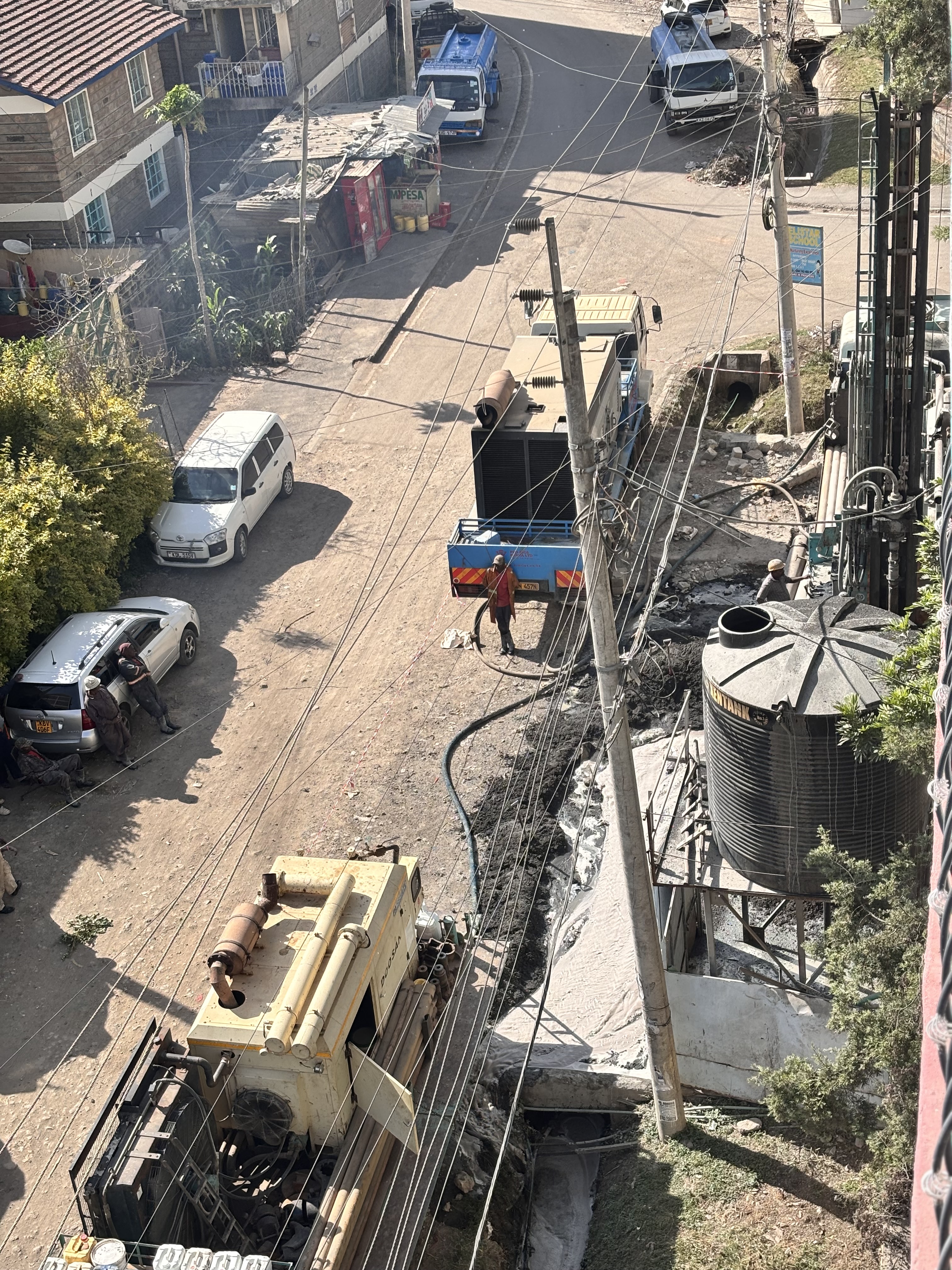
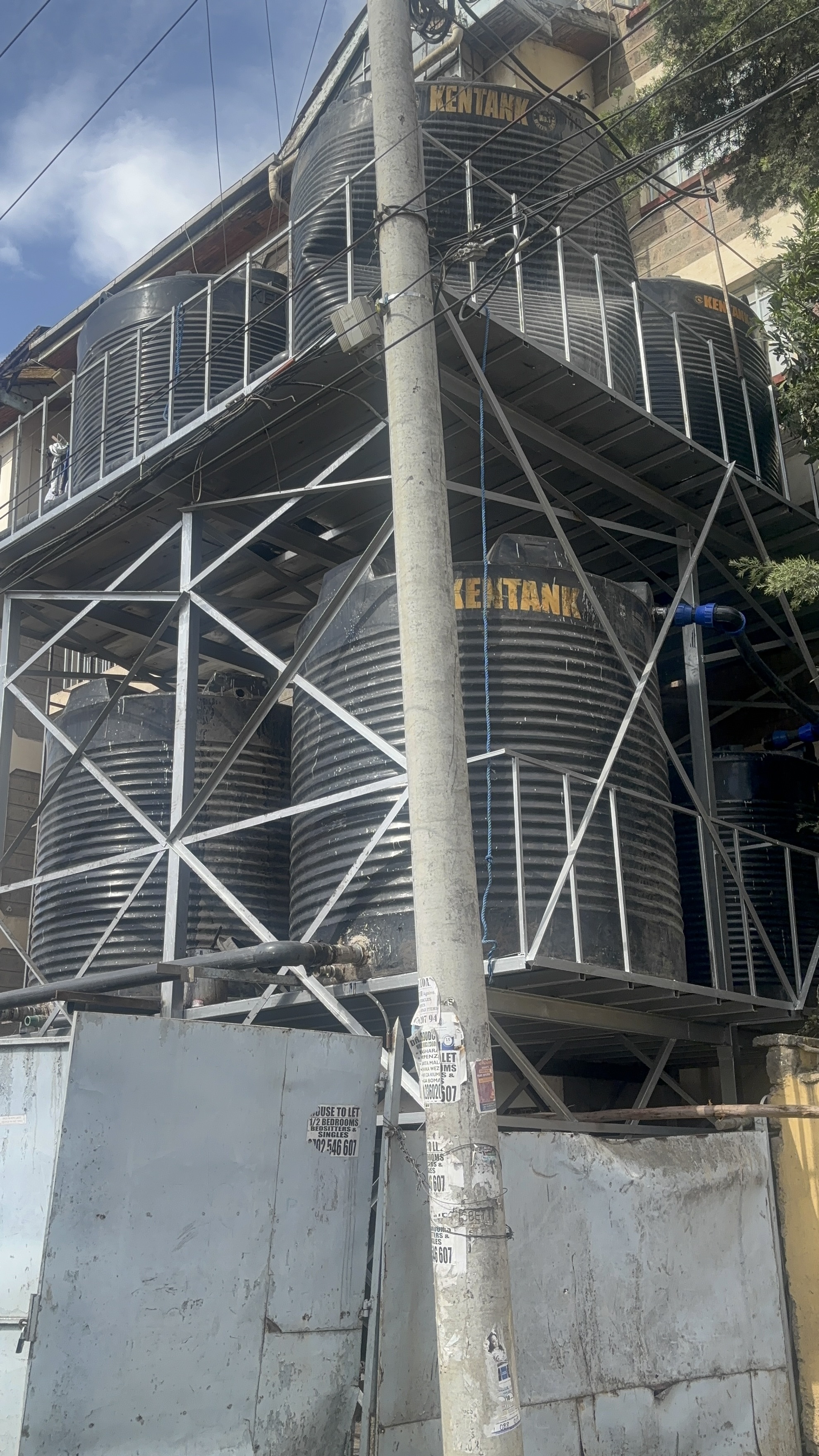
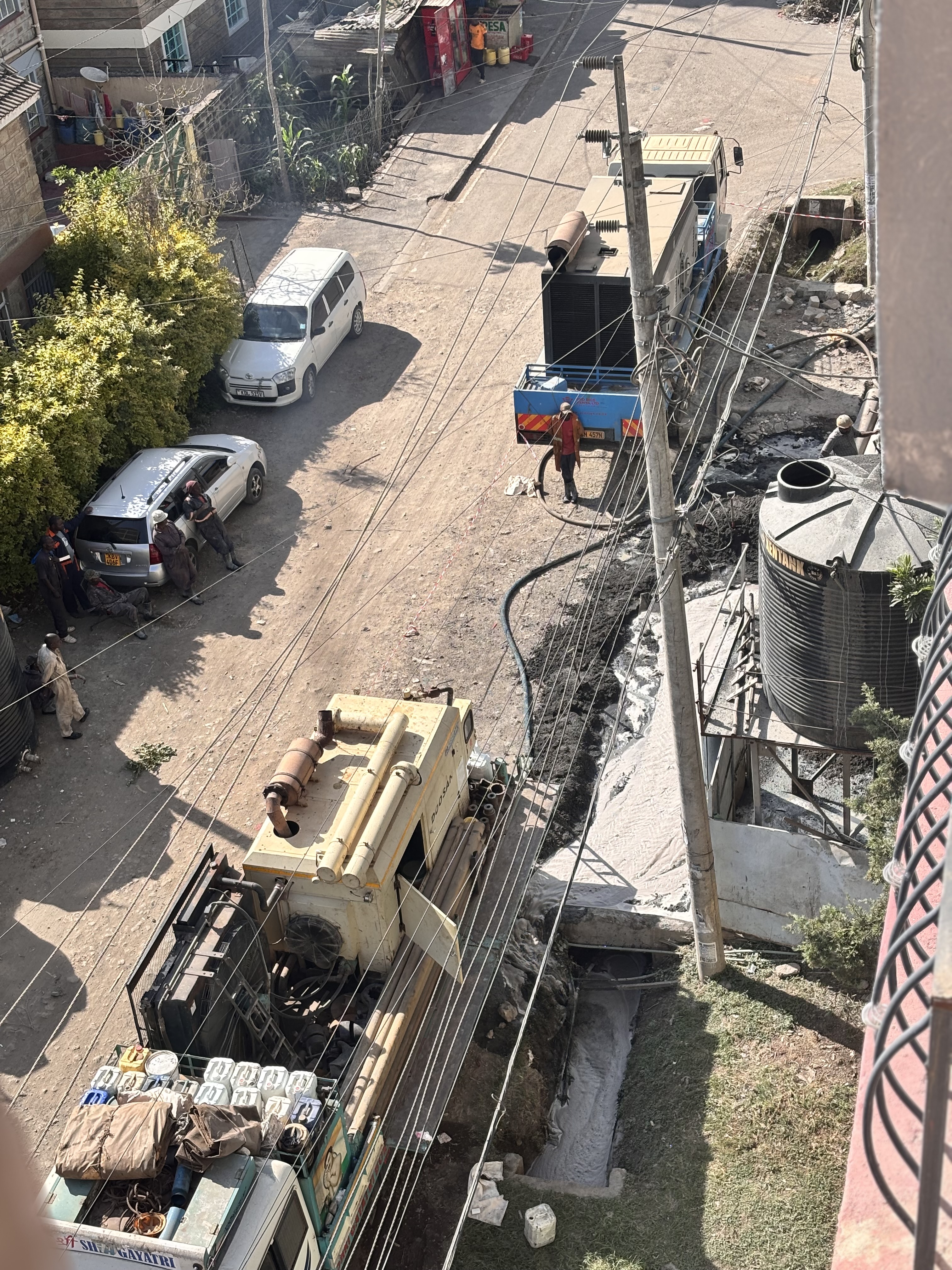
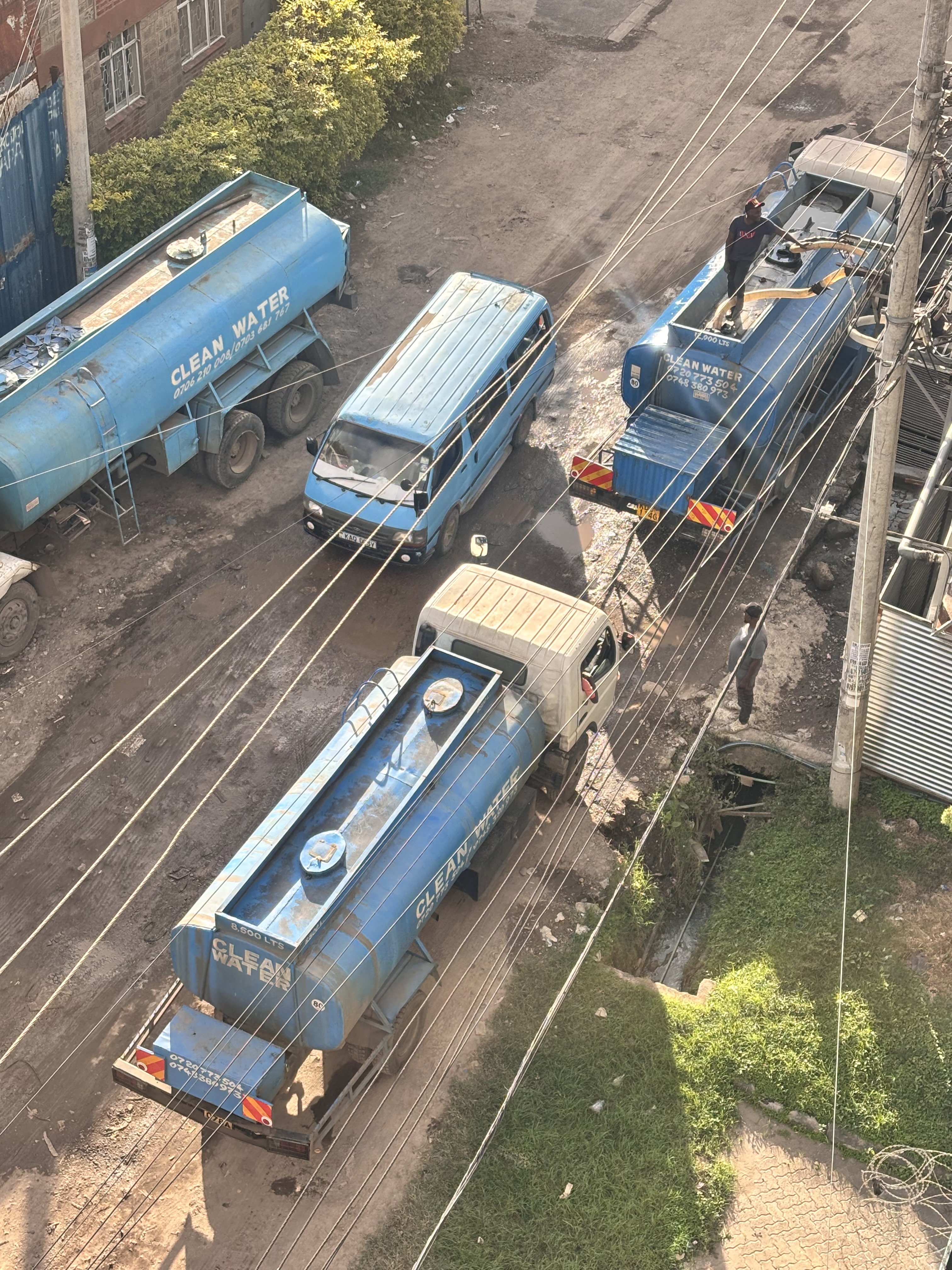
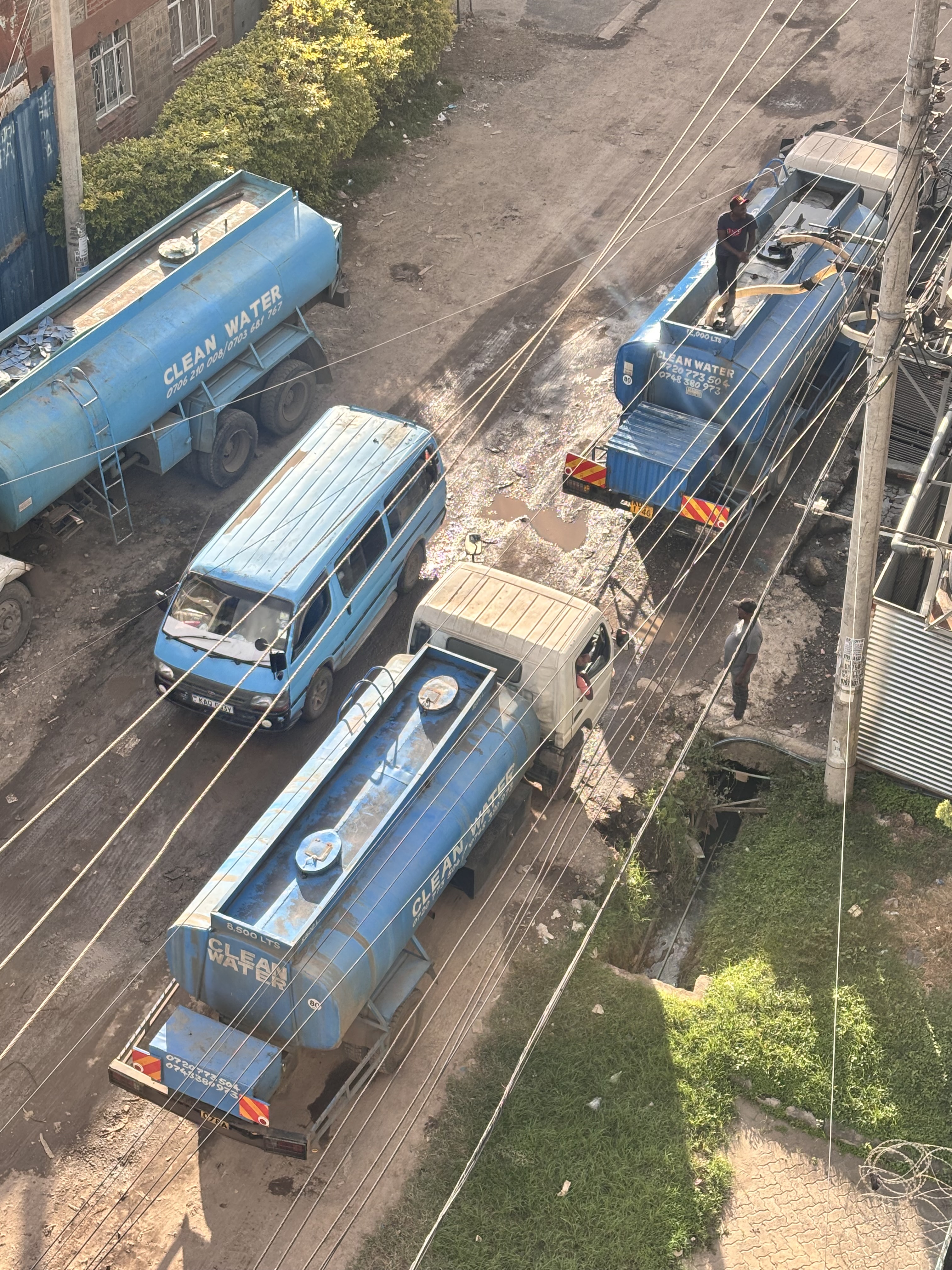
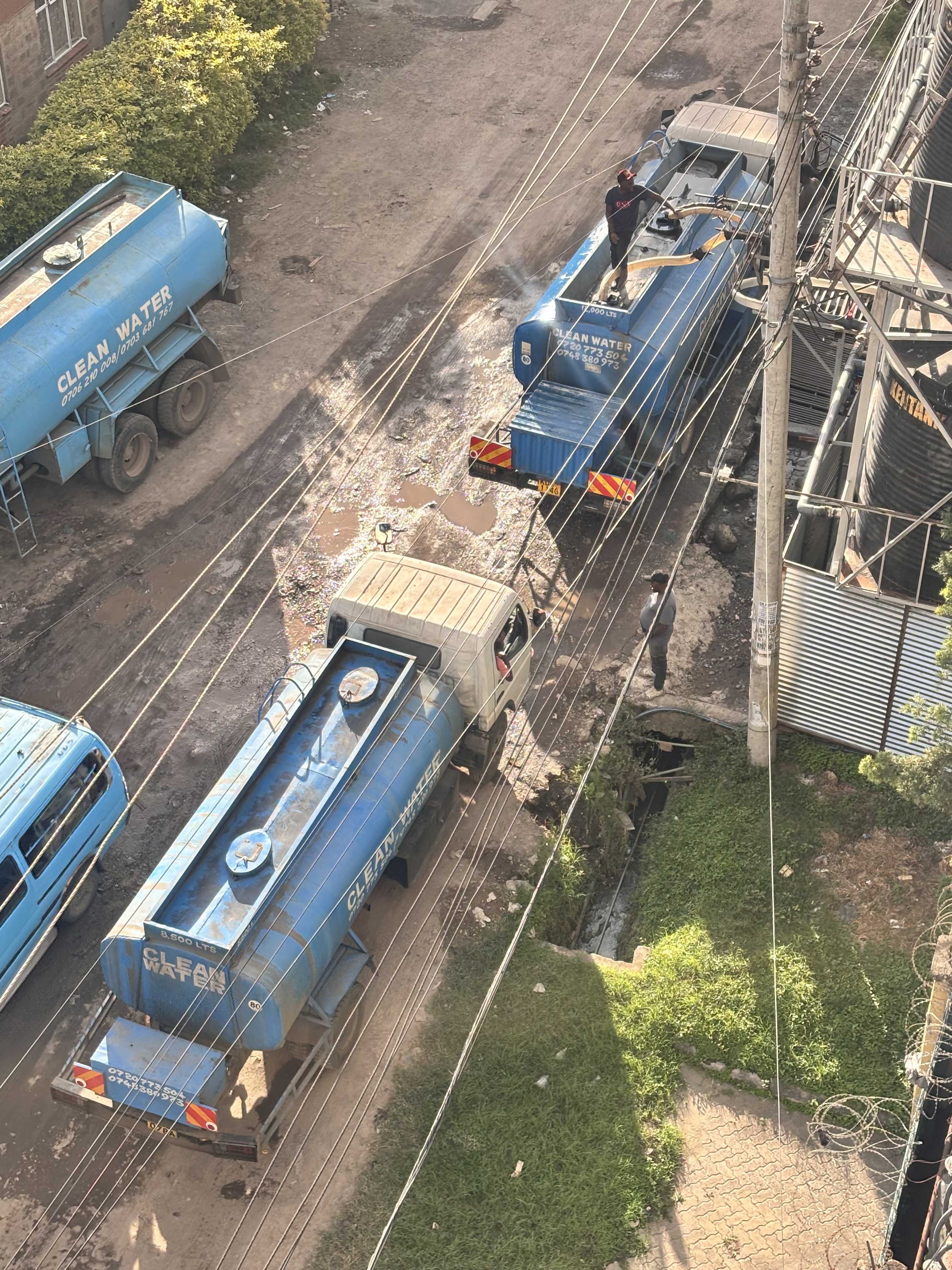
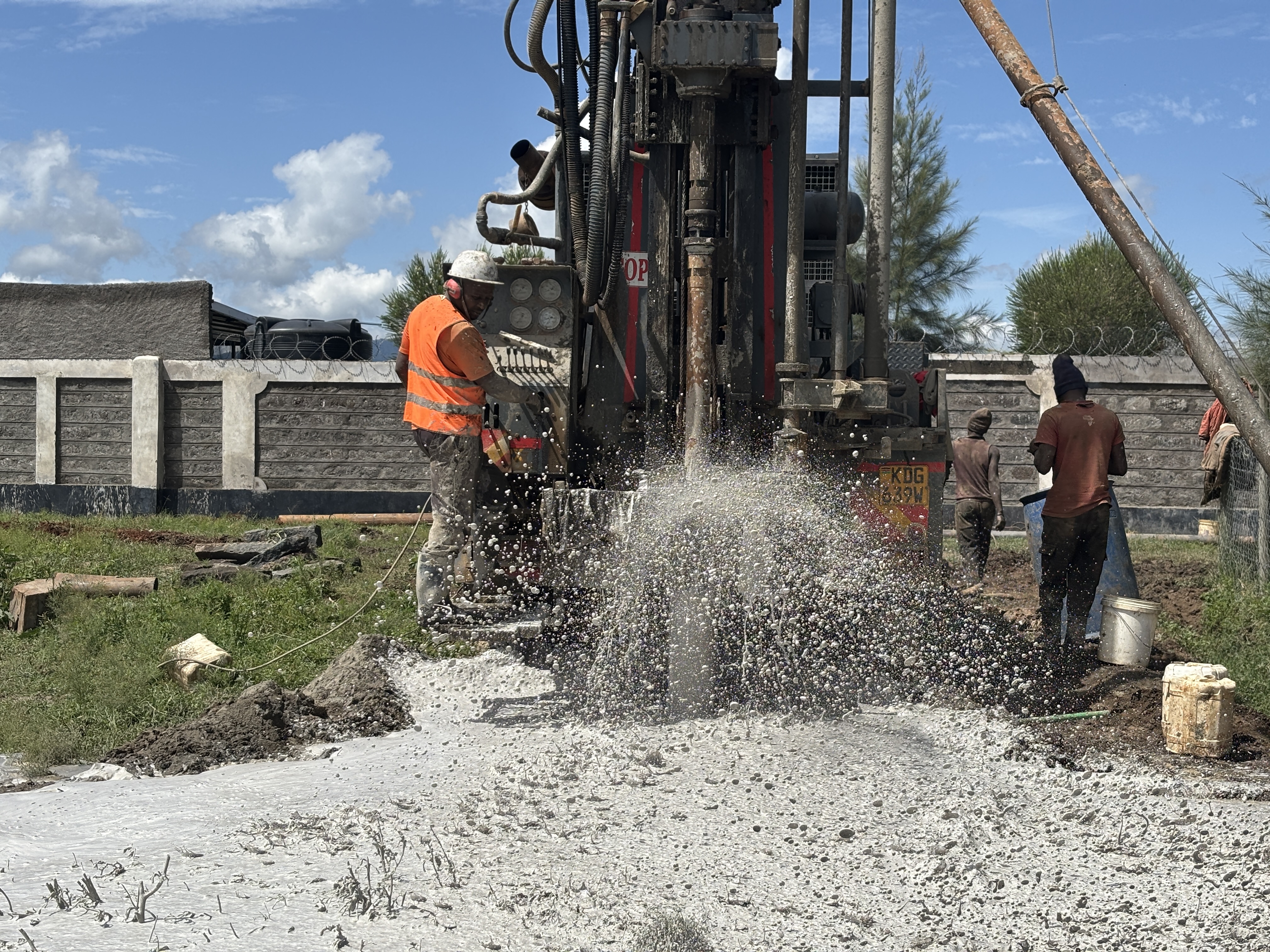
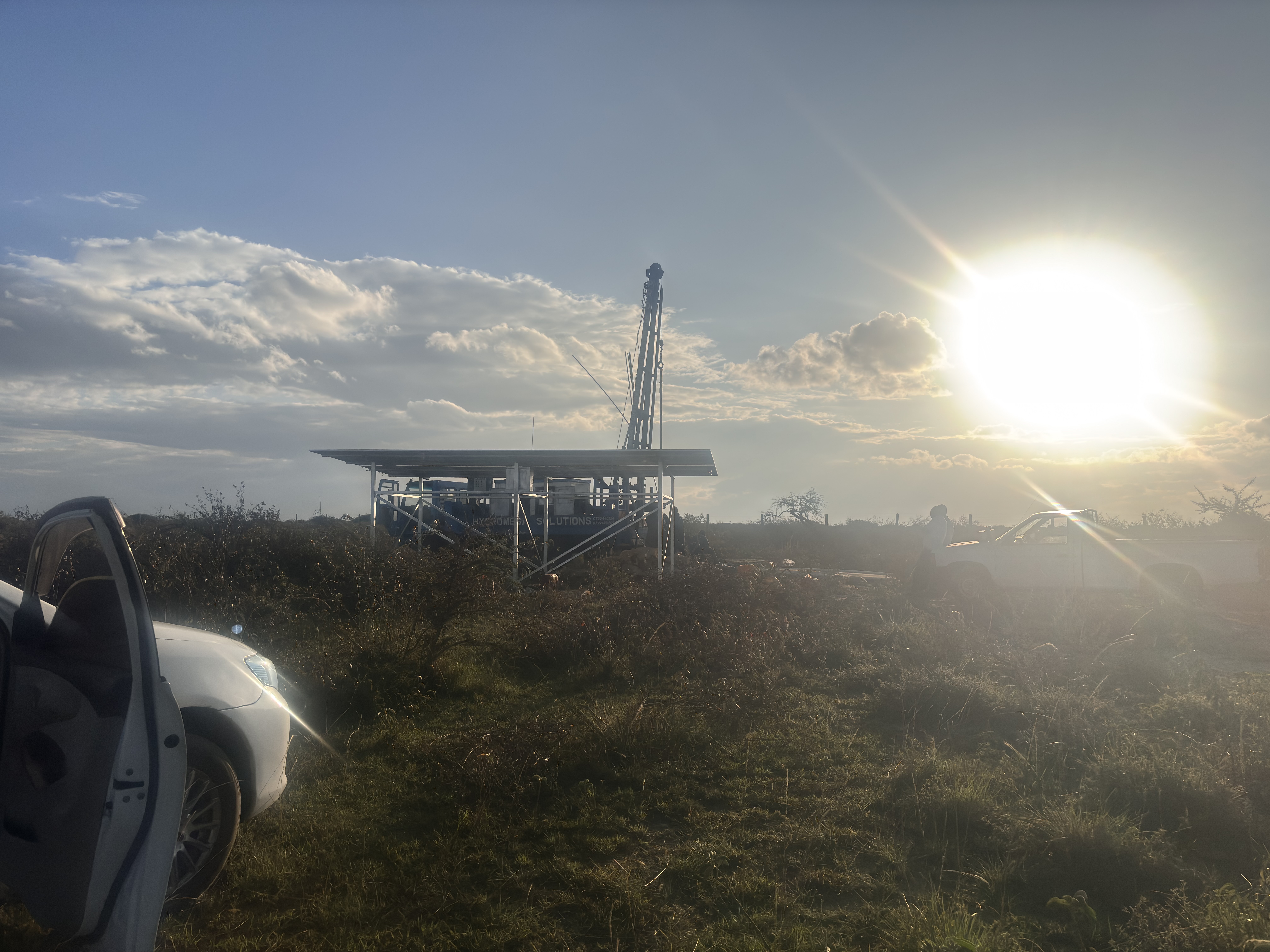
Nairobi County now hosts thousands of registered (and many unregistered) boreholes pulling from the same regional aquifer system —
the Athi Series sediments, the Nairobi Trachyte and the underlying Athi tuffs and lake beds. Densely-drilled areas like
Donholm, Umoja, Embakasi and Tena are putting real pressure on shallow aquifers. The smart move is not to compete shallow — it is to go deeper, wider and cleaner.
Falling static water levels
Across eastern Nairobi, static water levels have been dropping roughly 1–2 metres per year in heavily-drilled neighbourhoods. A borehole designed for today's water level dries up under tomorrow's demand. Ours was set deep with a wide casing so the pump can be lowered as needed for the next 20+ years.
Shallow aquifers are overdrawn
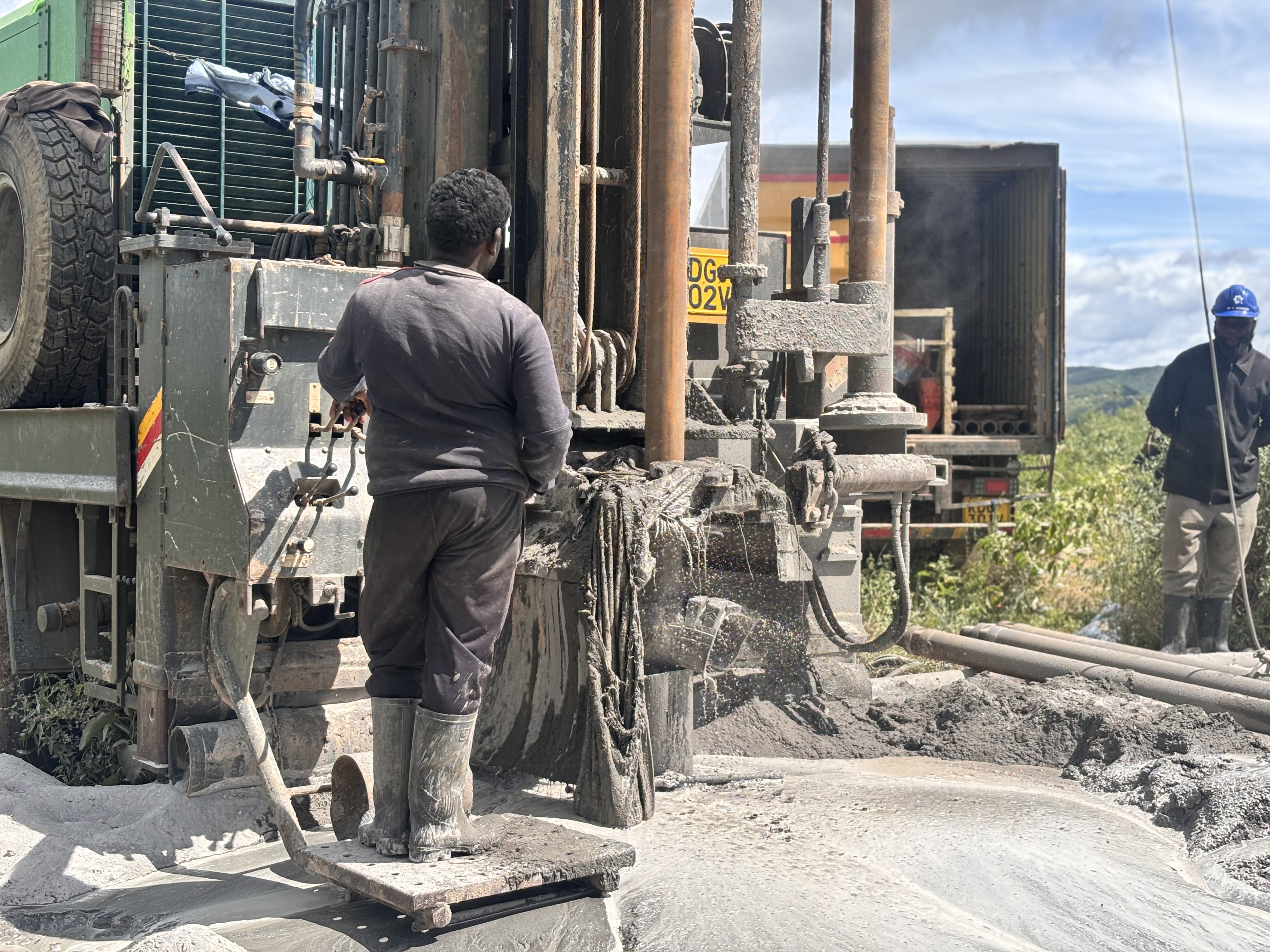
Most cheap Nairobi boreholes stop at 100–150 m and tap the upper Athi sediments. We pushed past those layers into deeper trachyte fractures and the Athi Series aquifers, which still hold strong, recharging volume — exactly what a commercial operation needs.
Volume needs space
You cannot pull 18 m³/hr through a narrow casing. The 10″/8″ build was chosen specifically so the casing isn't a bottleneck — the aquifer feeds the screens, the screens feed the casing, and a 6-inch submersible lifts it without choking the column.
Compliant from day one
Every commercial borehole in Nairobi County must pass through the Water Resources Authority (WRA) drilling and discharge permits and NEMA environmental screening. We sized this borehole knowing the volumes we'd declare on the WRA discharge permit — so the legal yield matches the engineered yield.