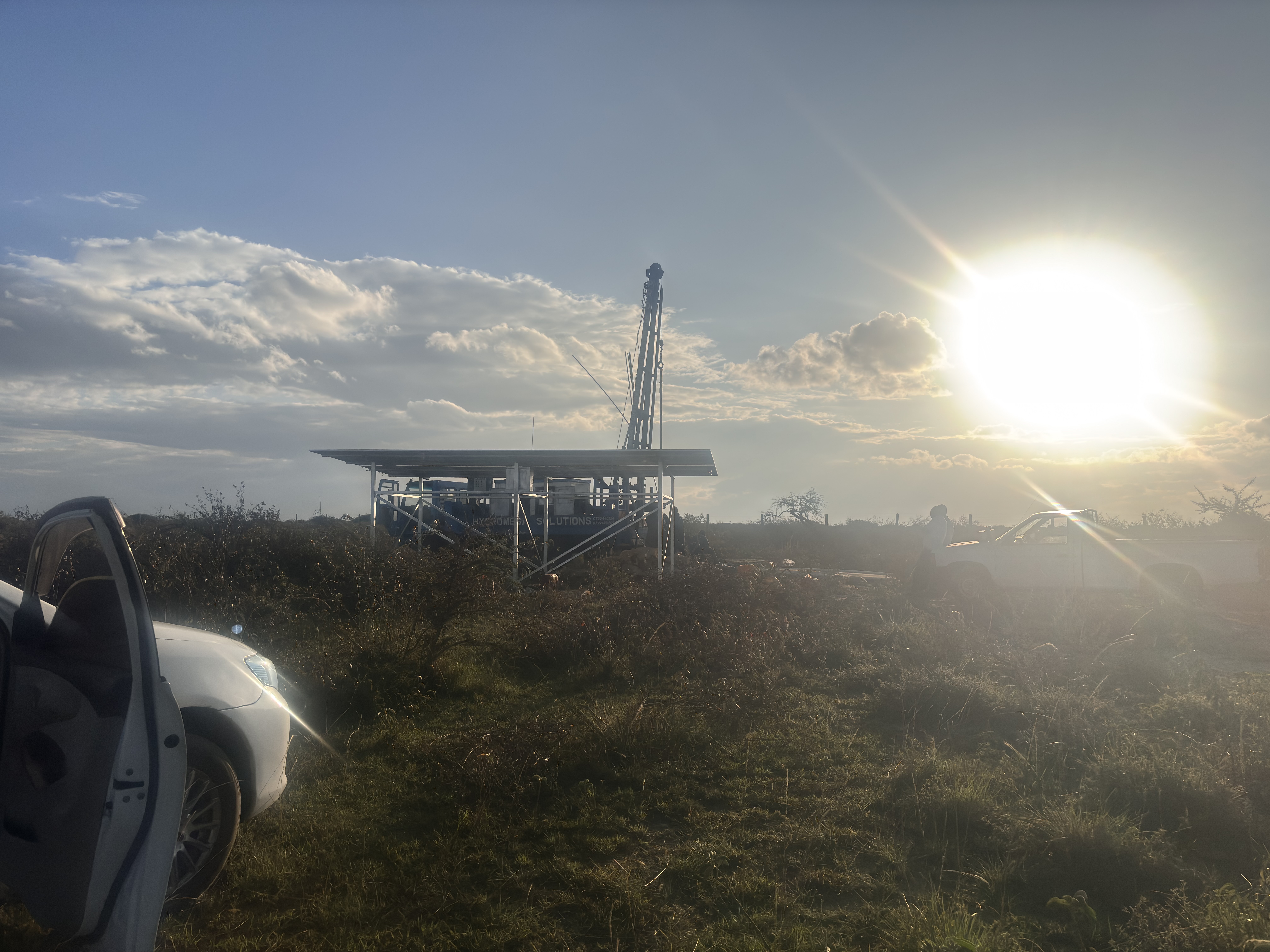
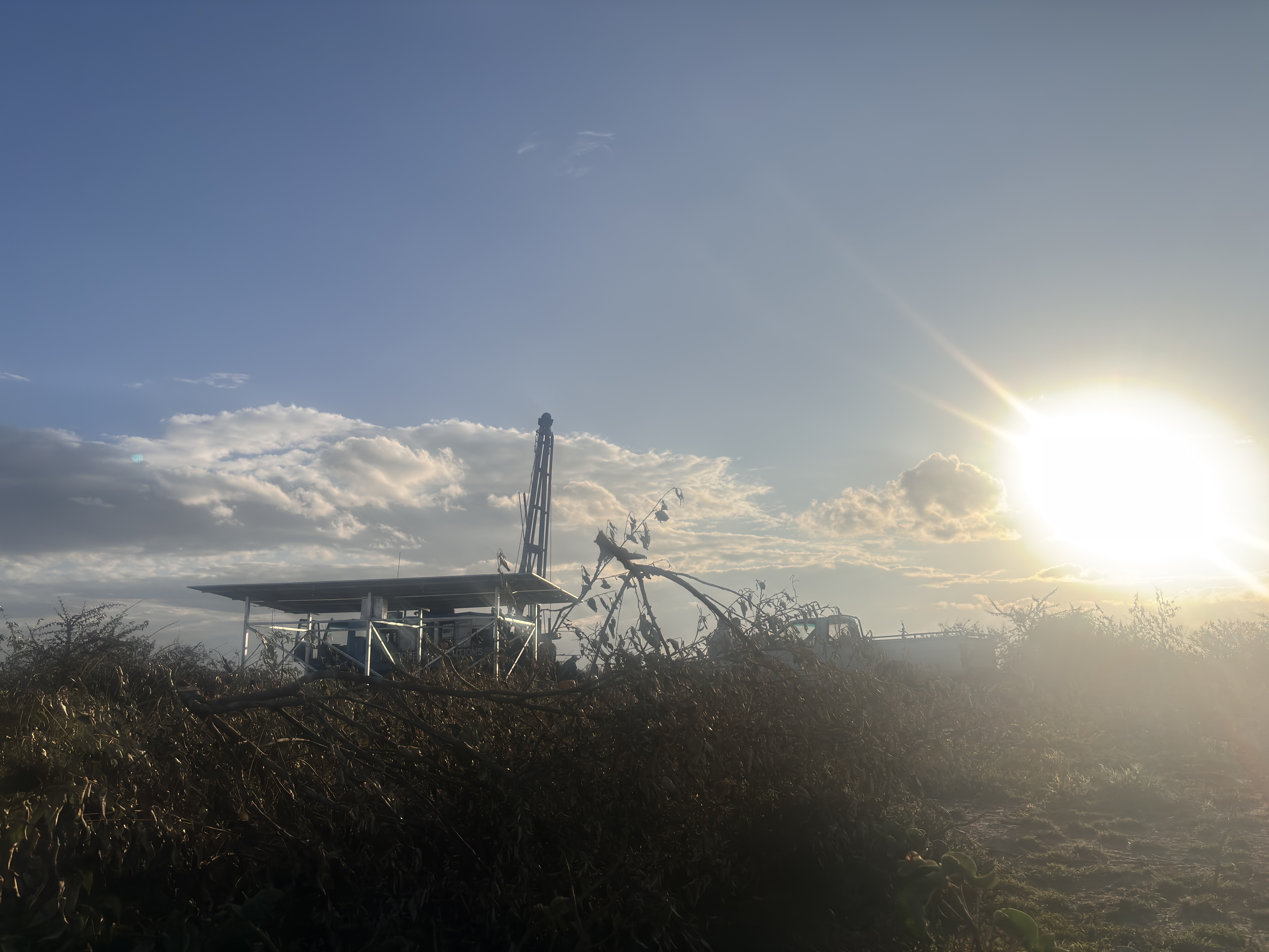
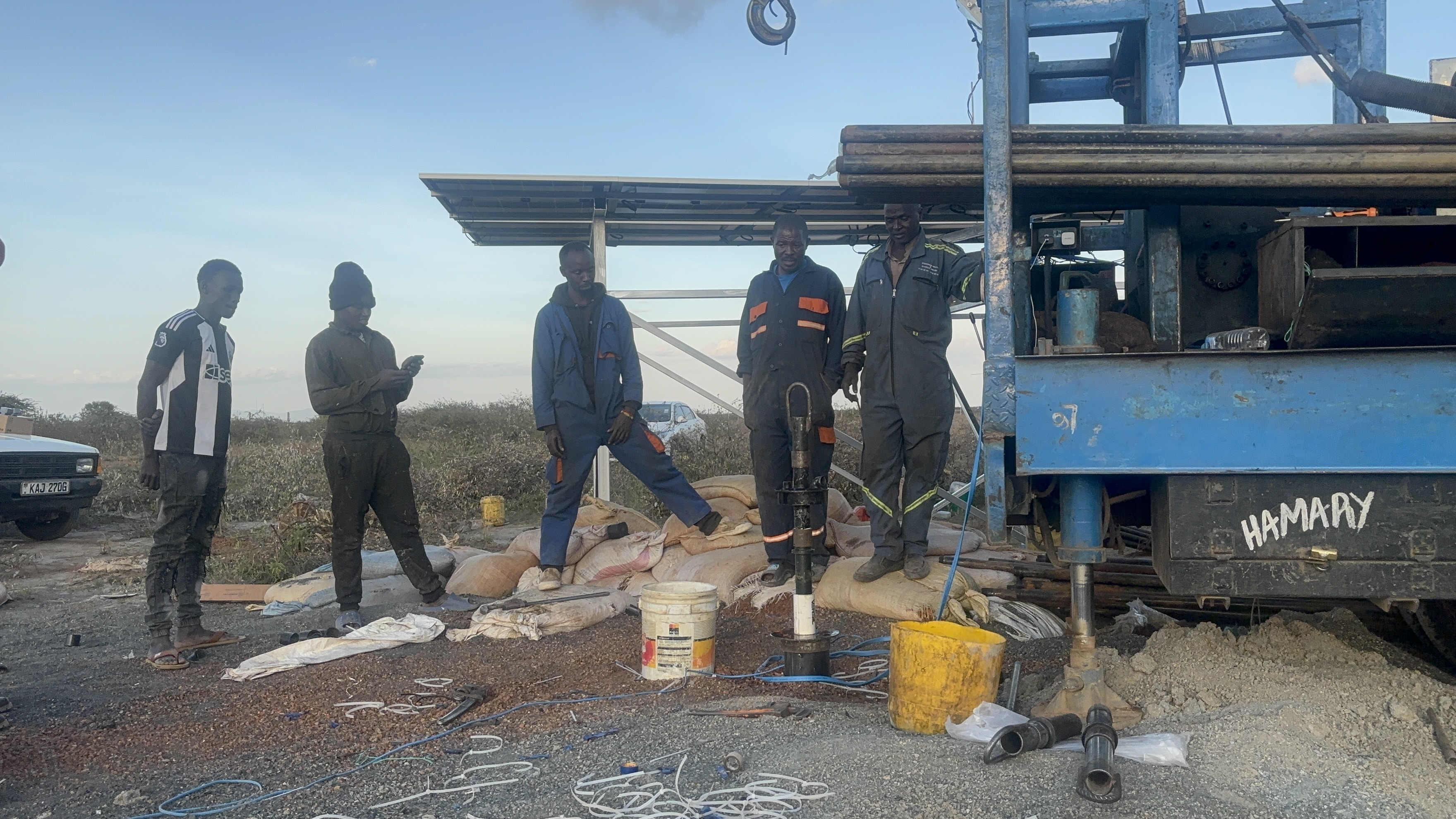
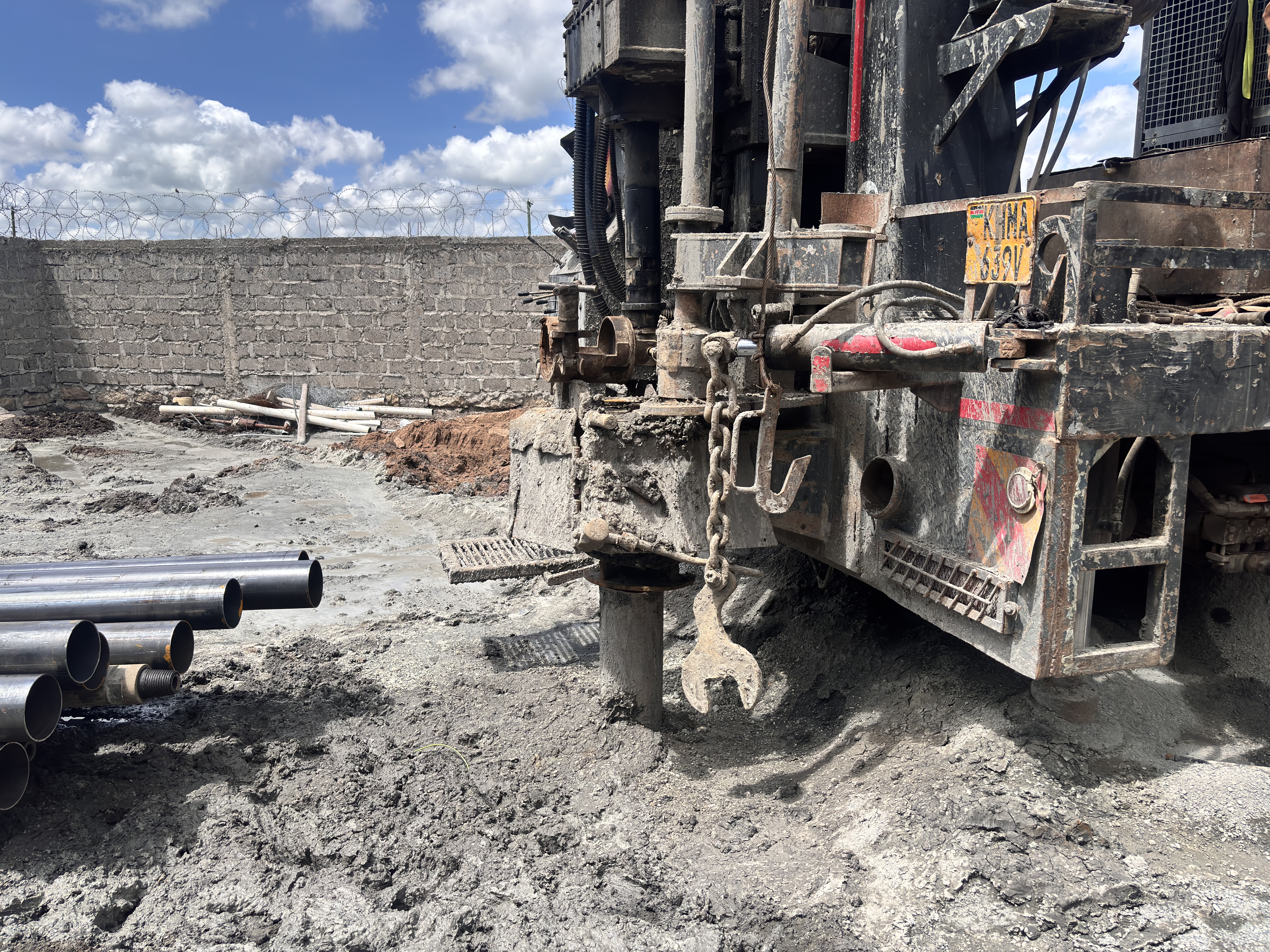
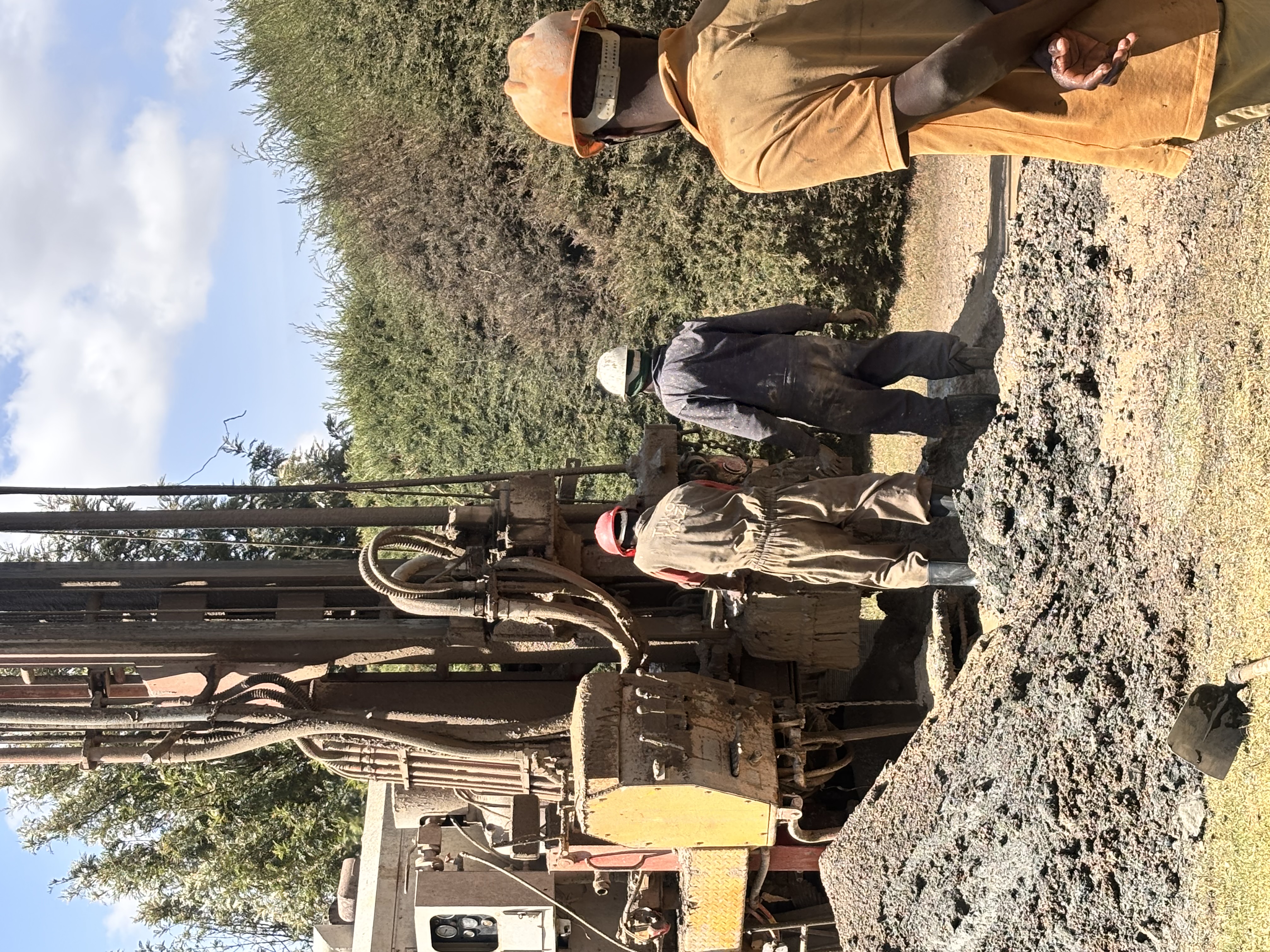
The hammer drowned — and that was the best news of the project

For most of the descent, the formation cooperated. Then, at roughly 185 metres, the
DTH hammer stopped biting properly. The cause was not stone — it was water.
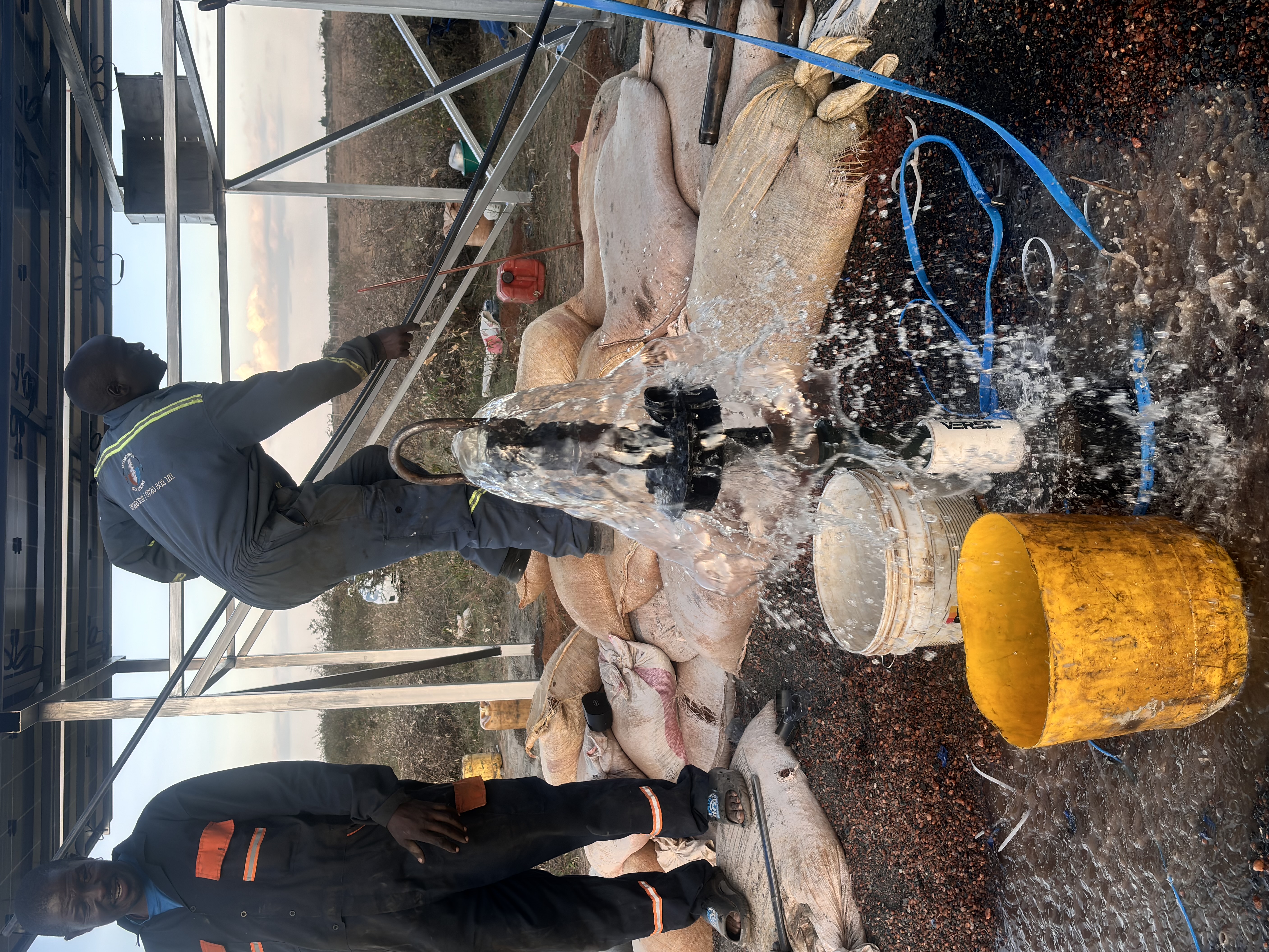
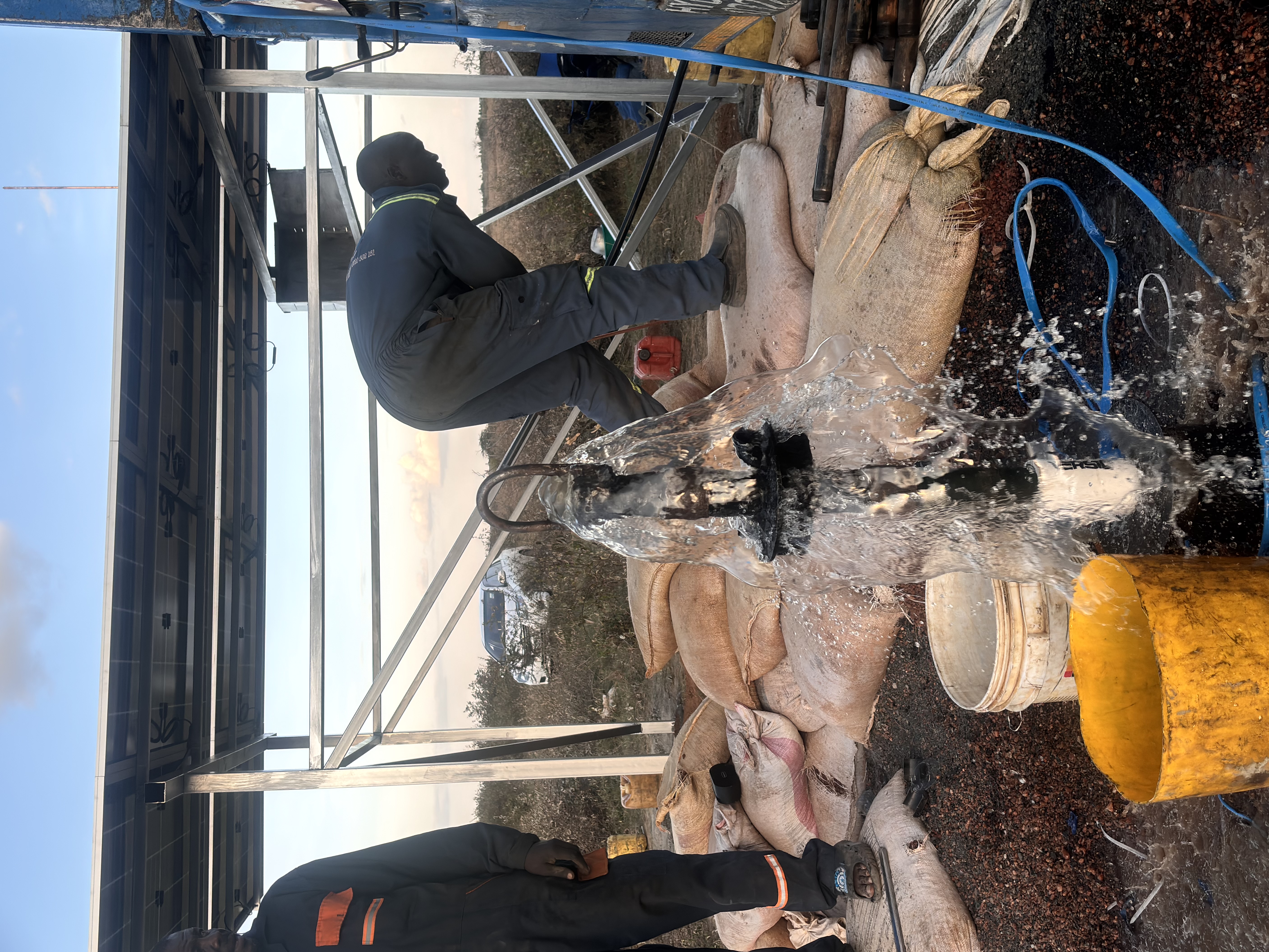
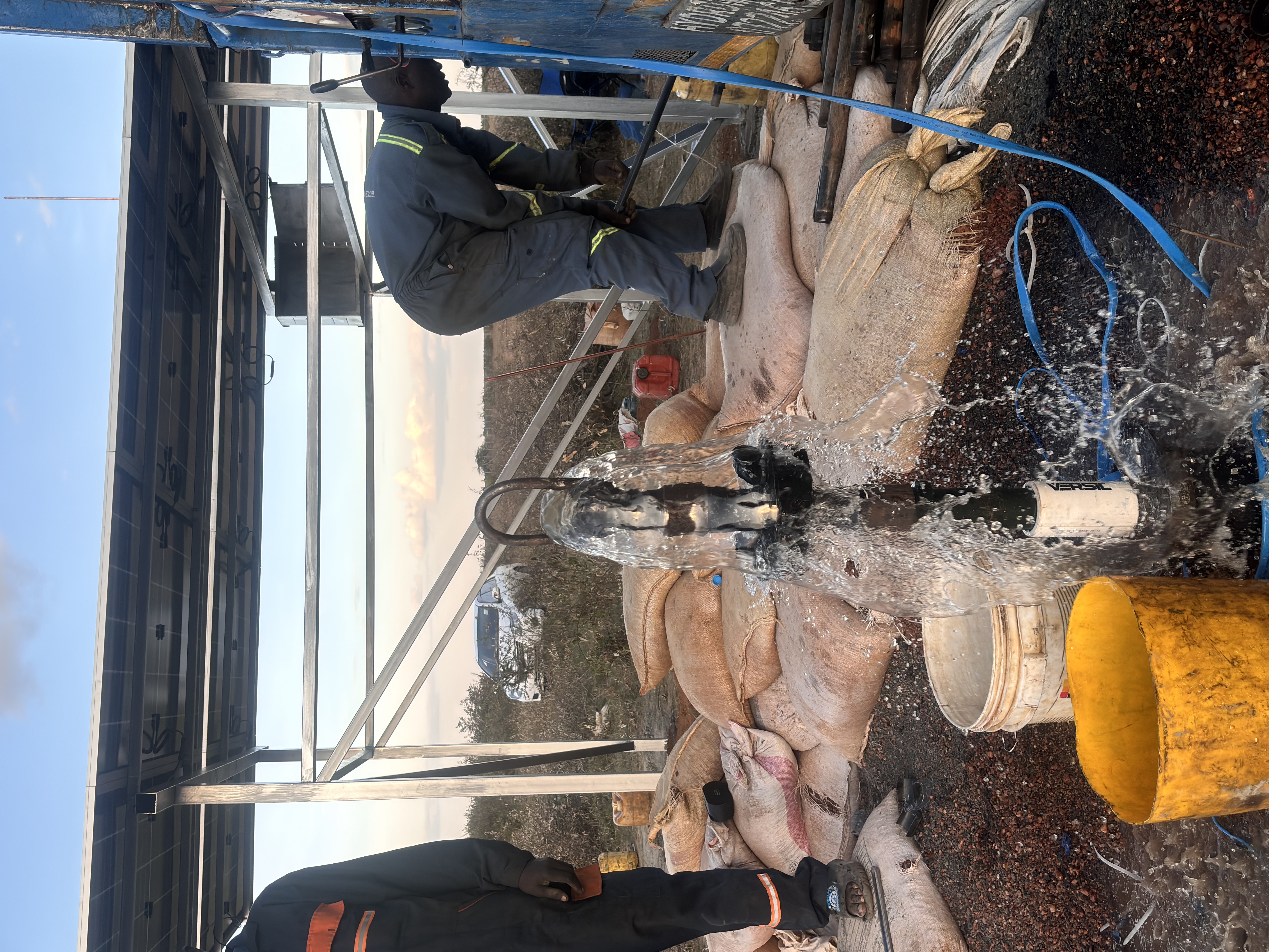
So much water entered the hole from the aquifer that it flooded the hammer chamber,
killing the air pressure the piston needs to strike. Penetration crawled. The drillers call it
bad hammering; in this case it was the loudest possible signal that we had hit the aquifer.
Rather than fight the water, we read it. The crew managed compressed air, flushing and rod handling
to keep the hole clean, confirmed the inflow zone, and completed the borehole with the
aquifer fully open below. There was no point pushing the hammer deeper into water it
could no longer beat — the production zone was already proven.
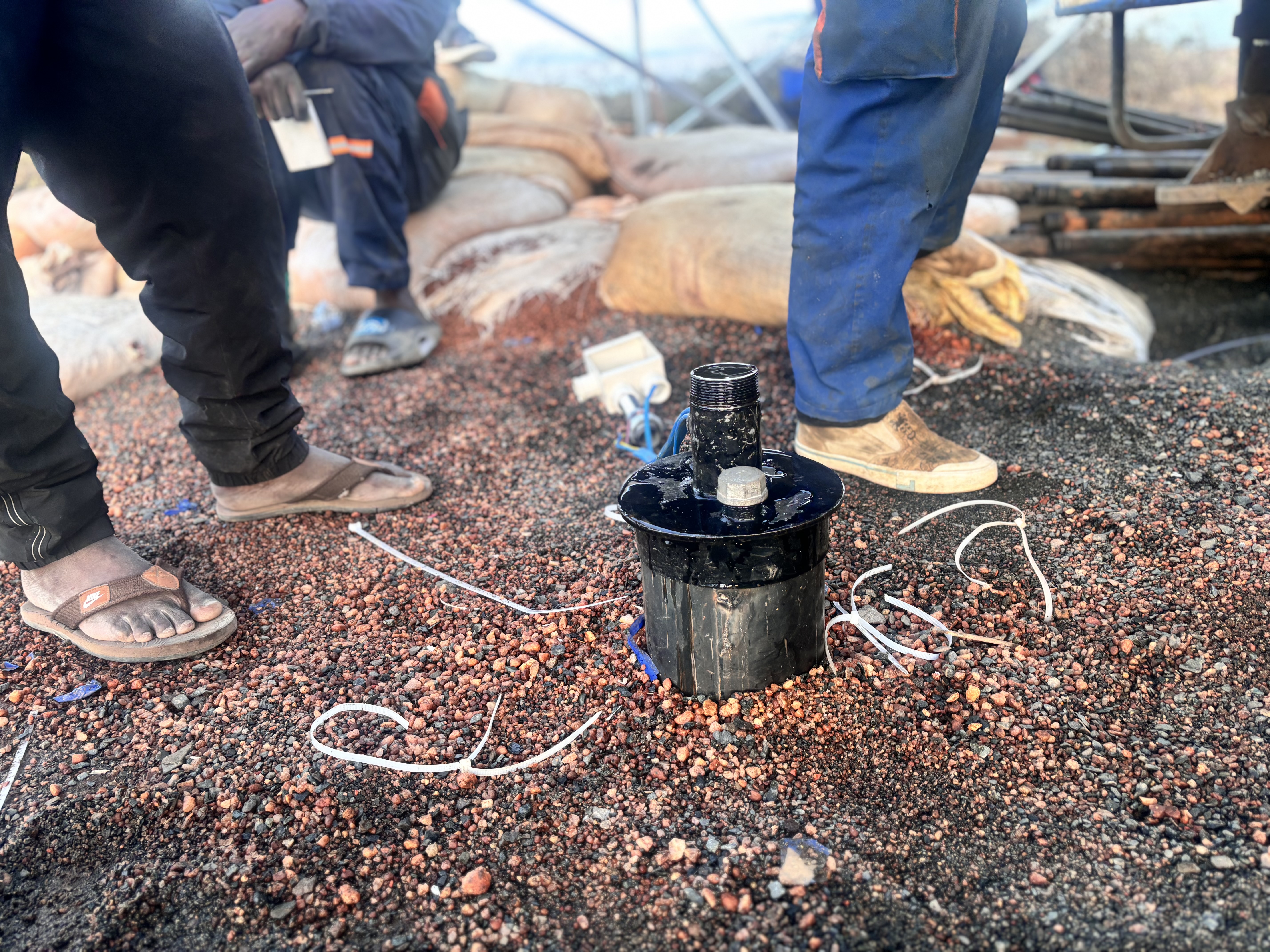
That is exactly why the pump is being seated at 180 metres — just above the heavy-inflow
interval, in stable hole, with clean access to the abundant water column below and serviceable for the life
of the irrigation system.
- “Bad hammering” = strong inflow drowning the DTH hammer — a yield indicator
- Aquifer confirmed below 185m — abundant, irrigation-grade flow
- Hole completed above the inflow zone for clean pump seating
- Pump set at 180m for stability, access and long service life