Moiben subsurface dossier · Uasin Gishu County
KWD-MBN-2026Predominance of failed shallow wells
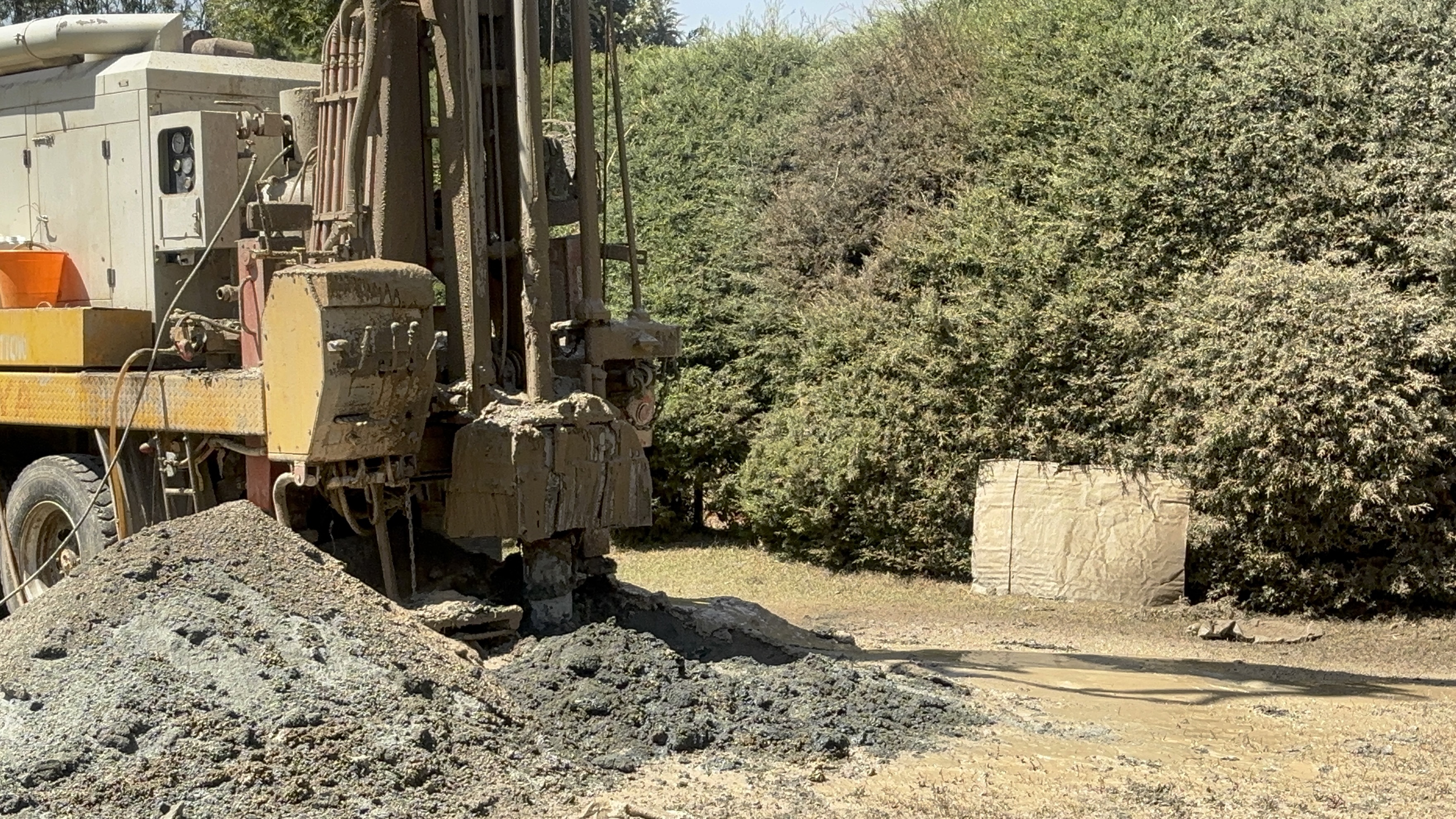
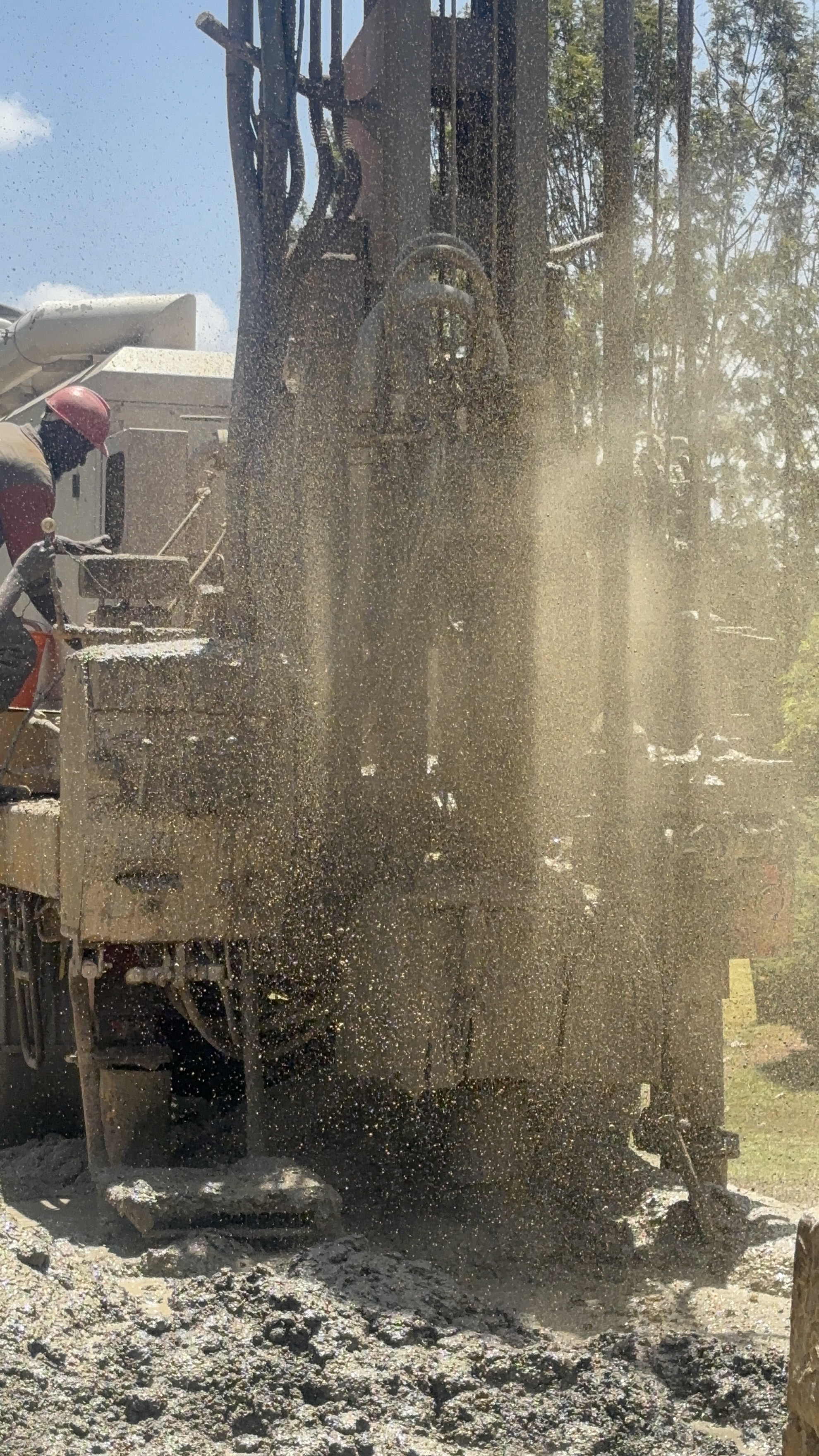
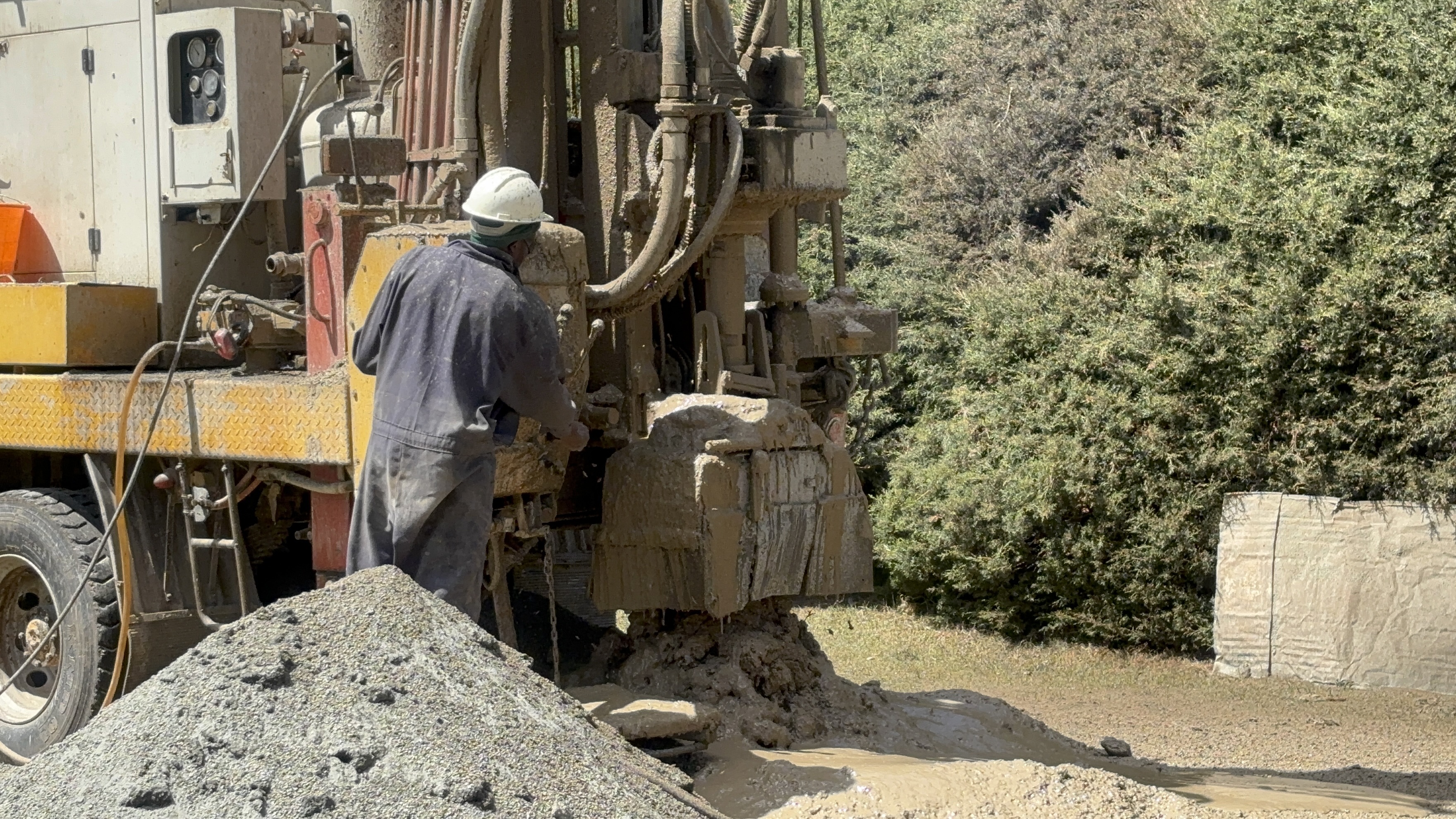
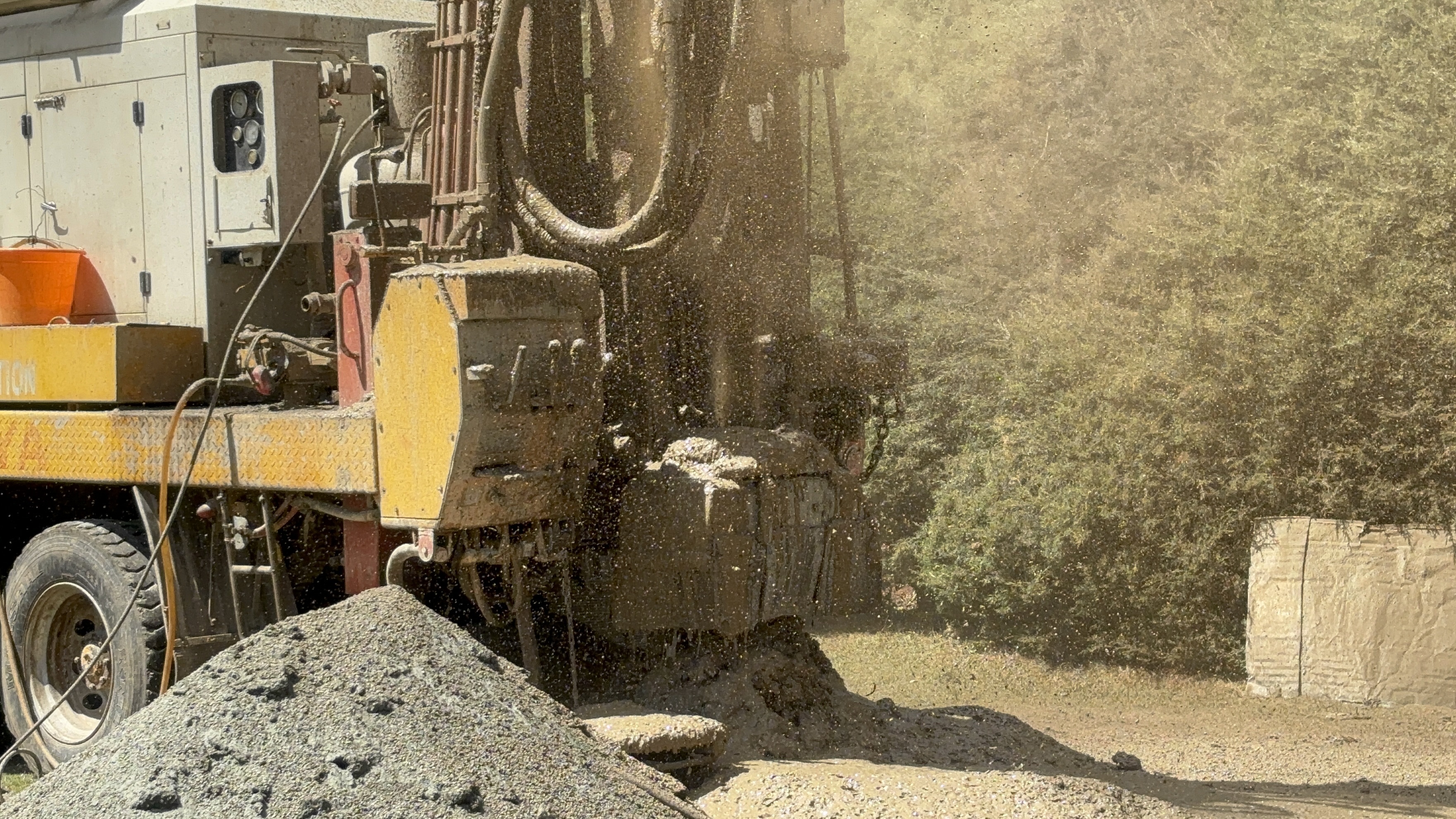
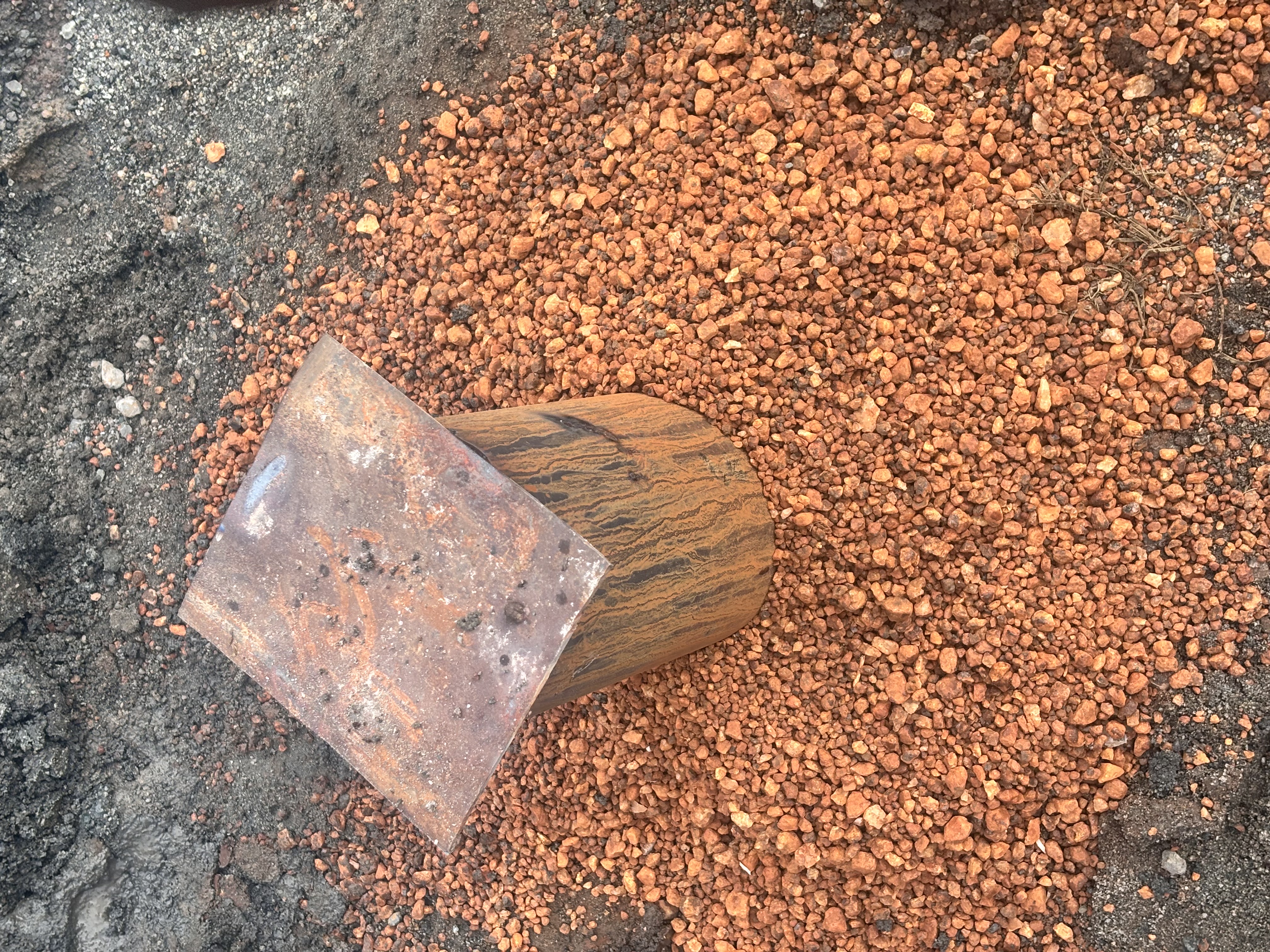
Across Moiben and the wider Eldoret hinterland, hand-dug wells and shallow attempts rarely survive. The near-surface geology is dominated by hard blue stone — dense, fractured rock that resists penetration and collapses poorly supported holes. Many abandoned pits dot the landscape, dry or seasonal at best.
Freshwater lives shallow — but not on the surface
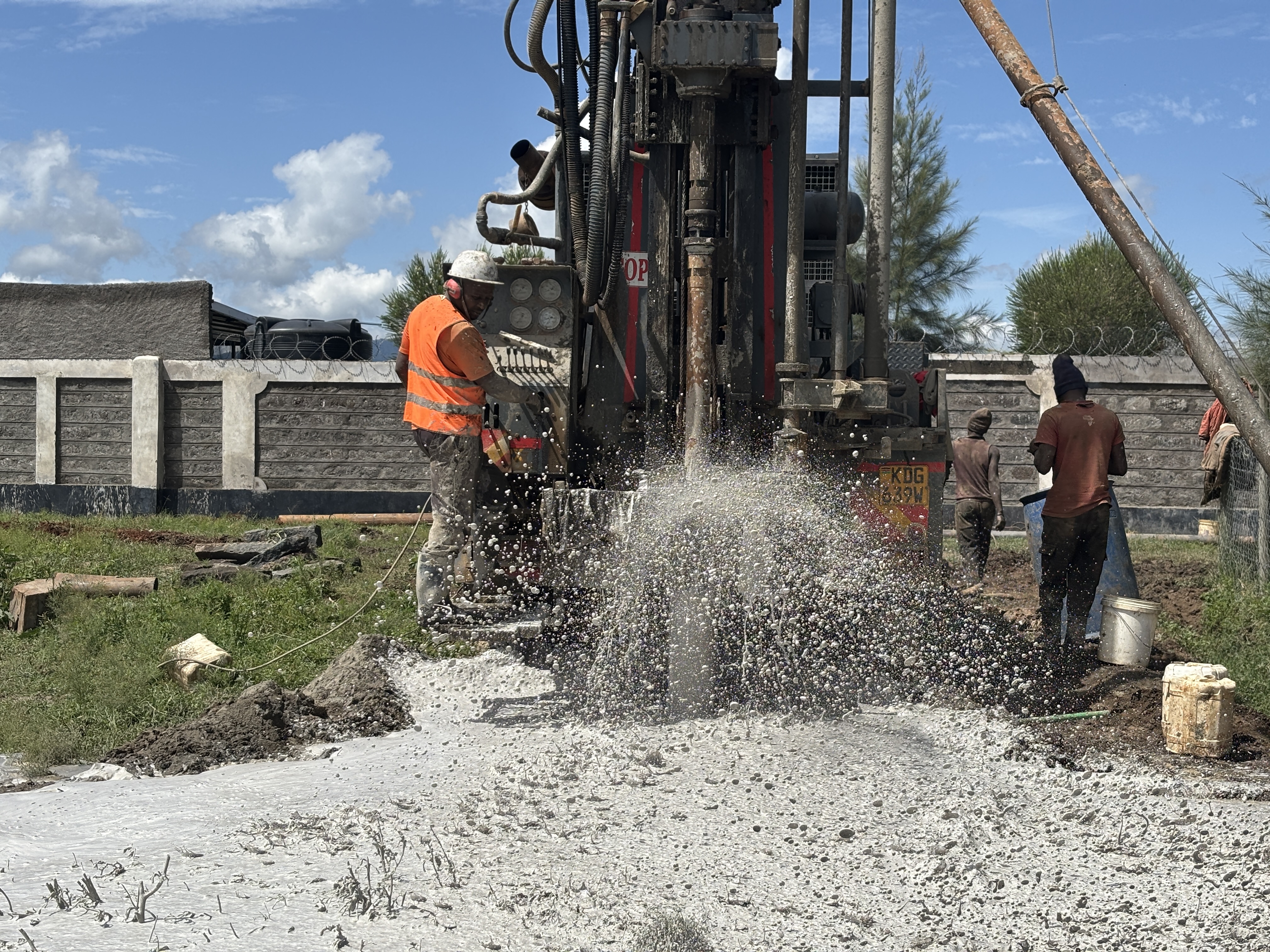
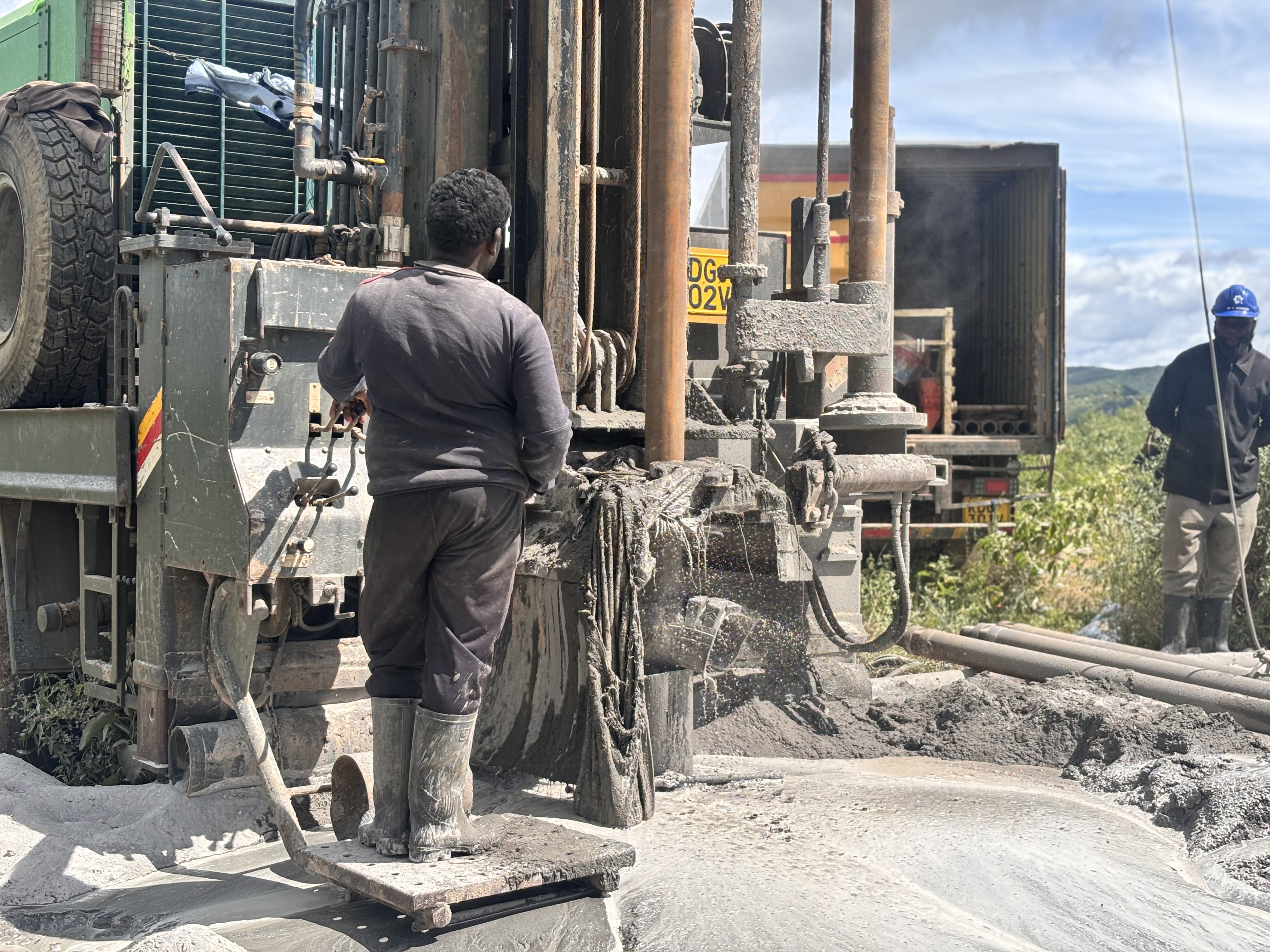
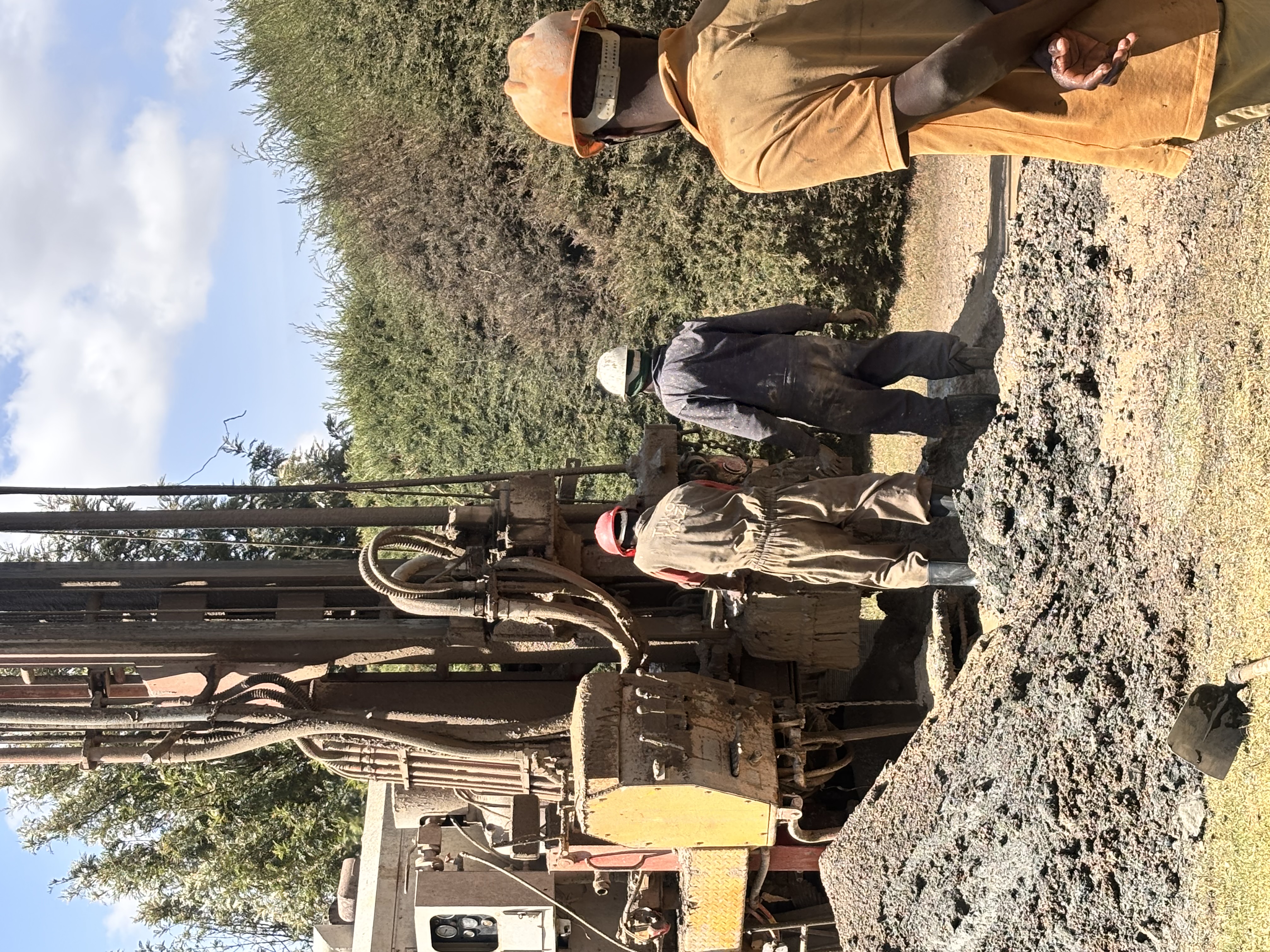
Hydrogeological assessment placed the productive shallow aquifers between 70 and 150 metres. Water exists — but only for crews who can drill competently through rock and stop at the right depth. Go too shallow and you miss the zone. Go too deep without survey guidance and quality deteriorates.
Salinity risk in deeper horizons
A pattern repeated across Moiben: boreholes drilled beyond the shallow freshwater lens often produce brackish or salty water. Mineralised deeper aquifers are unsuitable for irrigation — especially for sensitive crops like coffee. Targeting the correct shallow horizon was non-negotiable for this project.
Open boreholes left by others
Driving through Moiben, you will pass open, uncased boreholes — legacy holes where drilling stopped at rock, casing was never installed, or projects were abandoned mid-way. These are hazards as much as failures: unprotected holes in solid rock formations, no sanitary seal, no pump, no production. Our client wanted the opposite — a fully cased, sealed, productive installation.
Surface steel casing — open hole below in hard rock
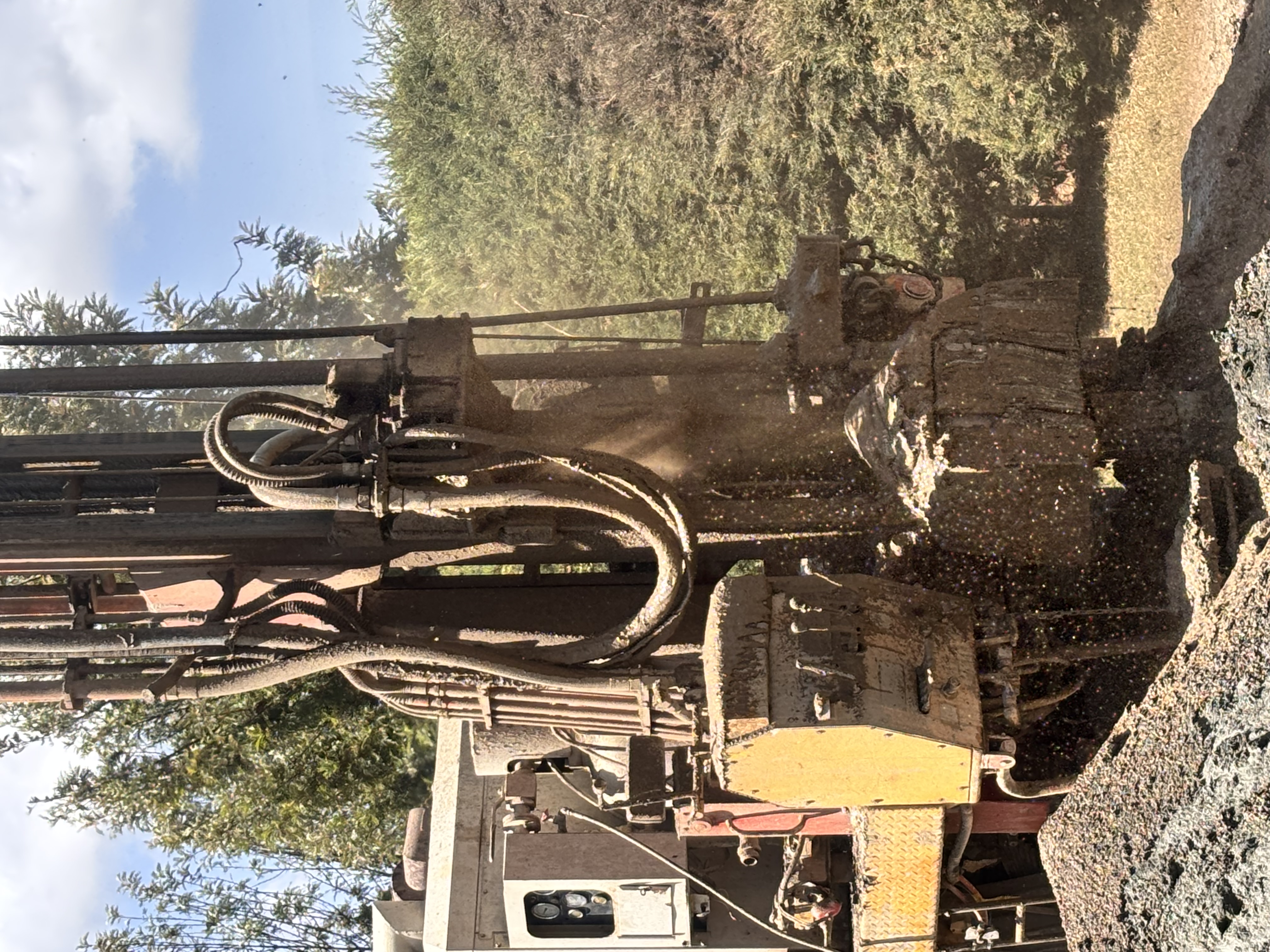
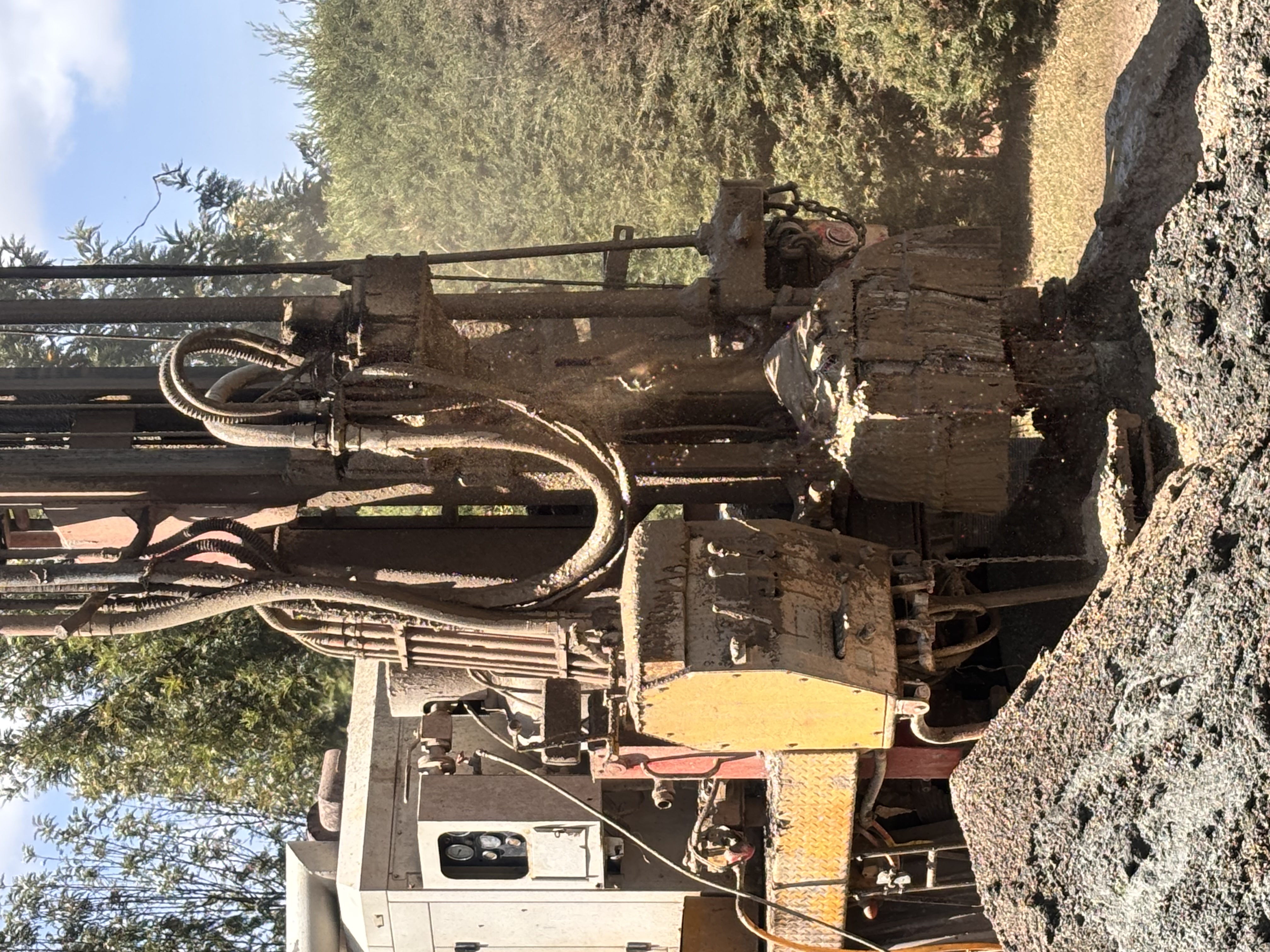
The client’s budget allowed steel surface casing to approximately 30 metres — sealing the unstable upper zone where shallow wells fail. Below that, no casing was installed. That is geologically sound here: hard blue stone begins around 30m and continues to the bottom, so the rock walls themselves stabilise the borehole. This is not the same as the abandoned open holes elsewhere in Moiben that never reached a productive aquifer or were left unfinished at rock face.