01 · Stuck
Rig bogged on the access route
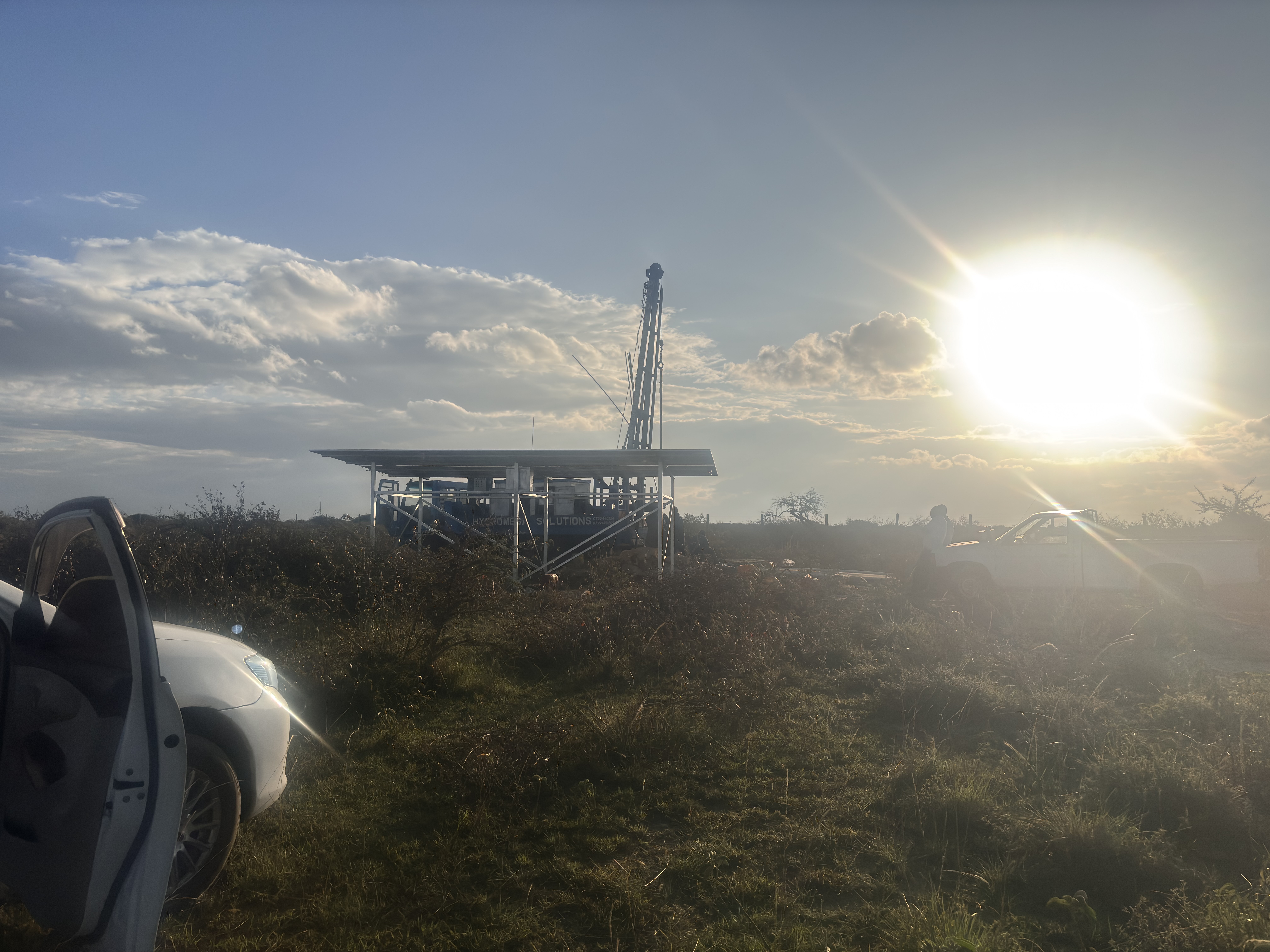
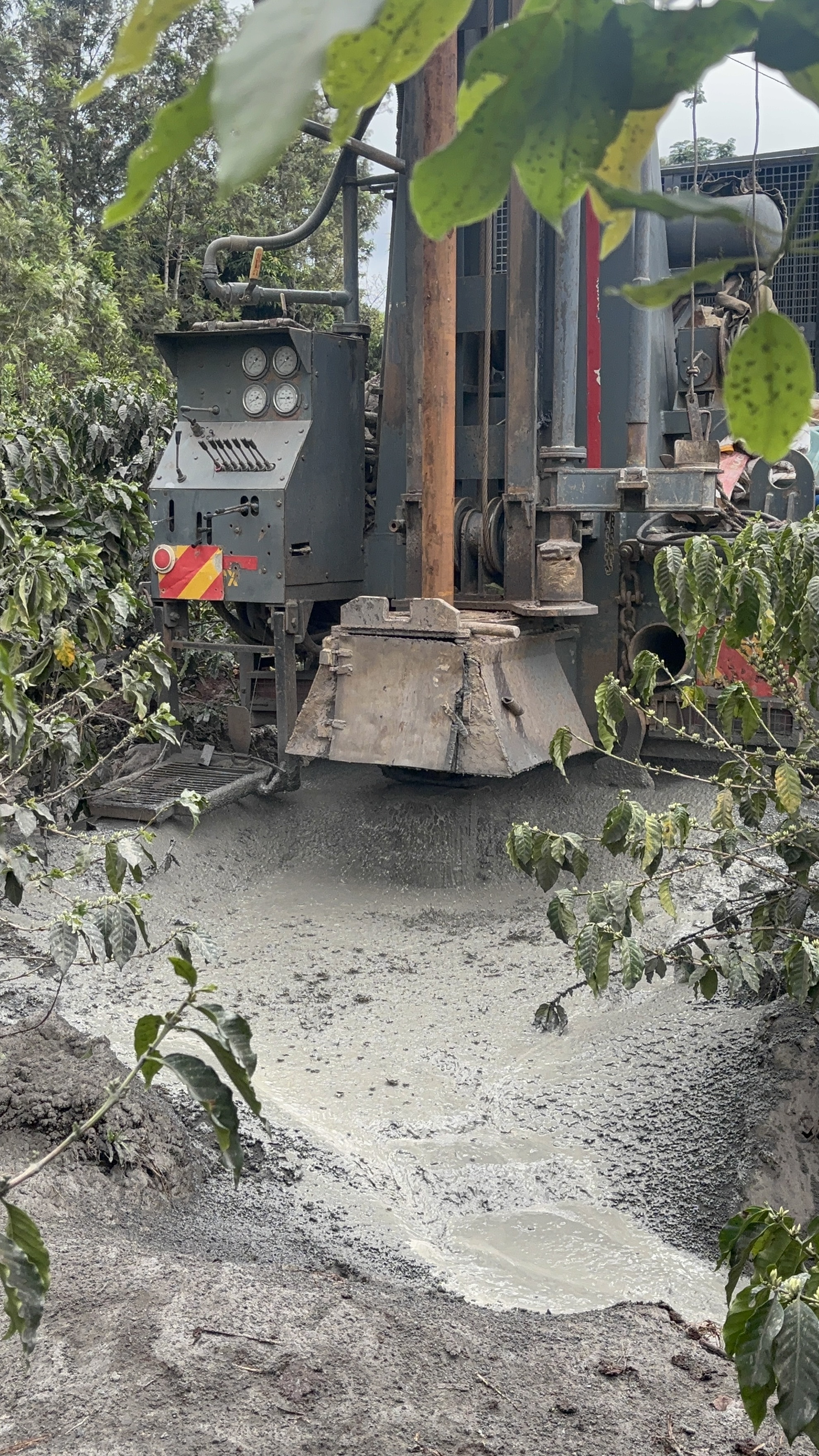
Embu's soft, wet ground refused to carry the truck-mounted drilling rig. Progress stopped before drilling even began.
On a Karurumo hillside in Embu County, a mature coffee farm was already in flower — the most fragile, water-hungry stage of the cycle. Then the rains delayed, and one by one the white blossoms began to drop. Without water, an entire season of yield was about to die on the branch. The client said enough is enough — and Kisima drilled 270 metres for an irrigation source that now flows at 8 cubic metres per hour. Getting there meant clearing the access road with a backhoe after the rig got stuck.
Chapter 01 · The crisis
Coffee does not forgive missed water. At flowering, the tree commits its energy to delicate white blossoms that will — if all goes well — set into the cherries that pay the school fees, the farm wages, and the family bills. Miss water in that window and the flowers fall. The season is lost before it begins.
In Karurumo, Embu County, that is exactly the line our client was watching cross. The trees were in full flower. The rains, normally reliable in this part of central Kenya, were late. Days became weeks. Blossoms that should have set into beans began to drift onto the red soil below the rows.
By the time the call came through to Kisima, the farmer was no longer asking about borehole economics or future planning. He needed water — and he needed it now.
Chapter 02 · The decision
After watching one too many seasons hostage to the rains, the client made a decision that every serious farmer eventually faces in Embu — stop praying, start pumping. He committed to a borehole built for irrigation, not just survival.
The client, on the phone to Kisima
Enough is enough. We are drilling. I cannot watch these flowers fall one more season.
— Coffee farm owner · Karurumo, Embu County
Chapter 03 · The road to the drill point
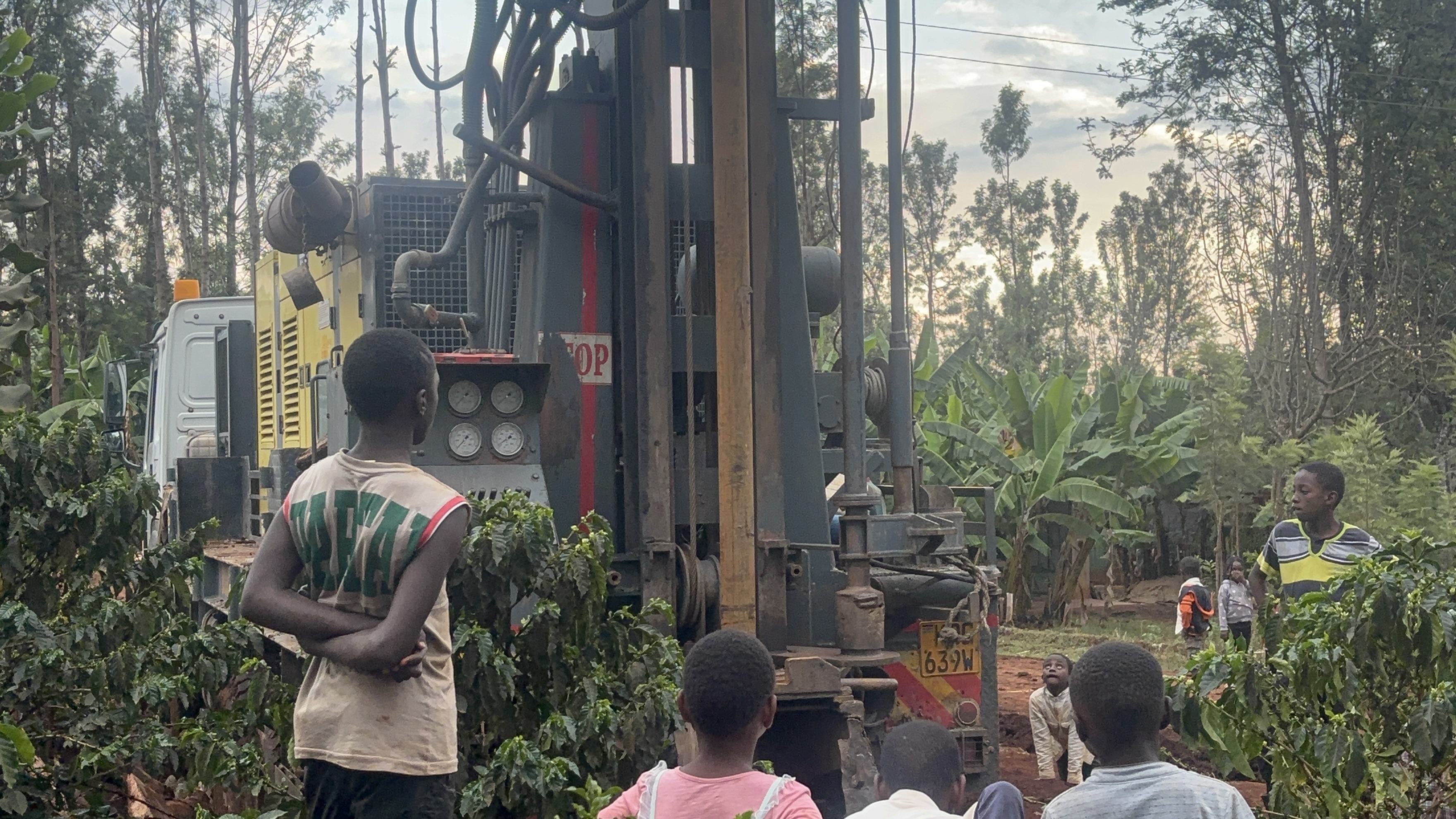
Embu's red soils are beautiful on a postcard and brutal on a heavy rig. The route to the drilling point ran through ground that simply could not carry the weight. The truck-mounted rig sank — not metaphorically, literally — and stopped where it stood.
Most contractors would have negotiated, delayed, or quietly walked away. With a coffee farm losing flowers by the day, we did not have that luxury. Kisima called in a backhoe tractor, re-cut the access, stabilised the route, and pulled the rig through to the surveyed drilling point.
That side-quest cost time and equipment, but it bought the project its single most important thing — the rig at the right spot, ready to drill.
Embu's soft, wet ground refused to carry the truck-mounted drilling rig. Progress stopped before drilling even began.
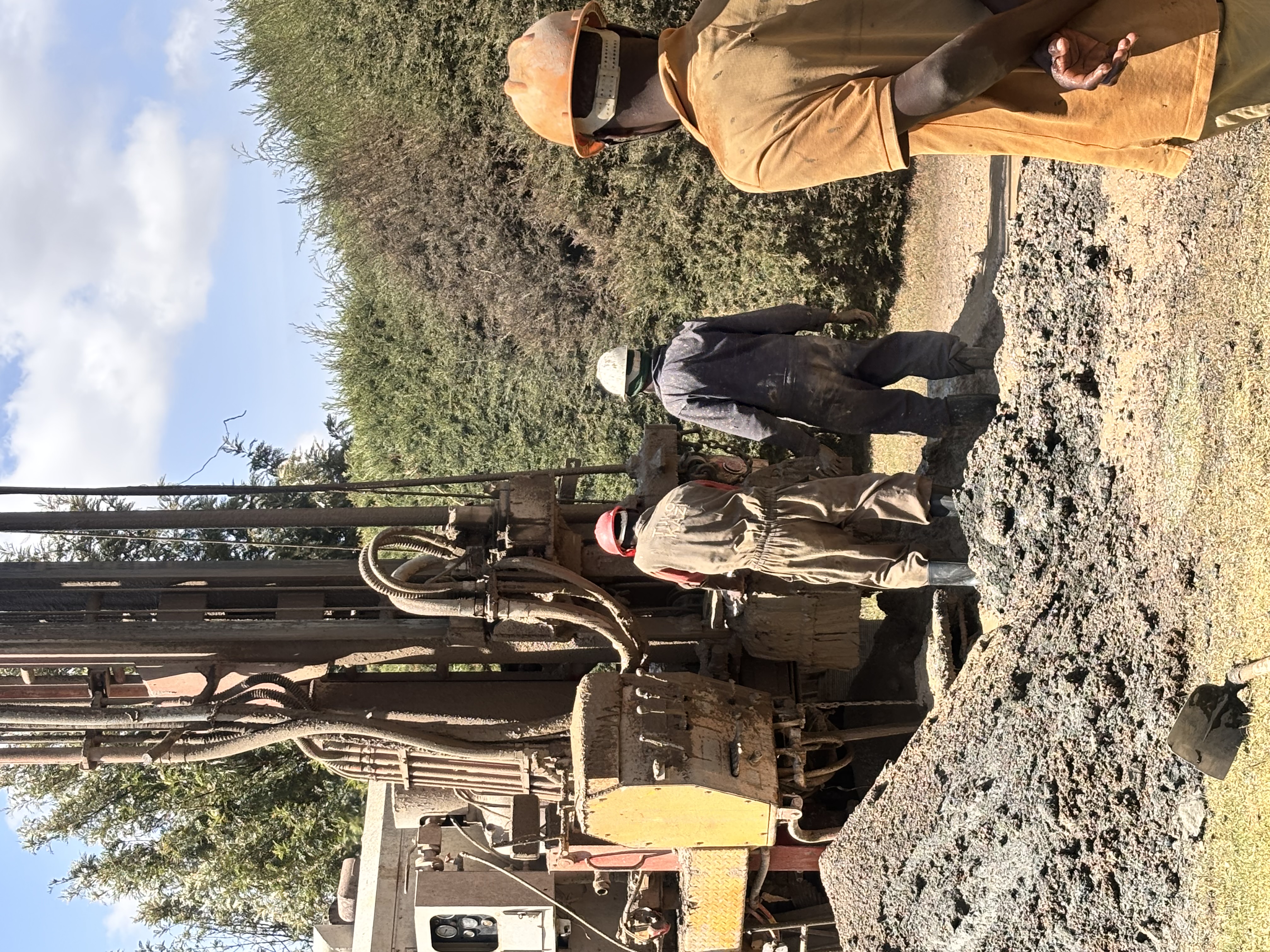
A backhoe tractor was mobilised to clear, cut and stabilise a usable route directly to the drilling point on the farm.

With the access stabilised, the rig was repositioned on the surveyed point and drilling started without further delay.
Chapter 04 · 270 metres for the coffee
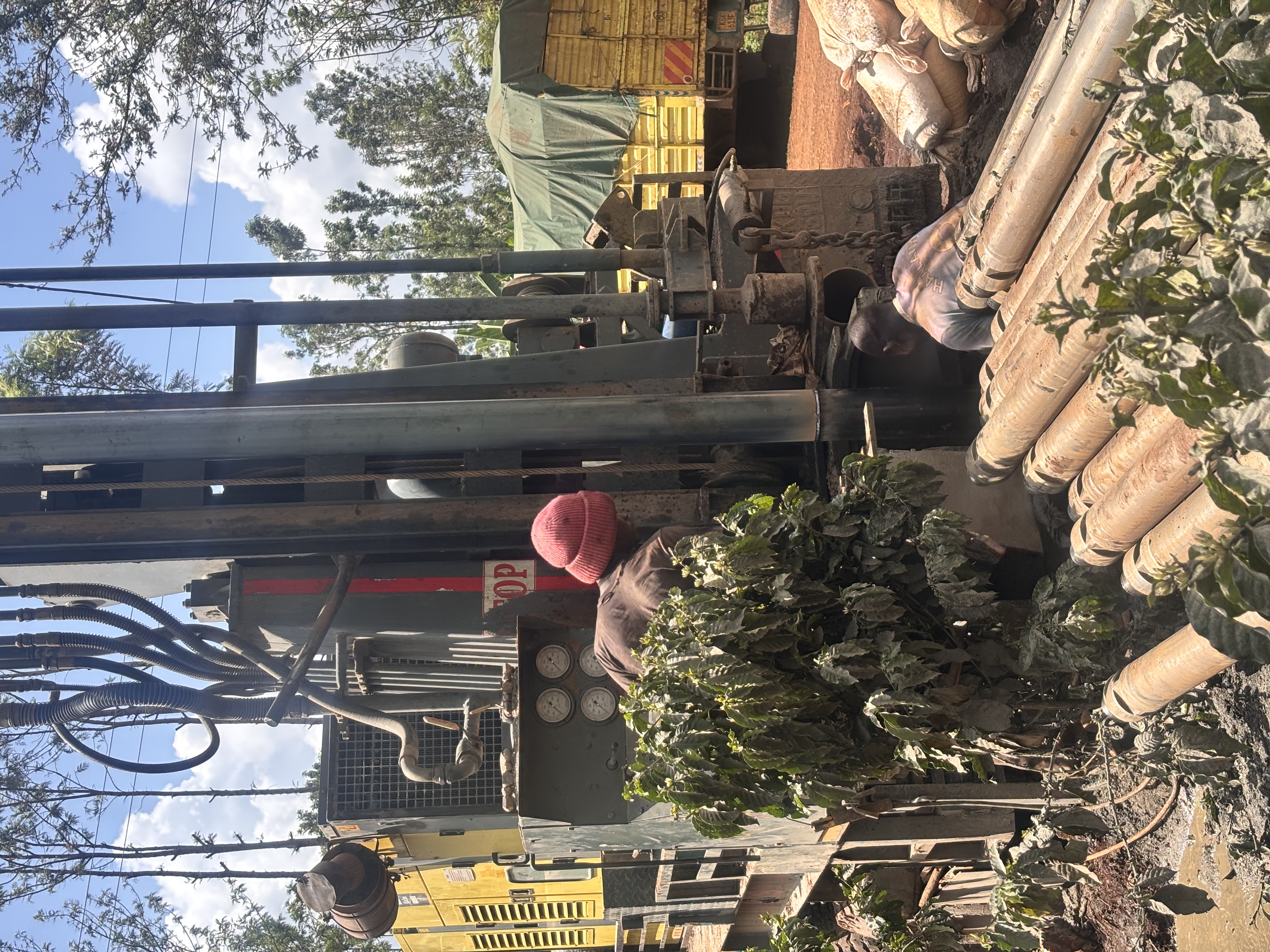
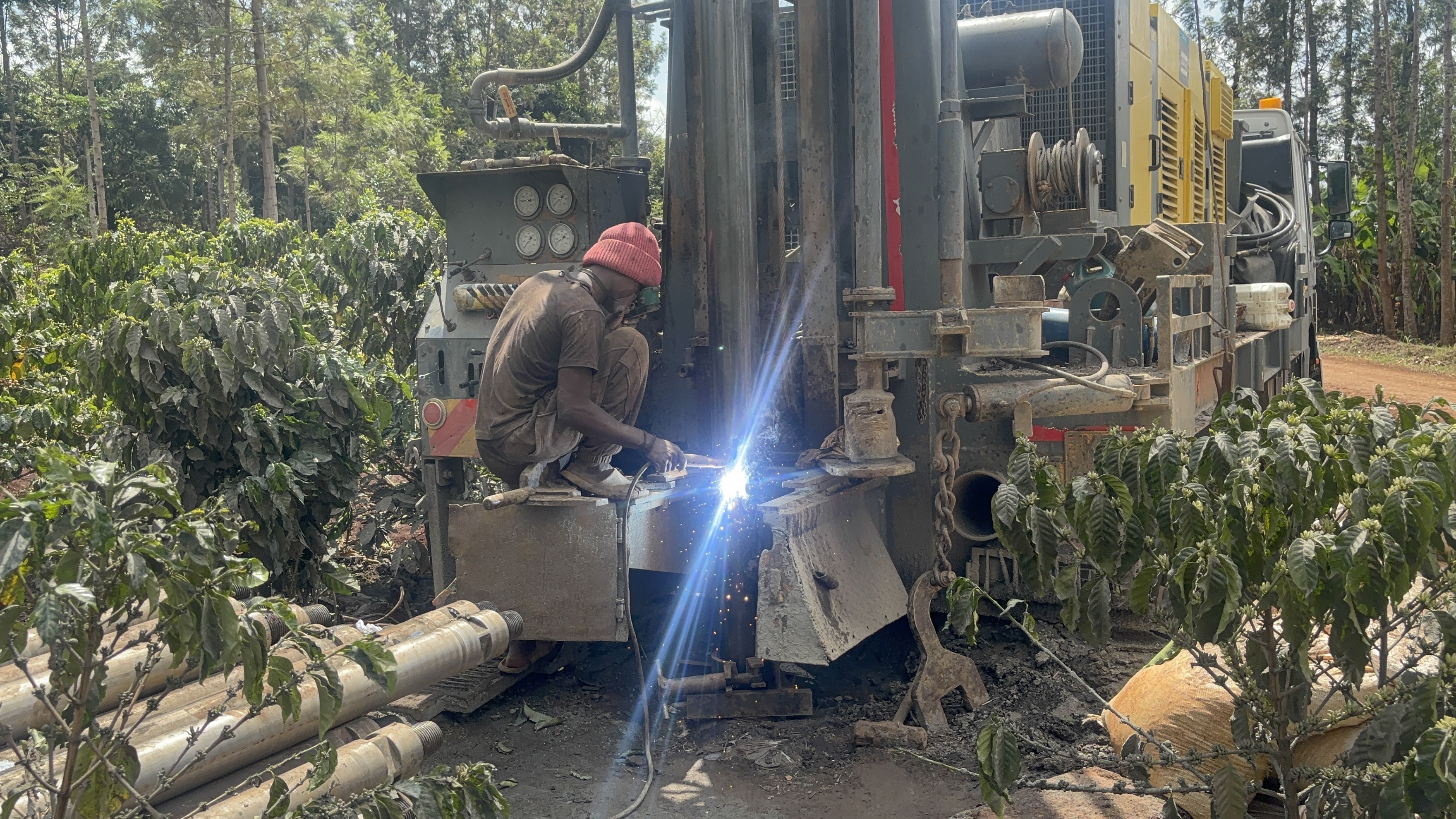
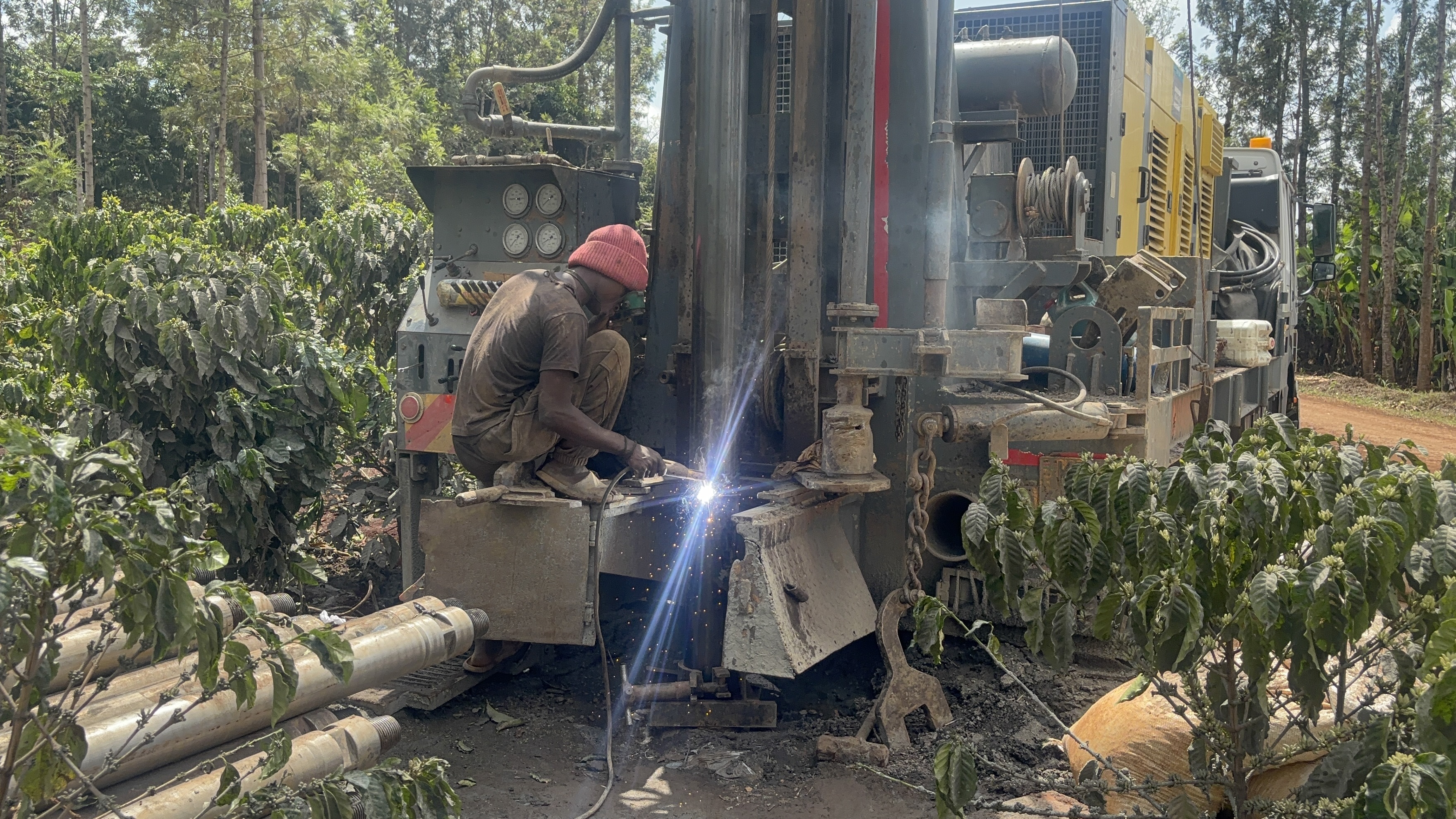
This was not a drinking-water borehole. The brief was irrigation, and irrigation needs volume you can rely on through a dry spell. Kisima drilled to 270 metres to seat the borehole on a production-grade aquifer that could carry coffee through the dry windows Embu has come to expect.
At test pumping, the borehole confirmed 8 cubic metres per hour — strong enough to fill storage on schedule, drive drip lines across rows, and give the farmer something the weather no longer does: a predictable water plan.
Chapter 05 · What 8 m³/hr buys this farm
Numbers on a test report are abstract. On a coffee farm they translate directly into trees kept healthy, flowers held, and cherries harvested. Here is what this Karurumo borehole actually buys.
Pumped across a typical 8-hour operating window — enough to cover a working coffee farm in dry conditions, with margin for storage refill.
Targeted irrigation at flowering means blossoms set into cherries instead of falling to the ground when the rains miss their window.
The farm planning calendar is no longer hostage to the sky. Inputs, labour, and harvest become things the owner can schedule, not pray for.
Chapter 06 · On site at Karurumo
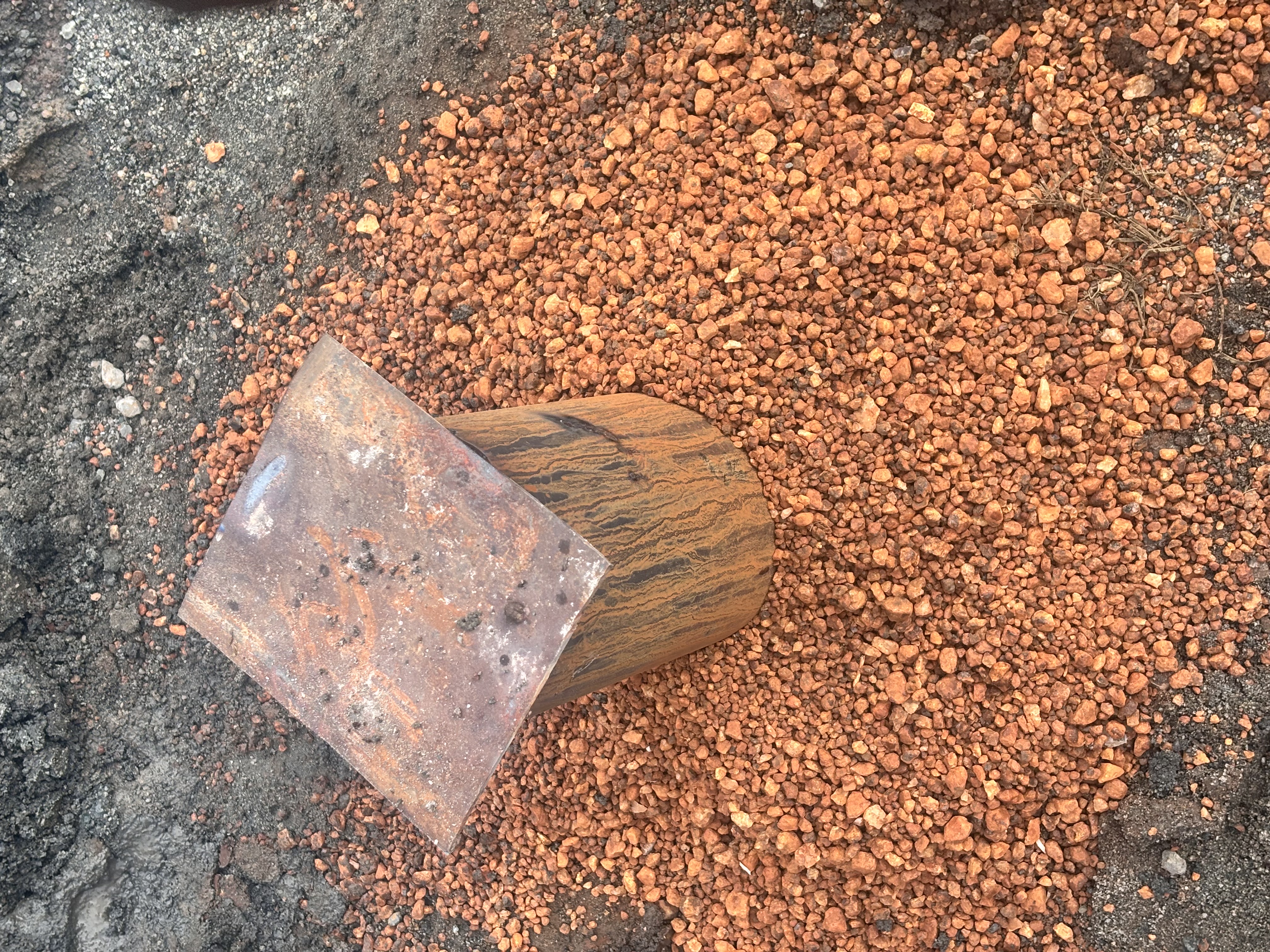 Drilling
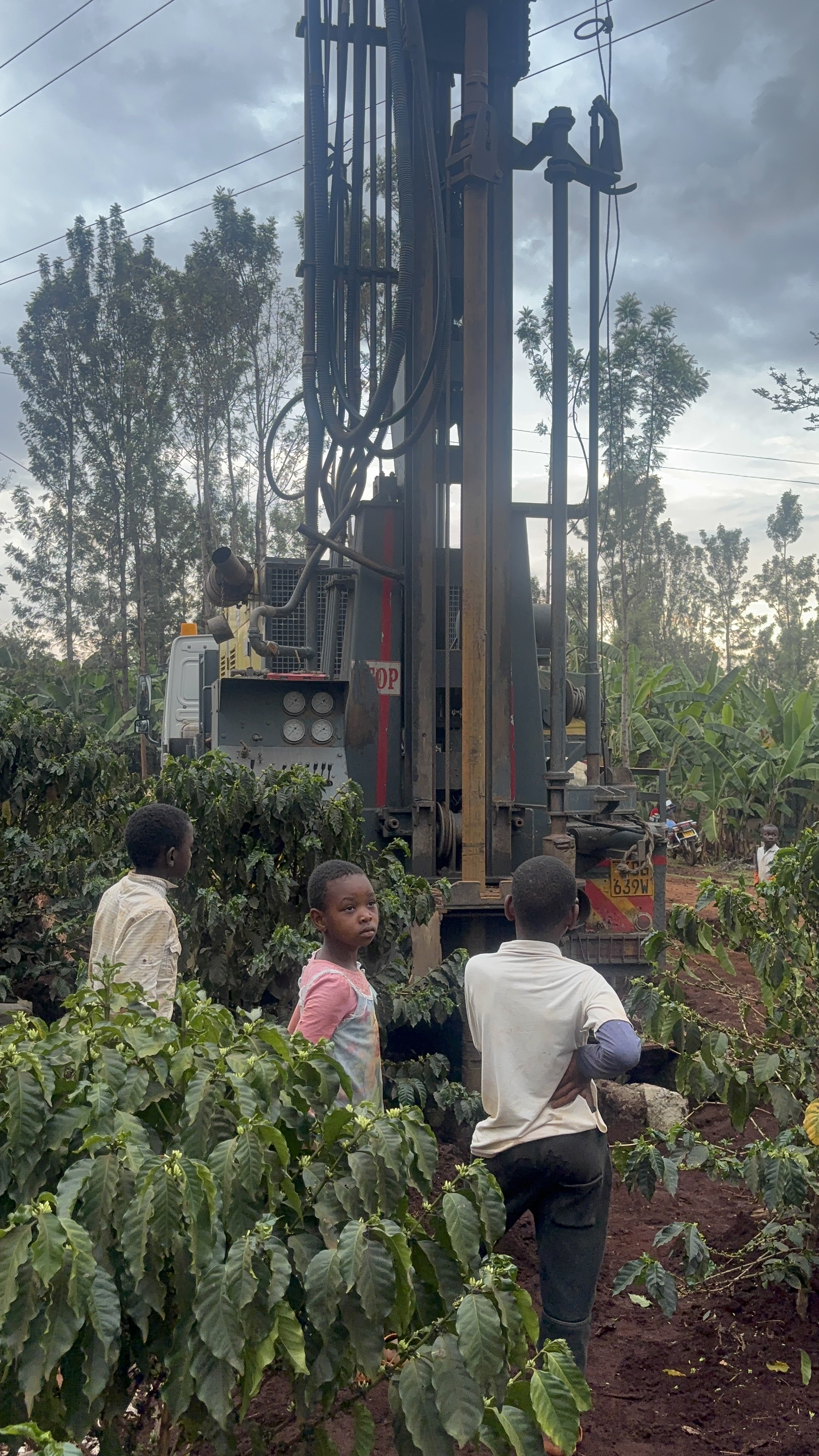 Site
Access
Site
Access
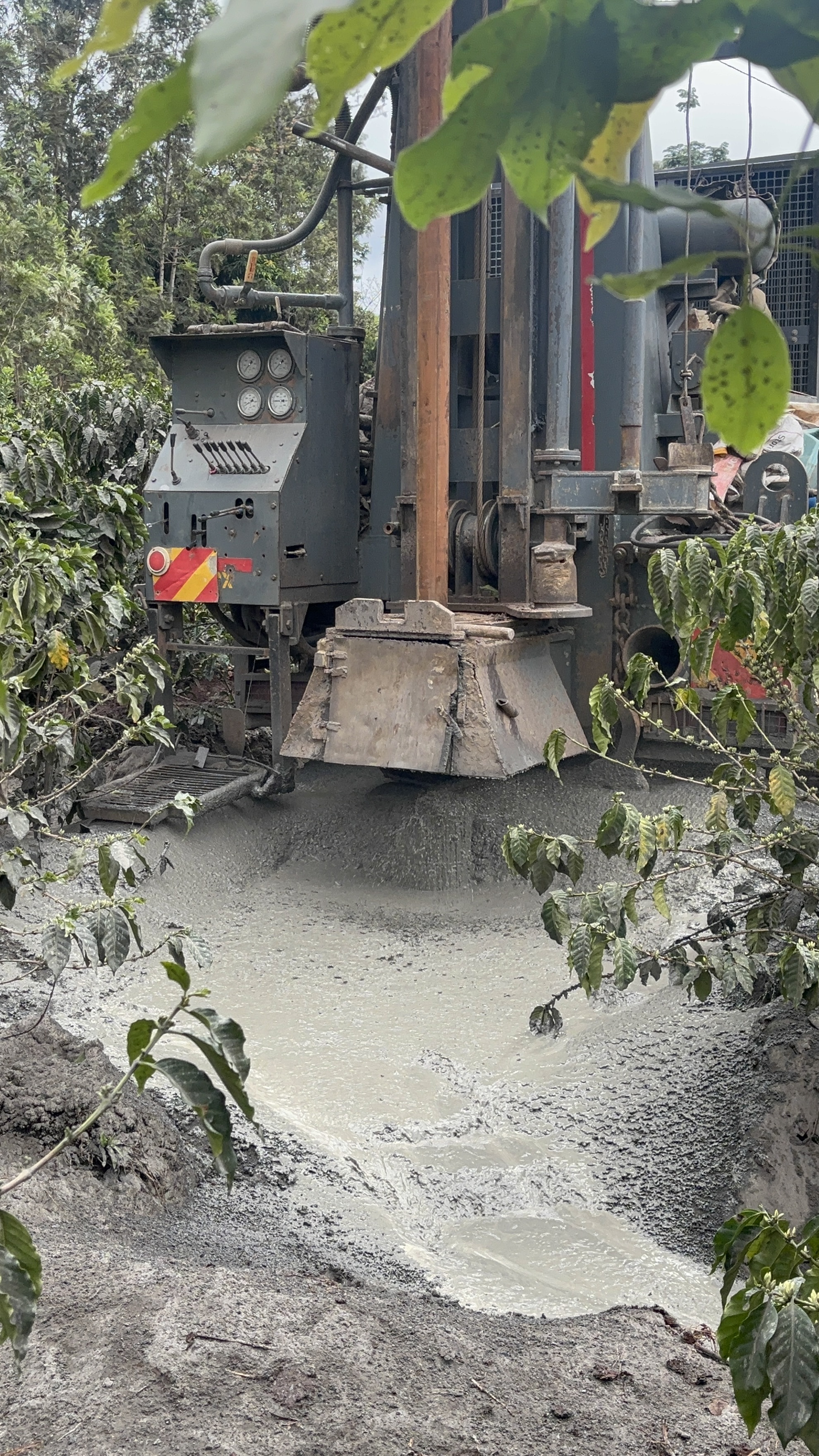 Crew
Crew
 Rig
Rig
 Casing
 Depth
Depth
 Site
Site
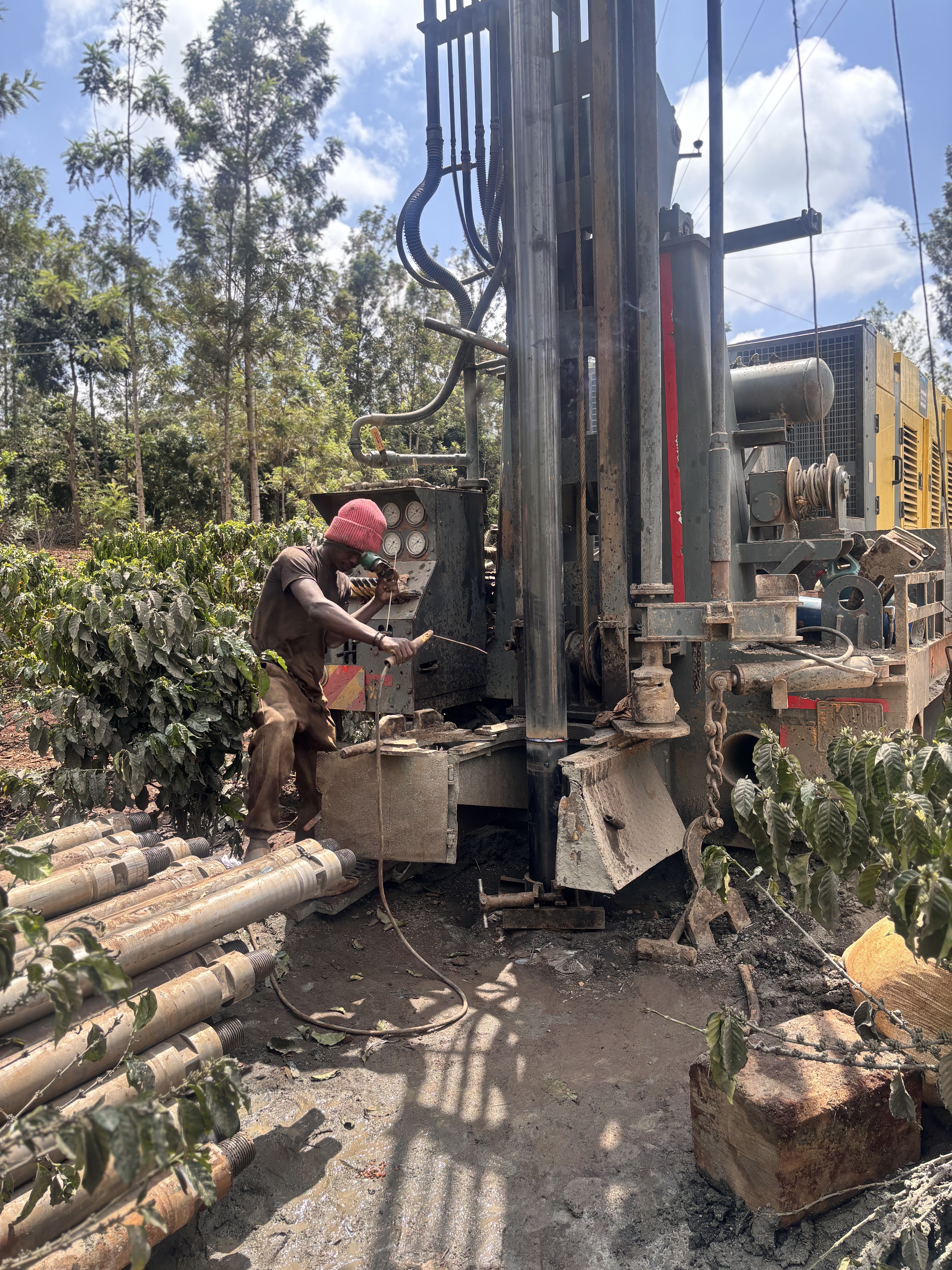 Drilling
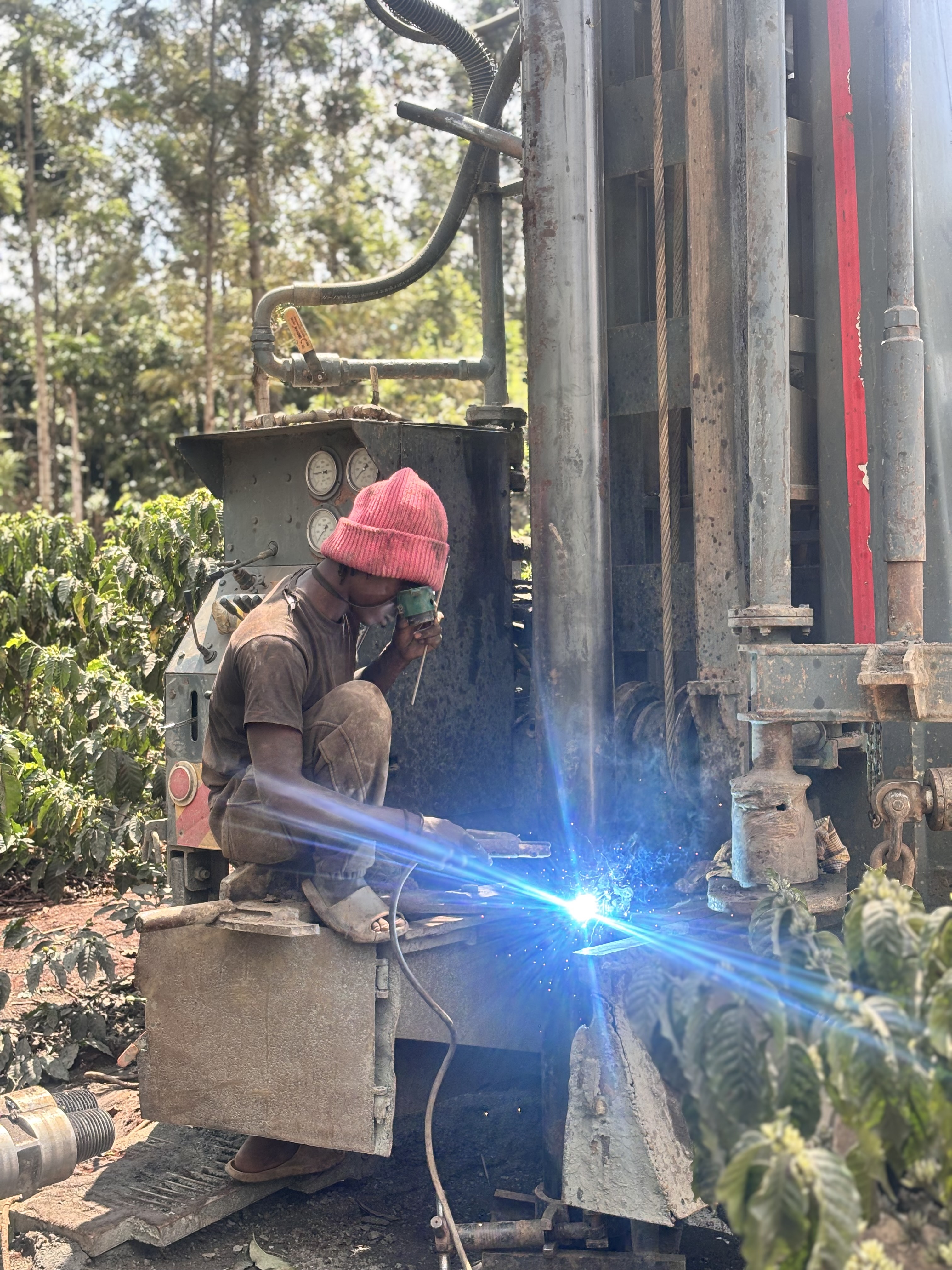 Progress
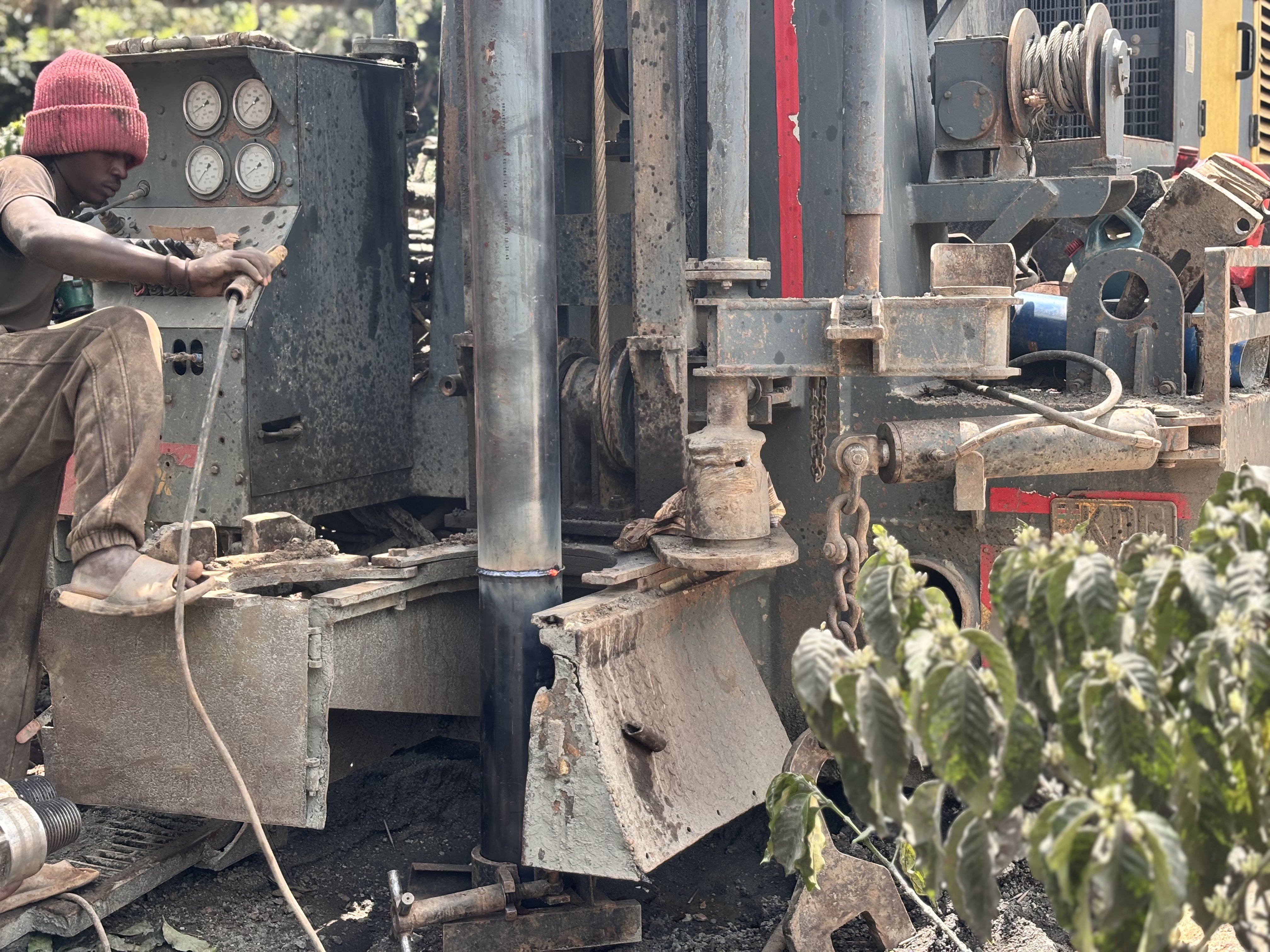 Completion
One season changed. Karurumo's coffee farm now plans around water it owns, not weather it cannot control.
We watched flowers fall every morning. Then Kisima brought a backhoe to cut the road, drove the rig to my farm, and drilled 270 metres until the water came. Eight cubic metres an hour. My coffee is no longer at the mercy of the rains.
When the rains miss and the crop is on the line, Kisima drills deep, builds access where there isn't any, and equips for real irrigation duty. Talk to us before the next flowering window.
Location