What are we actually doing on your land?
Under your feet, water does not sit in one big underground lake. It flows through cracks and layers of rock and soil called aquifers. A hydrogeological survey is a scientific study that answers four questions every borehole owner needs before drilling:
- Where on your plot should we drill? (GPS coordinates for the best spot)
- How deep must the borehole go to reach reliable water?
- How much water can you pump daily without the borehole running dry?
- Is the water safe for drinking, farming, or livestock — or does it need treatment?
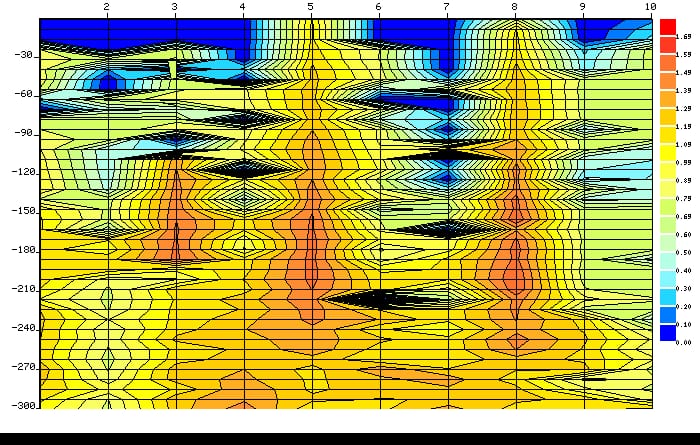
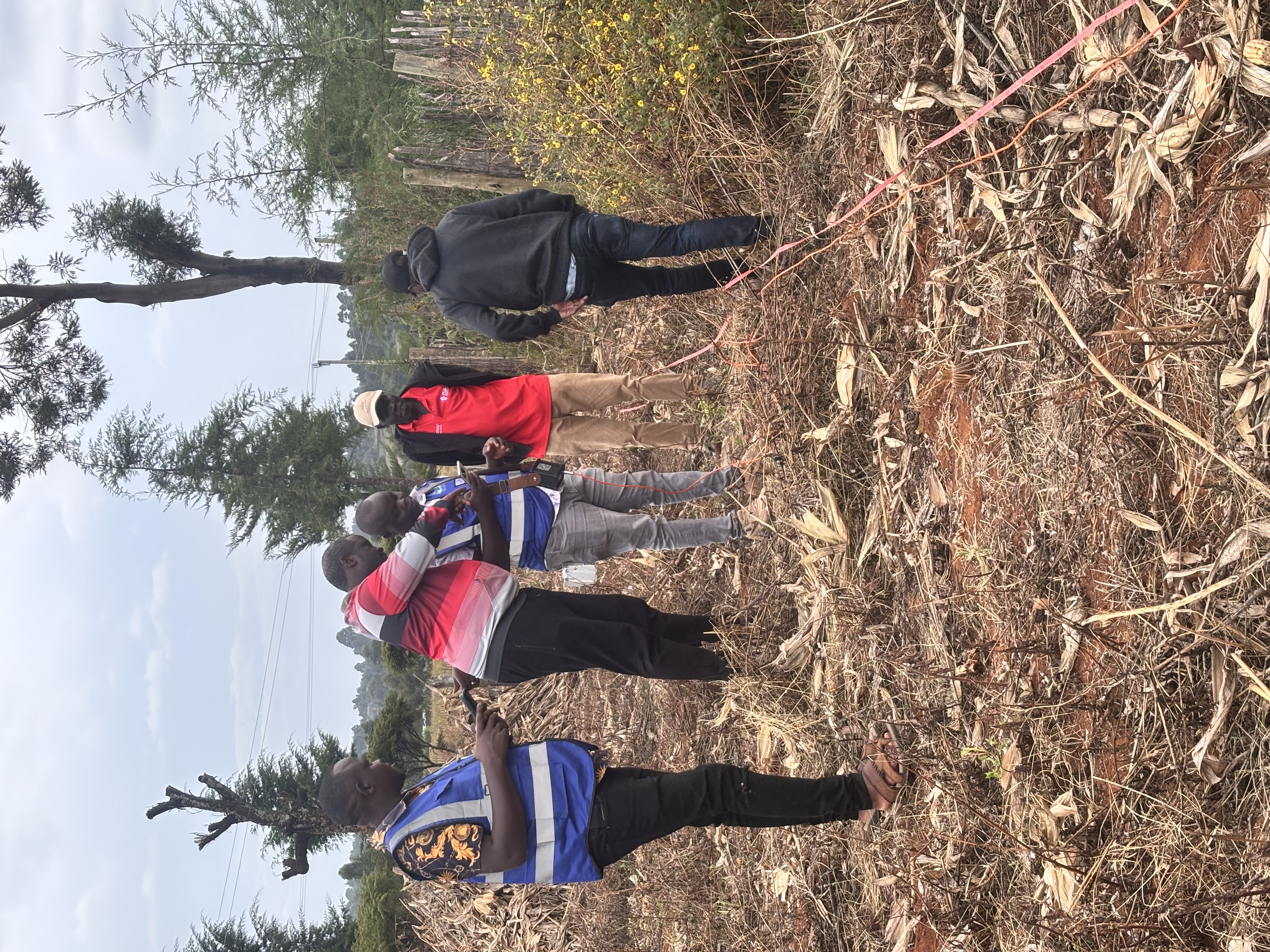
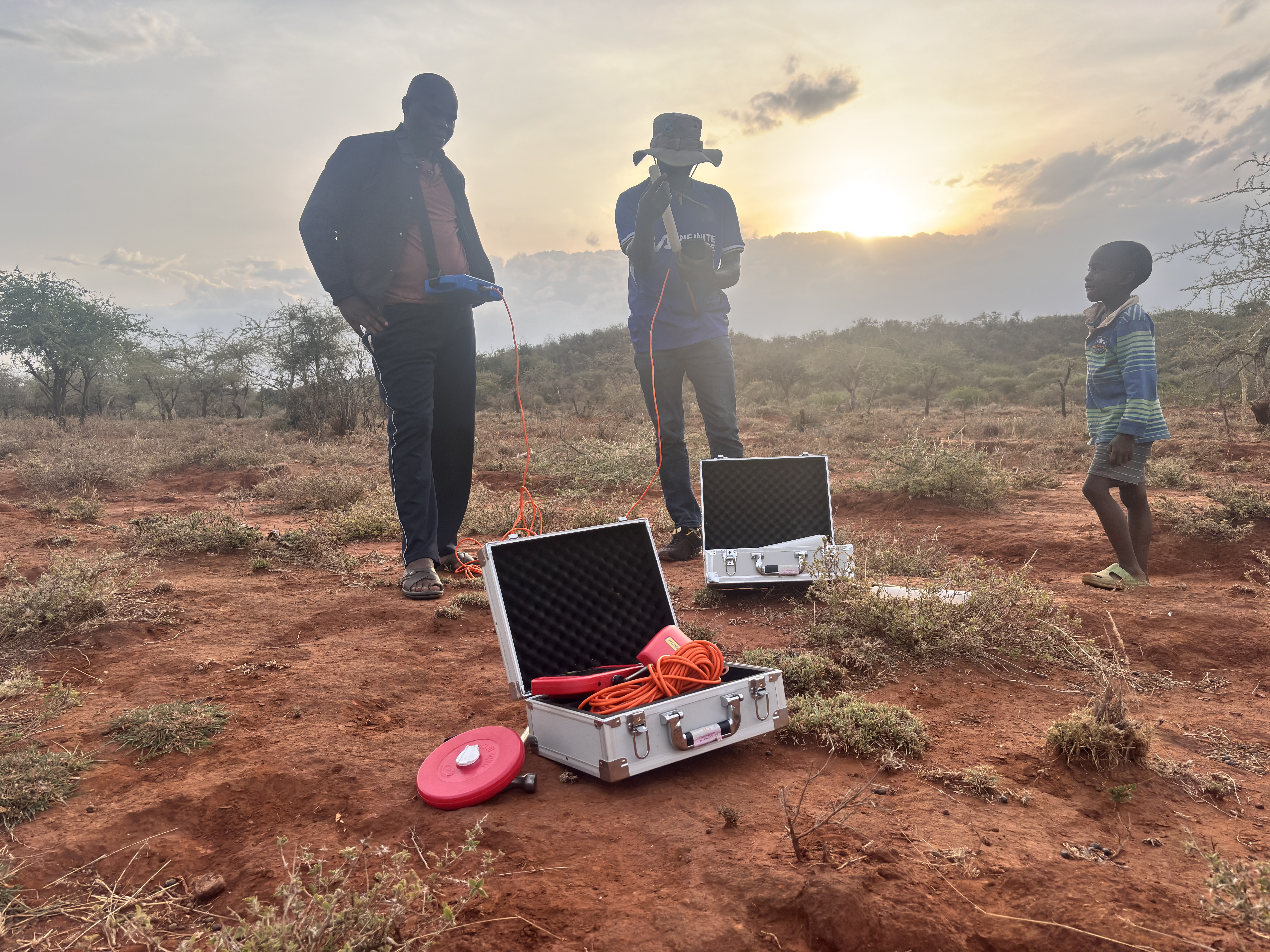
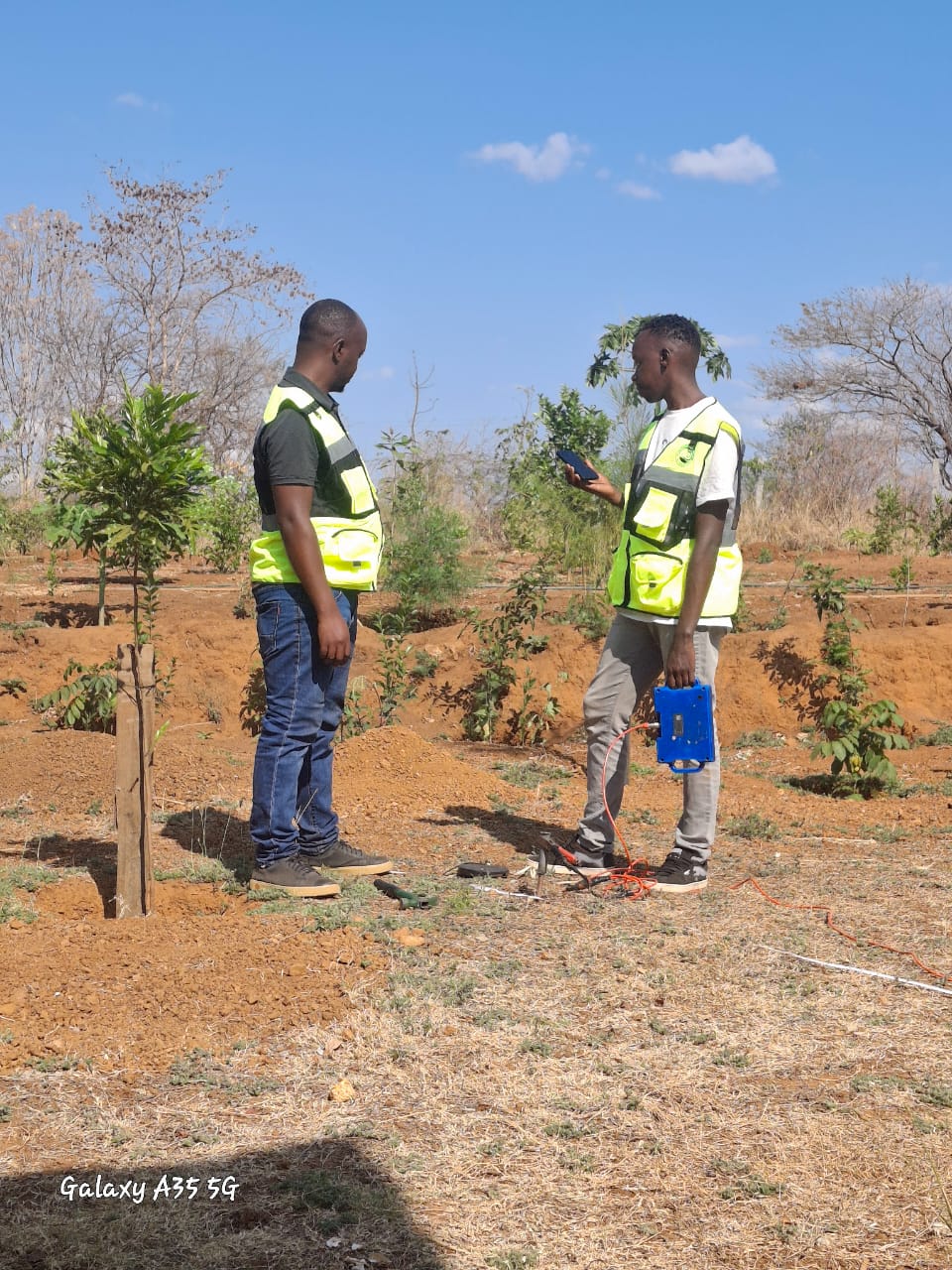
We answer these using field instruments (electrical resistivity, pool finder, GPS mapping), review of geology maps, and comparison with neighbouring boreholes — then deliver a written report you can use for quotes, loans, and permits.
Survey, drilling, test pumping & equipping — what happens when?
Many first-time clients confuse the survey with test pumping. They are different stages. Here is the full journey in order:
- 1 · Hydrogeological survey (this page)
- Before drilling. We find water on paper and in the ground — no permanent hole yet. You get a recommended drill point, depth, expected yield range, and quality notes.
- 2 · Borehole drilling
- After the survey. We drill the hole, install casing and screens, seal the top, and develop the borehole so water flows cleanly into the well.
- 3 · Test pumping
- After drilling, before buying a pump. We pump water out at measured rates for hours or days, watch how fast the water level drops and recovers, and calculate your real sustainable yield in litres per minute or m³ per day. This is not part of the survey — it requires a completed borehole.
- 4 · Equipping
- After test pumping. We size and install the submersible pump, pipes, electrical or solar system, and tanks — matched to the test-pump data so the pump is neither too weak nor overpowered.
Important: The survey gives an estimated yield so you can budget and choose a drill site. Test pumping gives the proven yield used to select your pump. Skipping the survey risks drilling in the wrong place; skipping test pumping risks buying the wrong pump.
Test pumping — what it is, in simple terms
Imagine your borehole is a glass of water with a straw. Test pumping is like drinking through the straw at a fixed speed while watching whether the water level in the glass drops too fast to recover.
On site, we lower a test pump, run it at set flow rates (e.g. 1, 2, and 3 m³/hour), and measure drawdown — how far the water level falls — and recovery — how long it takes to bounce back when we stop. From this we calculate:
- Sustainable yield — how much water you can use every day, year after year, without damaging the aquifer
- Static water level — how far below ground the water sits when you are not pumping
- Pump setting depth — how deep the production pump must hang
- Data for WRA reporting and for choosing pipe and pump sizes
Without test pumping, installers often guess pump size from neighbours or “rules of thumb” — a common reason pumps burn out in months or the borehole appears “dry” when it was simply over-pumped.
What you receive from Kisima after the survey
Your report is written for landowners, not only engineers. It typically includes:
- Recommended drill coordinates (you can mark the spot on your phone)
- Suggested total depth and which aquifer layer to target
- Estimated sustainable yield range (litres/min or m³/day)
- Water quality summary (TDS, pH, salinity or contamination flags where sampled)
- Indicative drilling and equipping cost range
- Notes on permits (WRA abstraction) and next steps
That package lets you compare drilling quotes fairly, plan tanks and pumps, and avoid paying for a hole in a dry or contaminated zone.
What goes wrong when people skip the survey
- Dry or weak boreholes — drilled where there is no usable aquifer (losses of KES 300,000–800,000+ are common)
- Too deep, too expensive — drilling past the best water layer because depth was guessed
- Saline or iron-rich water found only after installation — treatment costs not budgeted
- Wrong pump ordered early — because yield was assumed instead of surveyed, then test-pumped later