What is a borehole, in plain language?
A borehole is a narrow, deep shaft drilled from the surface down to an underground layer that holds water (an aquifer). It is not just a hole in the ground — it is a built structure: steel pipes (casing), filtered sections (screens), gravel around the screen, and cement seals that keep dirty surface water out and keep the hole from collapsing.
When drilling is done properly, you can lower a pump, draw water for years, and protect the aquifer. When it is done cheaply or in the wrong place, you risk dry holes, muddy water, collapsed walls, or pumps that fail within months.
The parts of your borehole — what each one does
- Drill hole (8″ typical)
- The main shaft from ground level to target depth. Size affects cost per metre and which pump fits later.
- Surface casing
- Thick steel pipe from the top down through soft soil — stops the top from caving in and blocks pit latrine or farm runoff from entering your water.
- Production casing & screen
- Pipes in the rock zone with slots (screens) where water enters. Blank pipe above the screen keeps weak layers out.
- Gravel pack
- Graded gravel placed around the screen — filters sand, stabilizes the hole, and improves how much water flows in.
- Grouting (cement seal)
- Cement pumped between the casing and the rock in the upper section — seals off shallow bad water from your main aquifer.
- Wellhead / sanitary seal
- The finished top of the borehole — capped, often in a concrete apron — so surface water cannot run down the outside of the casing.
Do I need a survey before drilling?
Yes — always. Drilling without a hydrogeological survey is like building a house without knowing where the foundation is. The survey tells us where on your land to drill and how deep to go. We mobilize the rig to those GPS coordinates — not to the most convenient corner of the plot.
If you already have a survey from another firm, we review it before quoting. If you do not have one, Kisima can carry out the survey first, then drill under one coordinated programme.
Typical depth in Kenya: Many productive boreholes fall between 80 m and 220 m, but depth depends entirely on your county and geology — never assume your neighbour’s depth applies to your land.
What happens on your land during drilling?
Most clients want to know about noise, time, and mess. Here is what to expect:
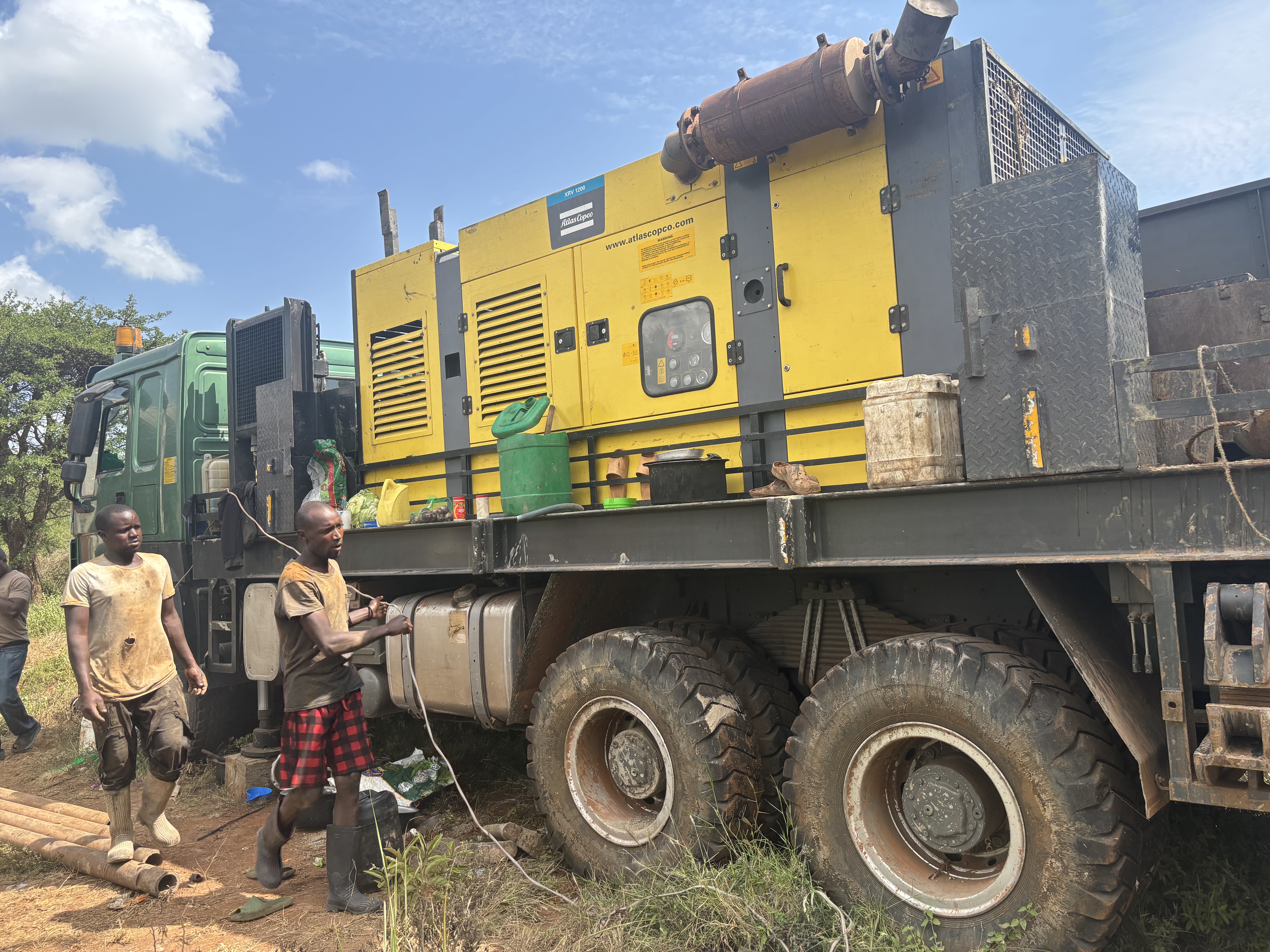
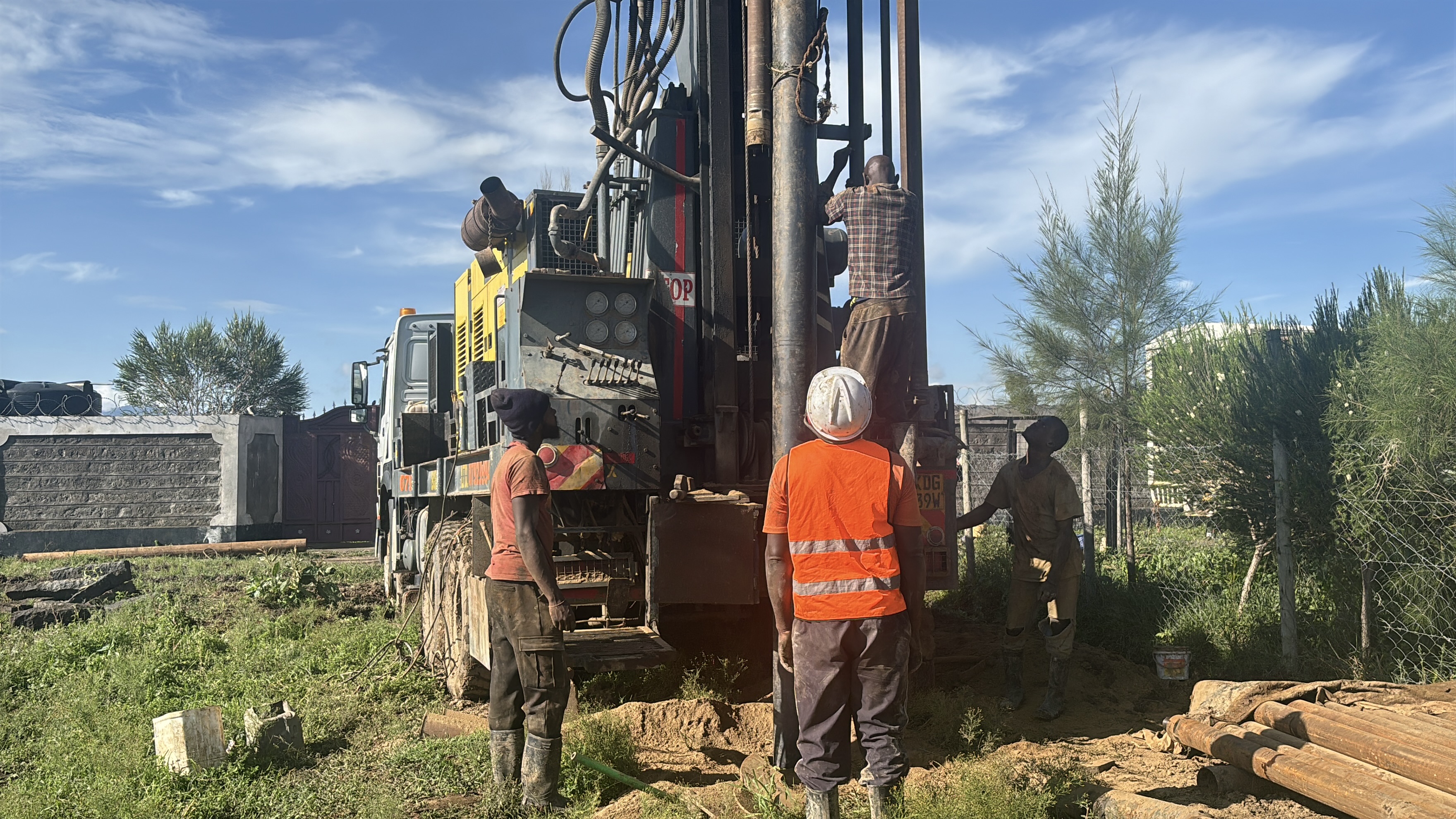
- Mobilization (Day 1) — Truck-mounted rig arrives; we mark the exact survey point, set safety zones, and stage casing, gravel, and cement.
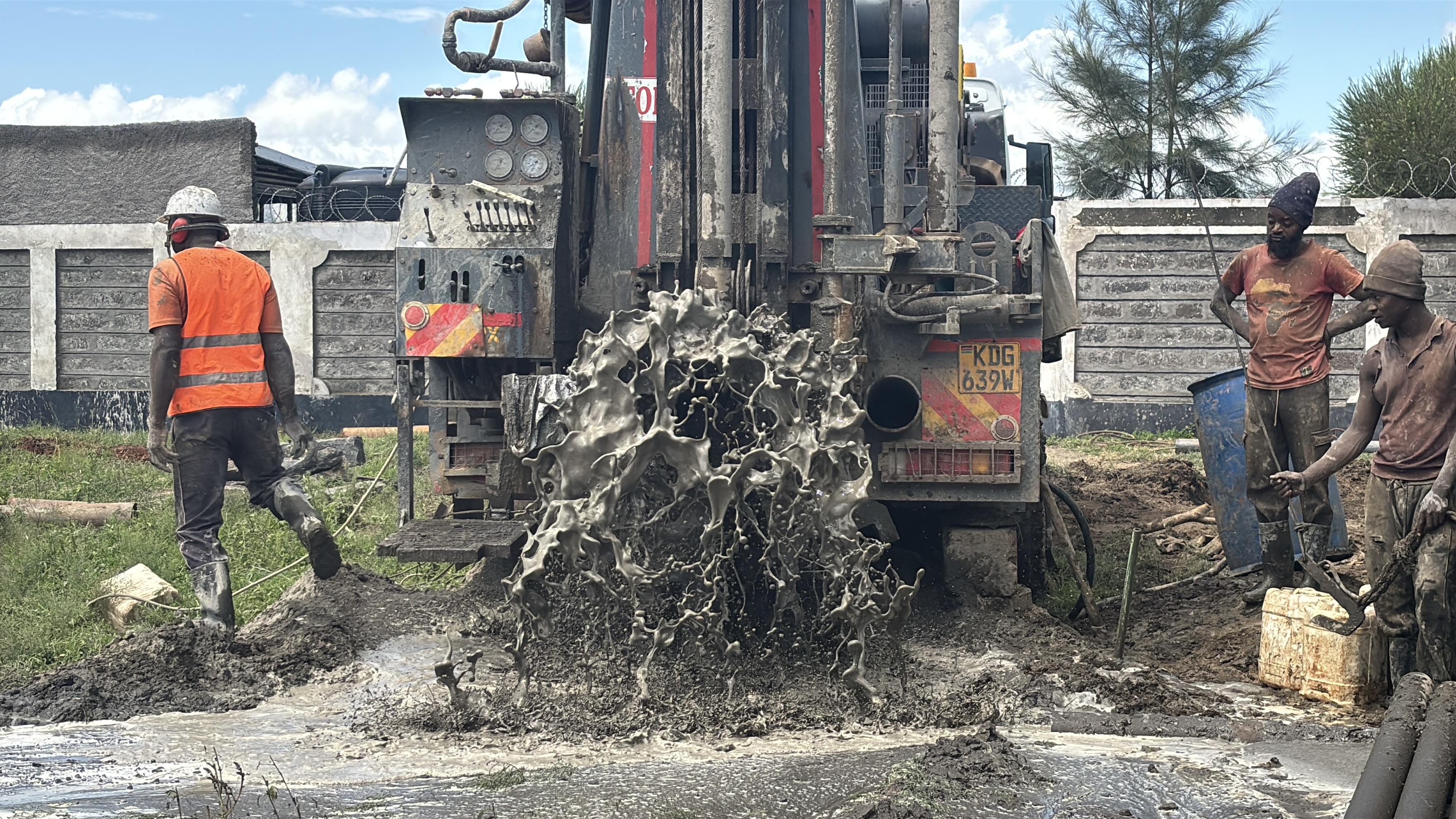
- Drilling (several days) — Rotary mud drilling advances the hole; steel casing is installed as we pass through unstable layers. You will hear engine noise during working hours; mud and cuttings are managed to avoid contaminating nearby wells.
- Completion — Screens and gravel pack go in, the hole is developed (flushed until water runs clear), upper sections are grouted, and the wellhead is built.
- Test pumping (critical final step) — See below — usually before we hand over for equipping.
Total time depends on depth and geology: a 120 m hole in favourable rock may take a few days; deep holes through clay or hard formations can take longer. We give you a programme with estimated days before work starts.
Test pumping — why it happens at the end of drilling
After the hole is built, water may sit at a certain level underground — but that does not tell us how much you can pump every day without damaging the borehole. Test pumping is a controlled exercise where we:
- Lower a temporary pump and run it at fixed flow rates (e.g. stepping up litres per minute over hours)
- Measure drawdown — how far the water level drops while pumping
- Measure recovery — how long the level takes to return when we stop
- Calculate your sustainable yield — the safe daily volume for long-term use
Think of it as a stress test for your new borehole. The results go into a report used to:
- Choose the correct production pump (not too small, not overpowered)
- Size column pipes and power (solar or electric)
- Support WRA abstraction permitting where required
- Prove yield to banks or project funders
Drilling gives you the structure; test pumping proves how much water it can deliver. Never buy a permanent pump based only on guesswork or a neighbour’s flow rate.
How drilling quotes work (so you can compare fairly)
Reputable drillers quote per metre drilled plus defined items: casing, screens, gravel, grouting, mobilization, and test pumping. Ask any contractor:
- Is depth based on a survey, or an estimate?
- What diameter hole and casing specification?
- Is test pumping included, or quoted separately?
- Who handles WRA/NEMA guidance and well completion records?
Kisima provides transparent scope — you know what each metre pays for before the rig starts. Use our cost calculator for an indicative range, then WhatsApp your survey for a firm programme.
What you receive when Kisima finishes drilling
- Completed borehole to survey depth (or agreed aquifer target)
- Installed casing, screen, gravel pack, and grout
- Developed borehole with clear water at the wellhead
- Test pumping report with yield, drawdown, and recovery data
- Recommendation for equipping (pump depth, flow, power option)
- Guidance on permits and next steps toward a working water system
Signs of poor drilling (what to avoid)
- No survey — rig placed where access is easy, not where water is proven
- Missing surface casing or grout — contamination and collapse risk
- No gravel pack or development — sandy, blocked, or low-yield wells
- Skipping test pumping — wrong pump ordered, borehole “fails” under load
- Vague per-metre quotes — extras appear mid-project with no written scope
Kisima standard — built for 100+ year design life
Correct diameter, quality steel casing, gravel pack, cement grouting, and professional development are not optional extras — they are how a borehole stays safe, productive, and protectable for generations.