What is “equipping”?
Equipping is everything installed inside and above your finished borehole so you can use the water: the submersible pump, pipes that lift water to the surface (column/rising main), electrical or solar power, control panel, protection devices, and often a tank or pipe network to your house, farm, or school.
Drilling creates the well. Test pumping (done at the end of drilling) measures how much water the well can deliver. Equipping uses those numbers to choose equipment that matches your borehole — and your daily usage — without burning out the pump or damaging the aquifer.
Simple rule: Never buy a pump from a shop catalog based on “horsepower” alone. The pump must match your borehole depth, water level, proven yield, and how many litres you need per day.
What you need before equipping can start
- Completed borehole — drilled, cased, developed, and sealed (drilling service →)
- Test pumping report — showing sustainable yield, static water level, and drawdown at different flow rates
- Your water demand — households connected, livestock, irrigation area, or commercial use (peak and average daily litres)
- Power situation — grid available, fully off-grid, or hybrid (solar + backup)
If Kisima drilled your borehole, we already have the test data. If another company drilled, send us the report on WhatsApp — we review it before quoting equipping.
Parts of an equipping system — what each does
- Submersible pump & motor
- Sits underwater, pushes water up the borehole. Sized for depth + flow + pressure. Wrong size = burnout or weak supply.
- Column pipes (rising main)
- Pipes from pump to surface. PVC for many domestic wells; steel for very deep or high-pressure systems. Must handle pump pressure at depth.
- Power supply
- Mains electricity, solar array + controller, diesel genset, or hybrid. Must match pump kilowatts and hours of run per day.
- Control panel & protection
- Starts/stops the pump safely — overload, dry-run, low voltage, and timer options. Prevents damage when water level drops too far.
- Storage tank
- Stores water so the pump does not run 24/7. Sized for peak morning/evening use and irrigation blocks. Often on a tower for pressure.
- Distribution
- Pipes to buildings, troughs, or irrigation. Pressure and pipe diameter depend on tank height and distance.
How we use your test pumping report
The test report tells us facts about your borehole — not your neighbour’s. Key numbers we use:
- Static water level — how far below ground the water sits when you are not pumping (affects pump “head”)
- Sustainable yield — safe litres per minute or m³ per day you can take long-term
- Drawdown — how far the level drops while pumping at set rates
- Recovery time — how fast the level returns after pumping stops
We combine these with your daily demand to calculate total dynamic head (TDH) — the total “push” the pump needs (lift height + pipe friction + any tank pressure). That is how we select pump model, pipe size, and power — not guesswork.
Example: If test pumping shows 40 L/min sustainable yield but your farm needs 80 L/min at peak, we design storage (tank + timed pumping) or discuss realistic usage — not a pump that will kill the borehole.
Solar, grid, diesel, or hybrid — which is right?
- Grid (KPLC) — lower equipment cost if reliable power exists; best with timer + tank to pump in off-peak hours.
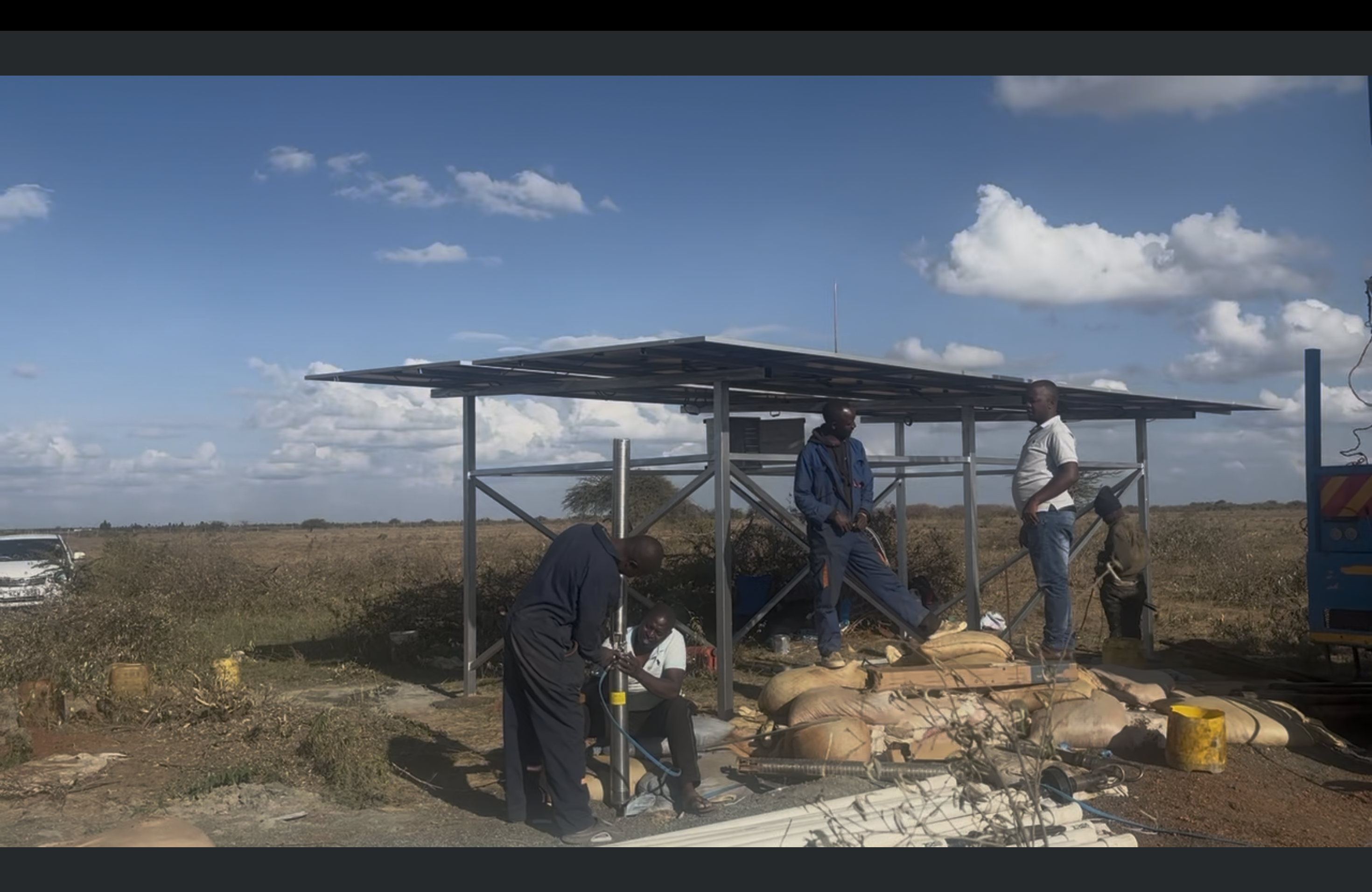
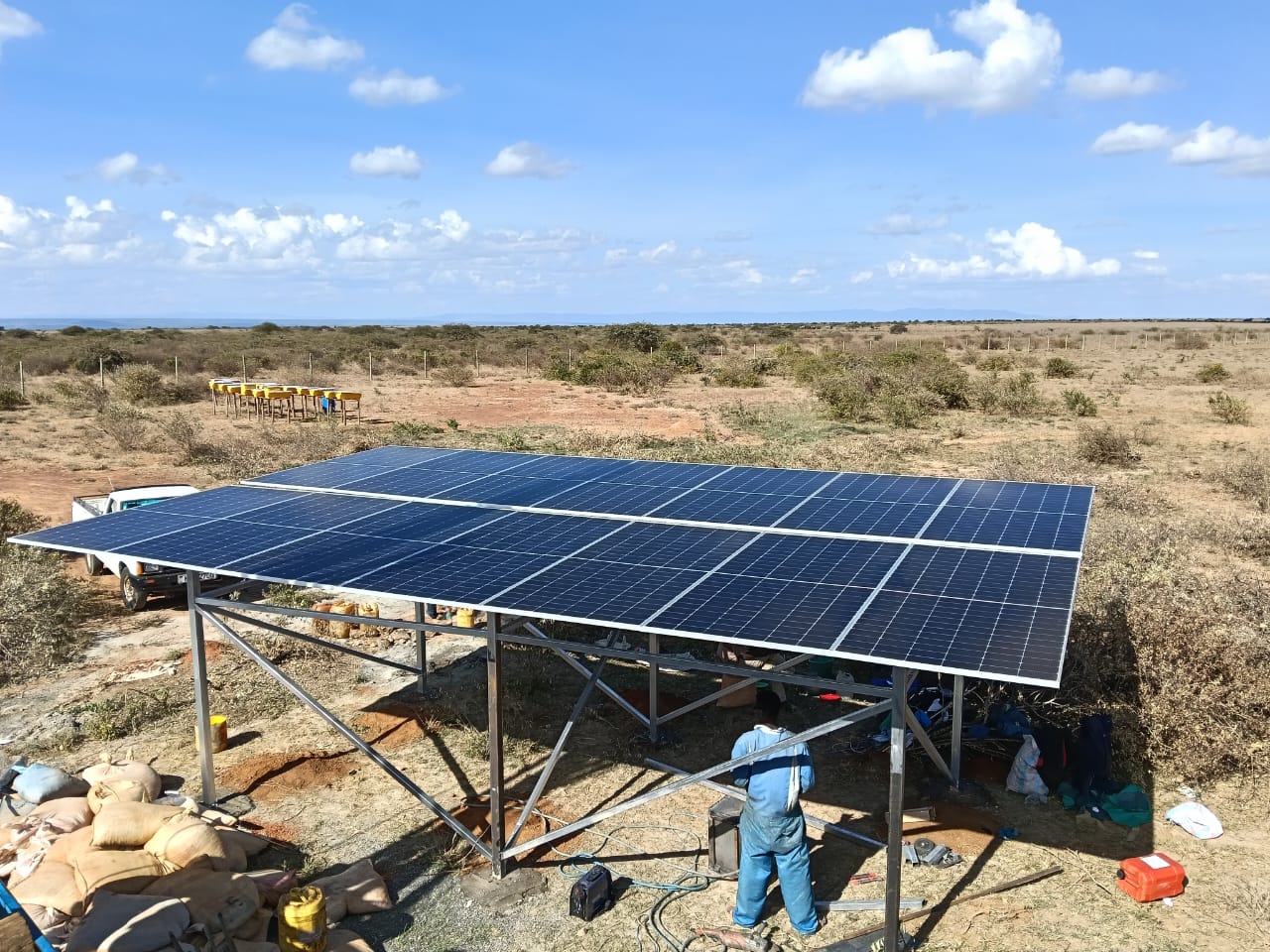
- Solar — ideal off-grid; panels sized to pump kW, sun hours, and daily volume. Often 70–80% running cost savings vs. diesel or generator-only sites.
- Hybrid — solar primary with grid or genset backup for cloudy weeks or peak irrigation.
- Diesel generator — sometimes used temporarily; we usually recommend moving to solar + tank for long-term cost.
We explain daily running hours, expected water per day, and what happens in January clouds vs. June sun — so you approve the design before installation.
What happens on installation day?
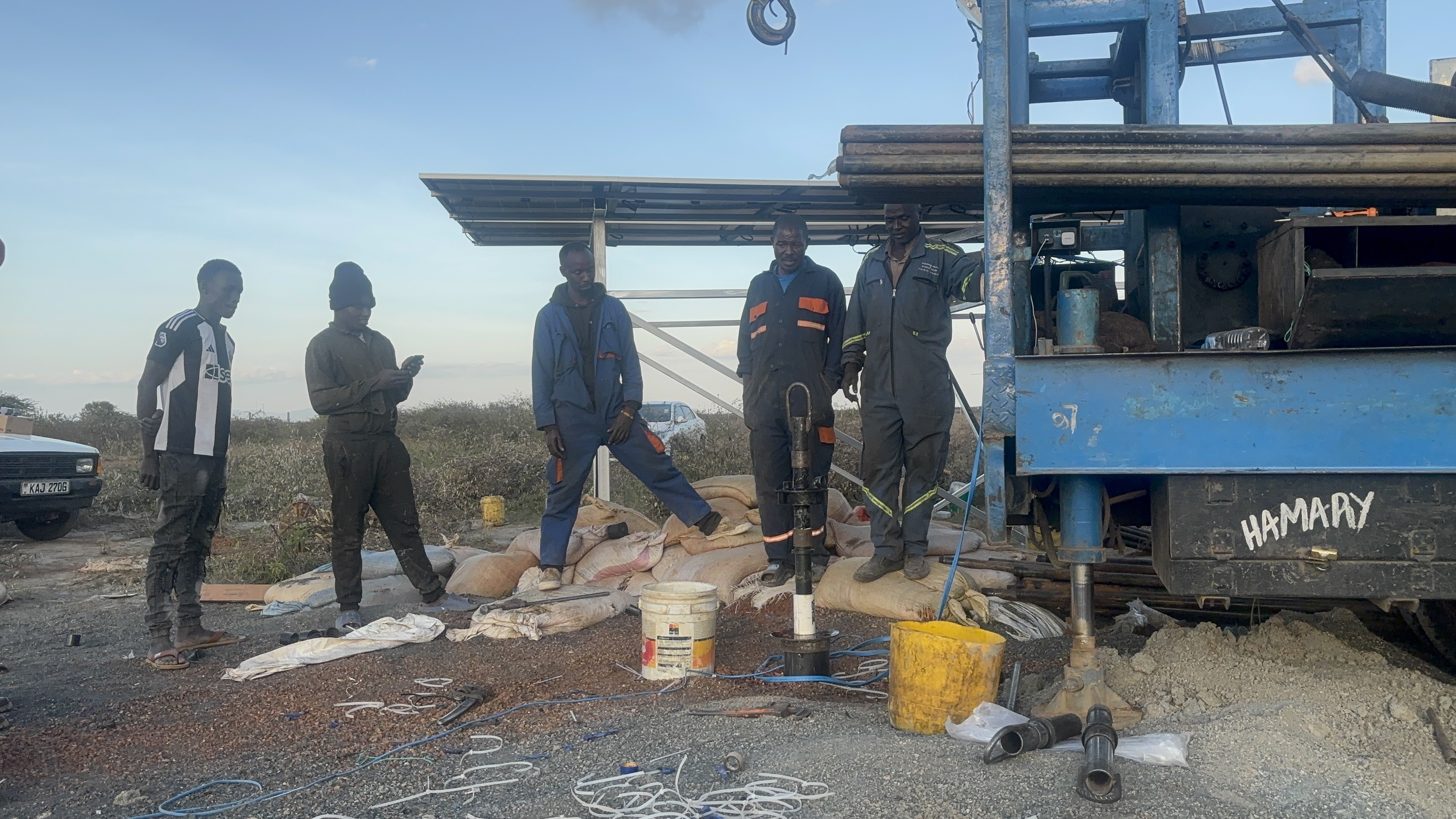
- Pump and column pipes are lowered on stainless cable/rope — aligned so nothing rubs the casing wall
- Electrical or solar cabling, earthing, and control panel mounted in a weather-safe position
- Dry-run and level sensors set to stop the pump if water drops too low
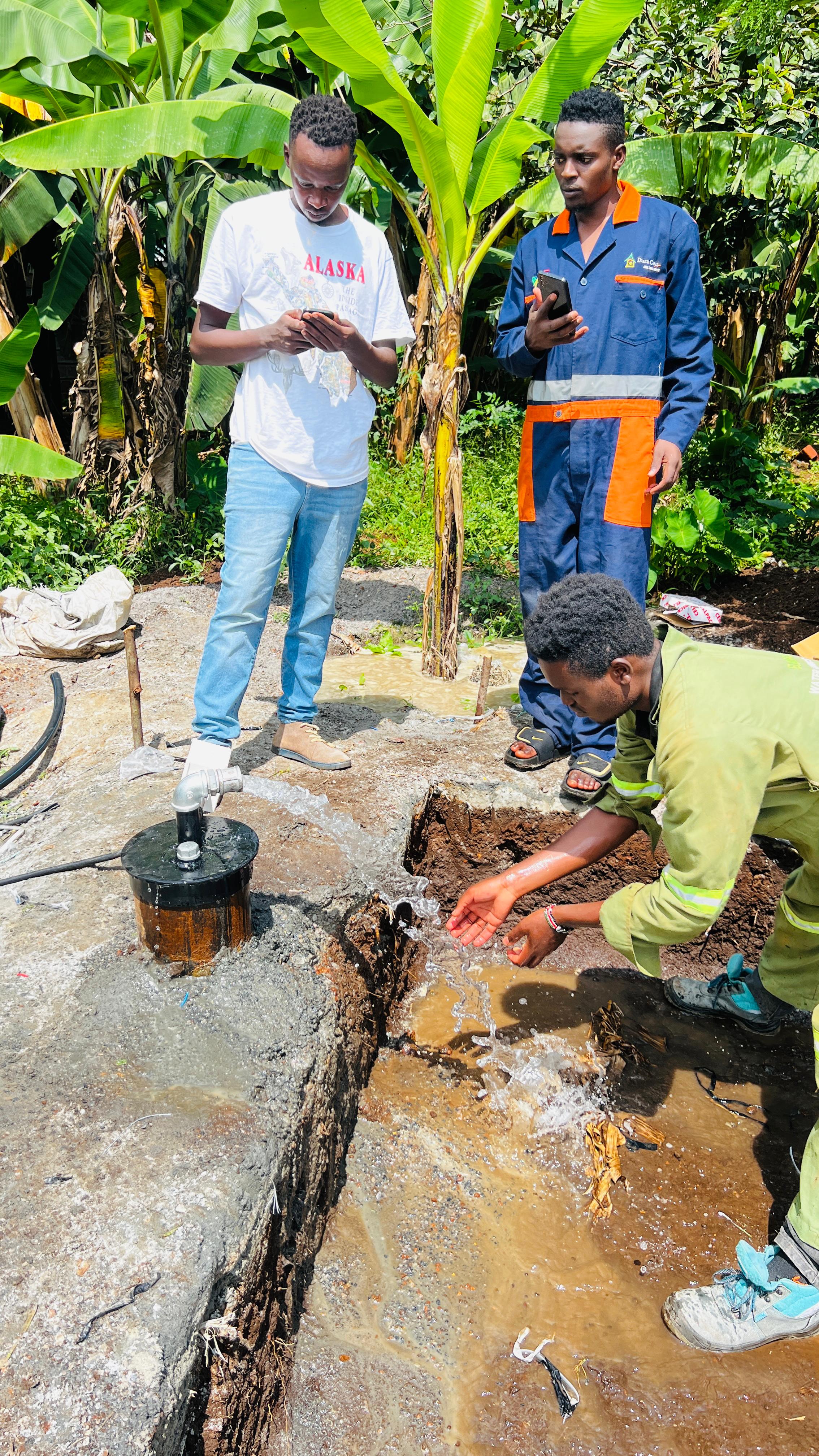
- Flow test at the surface — you see actual litres per minute at the outlet
- Chlorination or flushing if required; basic operation training for your caretaker
Typical domestic equipping takes 1–3 days on site after materials are on location; larger solar farms or schools may take longer.
What you receive when Kisima equips your borehole
- Pump and motor matched to test report and demand (quality brands, 24-month pump warranty)
- Correct column pipes, fittings, and wellhead connections
- Power system installed — solar and/or grid with protection
- Commissioning flow test and written handover notes
- Guidance on running hours, tank levels, and basic maintenance
- Optional integration with storage towers and distribution lines
Common equipping mistakes (avoid these)
- Pump bought without test data — too powerful and the borehole sands up or water level crashes
- Undersized pump — runs constantly, overheats, fails in weeks
- Cheap column pipe — bursts under pressure at depth; retrieval is expensive
- Solar too small — pump stalls midday; panels must match pump duty, not “look big”
- No dry-run protection — pump runs dry after seasonal level drop and burns out
- No tank — pump runs all day for intermittent use; high power bills and short pump life
Why professional equipping pays off
Correct sizing means lower electricity or diesel cost, fewer breakdowns, and a borehole that still performs 10–15+ years later. The equipping quote is a fraction of drilling cost — but it determines whether you actually enjoy the water you paid to reach.