130 m
Total drilled depth
In Hamisi, Vihiga County, the earth runs rich red for the first sixty metres — beautiful for tea and maize, ruinous for a borehole that has to deliver clear domestic water. Kisima sealed the entire red-soil column with sixty metres of hard PVC surface casing and drilled on to 130 metres — finishing with 3 cubic metres per hour of water that actually looks like water.
Hamisi sits in the green, hilly heart of Vihiga County — fertile, wet, and underlain by deep tropical red soils. The brief was simple: clean water from the first pour, sized for a household. The honest answer was a longer surface casing than most boreholes need.
Most boreholes need maybe ten or twenty metres of surface casing — just enough to anchor the well and seal out the loose topsoil. Hamisi is different. The red ferrallitic soil here extends right down to 60 metres before competent rock takes over. Drill straight through it and your water comes up red, every day, forever.
A borehole's surface casing is its sanitary skin — it physically separates the well from the formation around it. Anywhere the casing is missing, the formation can leak into your water: shallow contamination, fines, and in Hamisi's case, iron-rich red clay.
The right casing length is whatever it takes to seal off every metre of unstable or contaminating formation. At Hamisi, that number is sixty metres on the nose — short enough to fit the budget, long enough that no red soil ever touches the inside of the well.
Red, cloudy water that stains laundry, blocks filters, and never quite tastes right. The borehole becomes a daily disappointment.
Clear, clean water the family is happy to drink, cook with, and serve to guests. The borehole becomes a daily upgrade to life.
Three things had to be right for Hamisi to deliver clean water from day one. Get any one of them wrong and the family gets red water, no matter how deep you drill.
Sixty metres of red soil means sixty metres of casing. Anything less leaves an open path for the formation to bleed into your water.
Heavy-duty class PVC casing — engineered to handle soil pressure, ground movement, and the long, quiet life of a domestic borehole.
After casing, the borehole is flushed and test-pumped until the water runs clear. We only hand over a borehole when the water passes the eye test.
Pumped sensibly into storage, 3 m³/hr covers a whole household and then some. Here is what that flow actually buys.
A typical household uses 1,000–2,000 litres a day for drinking, cooking, washing, and hygiene. 3 m³/hr fills that in well under an hour. The pump rests, the borehole rests, and the family always has water.
Walk-over with the family. Confirm the red-soil depth and the right casing strategy.
Push through the full 60 m of red ferrallitic soil with controlled flushing.
Drop and seat the hard PVC surface casing — the full red-soil column sealed shut.
Drill on in competent rock until production-quality water indicators appear.
Flush and test-pump until the water runs clear. Confirmed yield: 3 m³/hr.
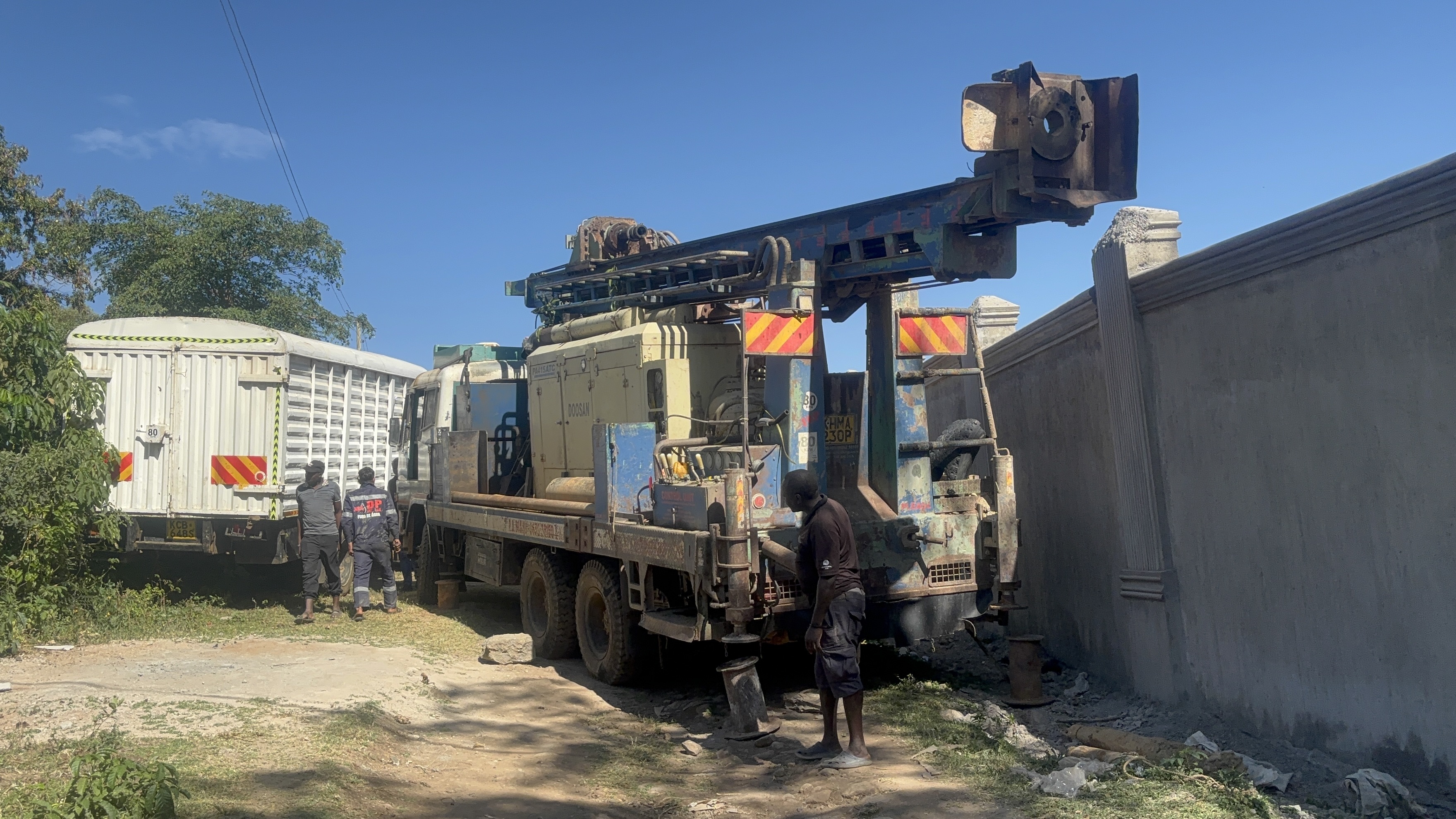
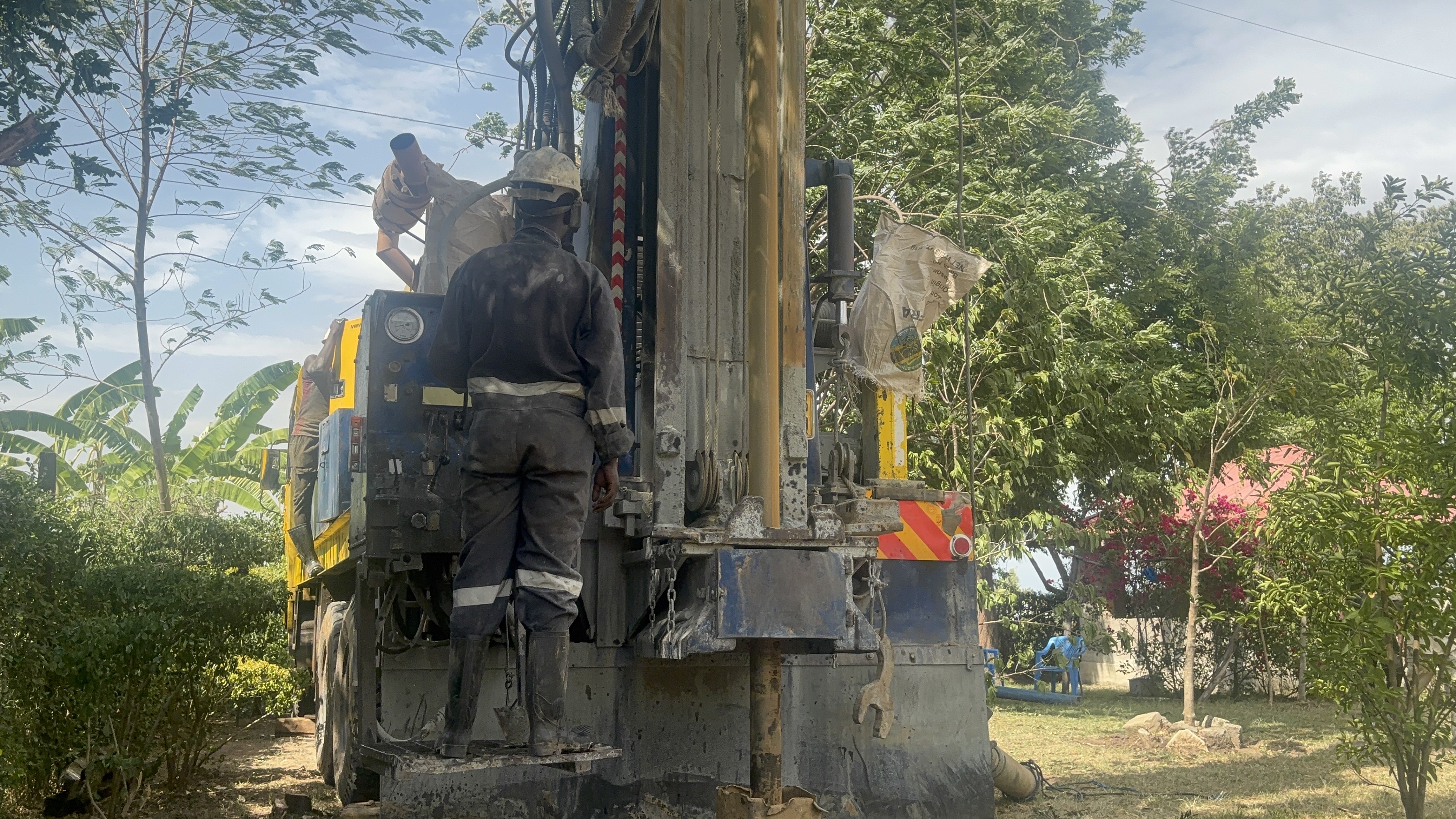
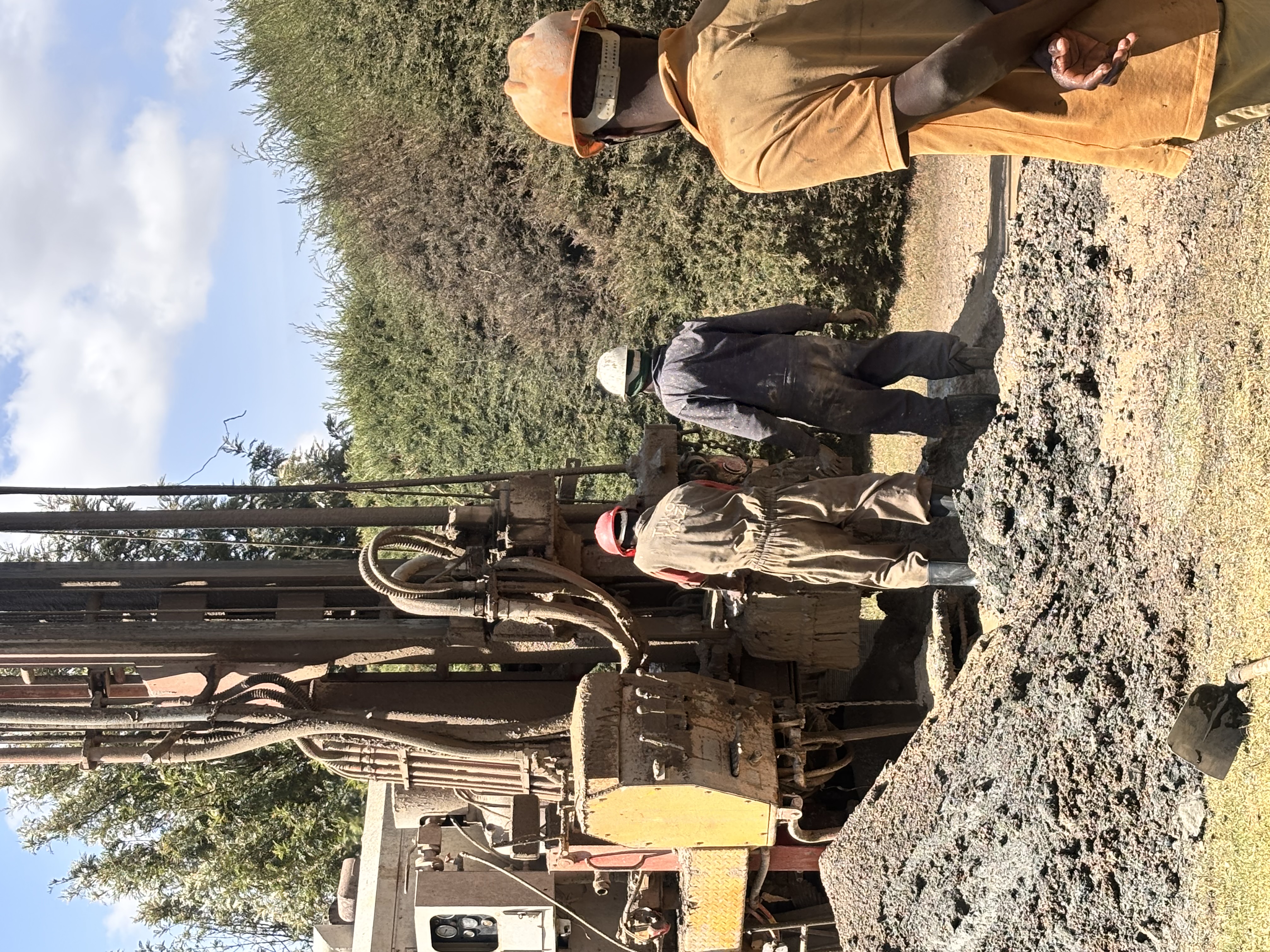
Real images from the Hamisi site — rig setup, the casing being lowered, and the green Vihiga setting that defines the project.
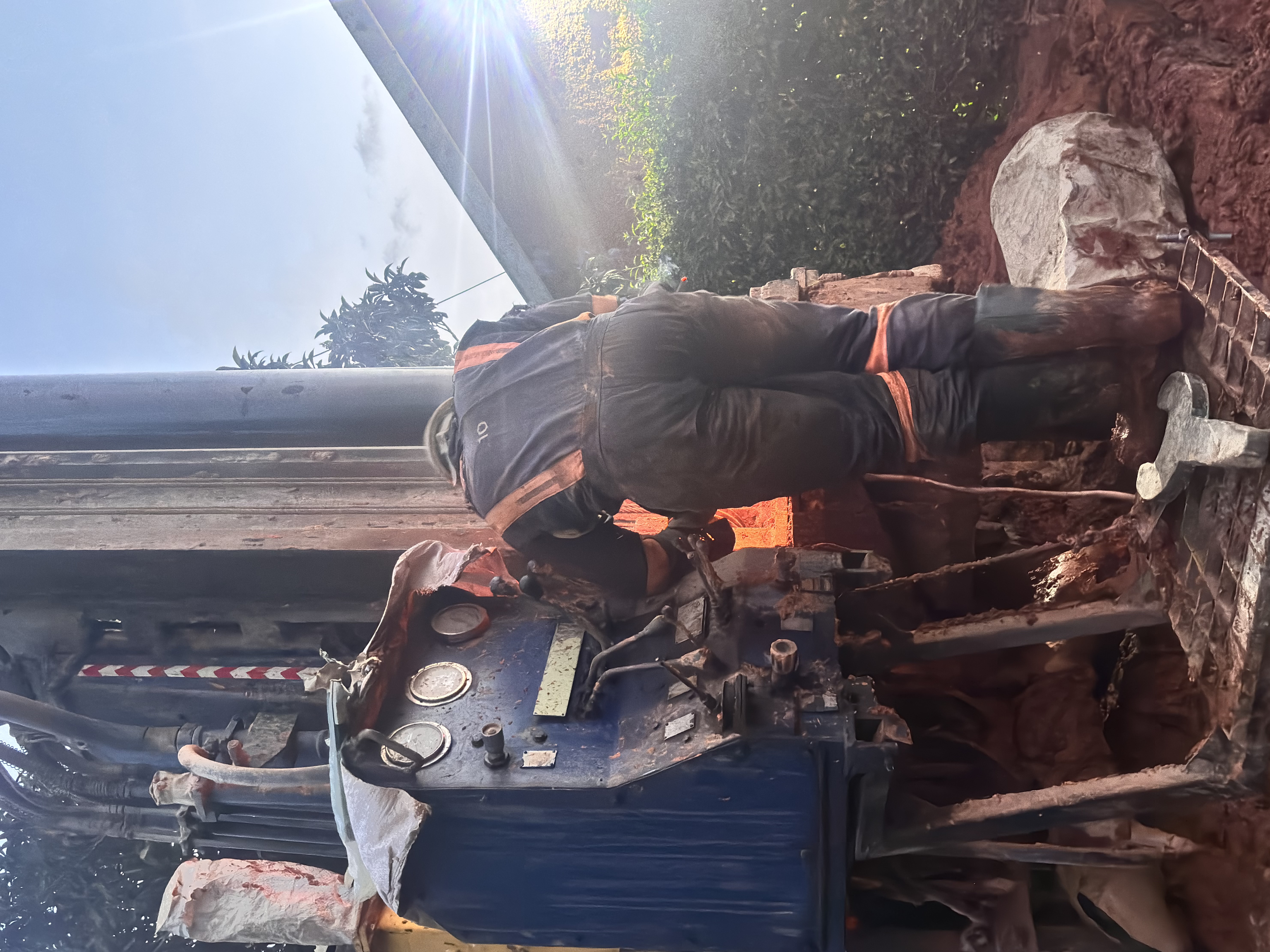 Rig
Rig
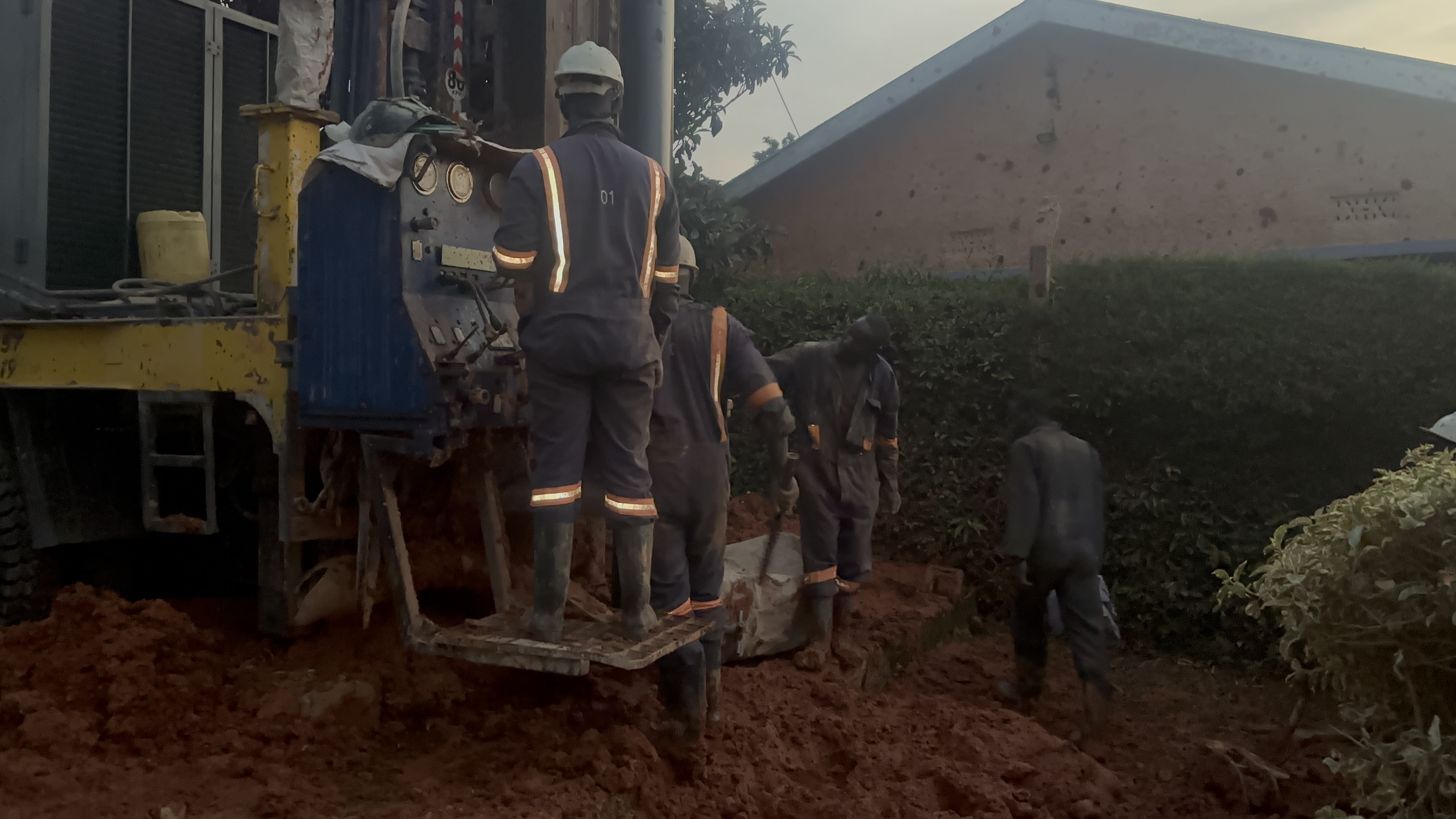 Red soil
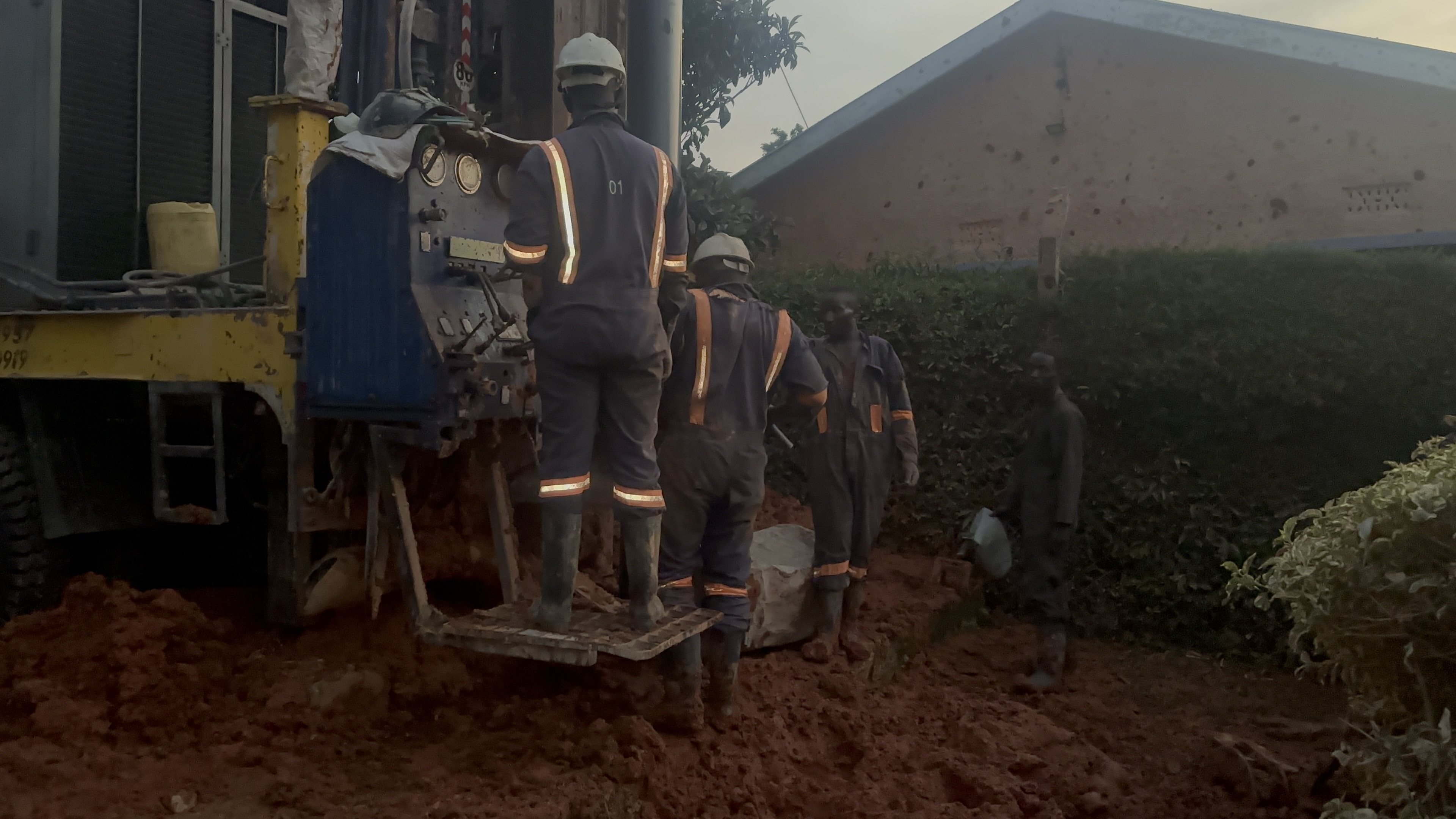 Site
Site
 Action
 Casing
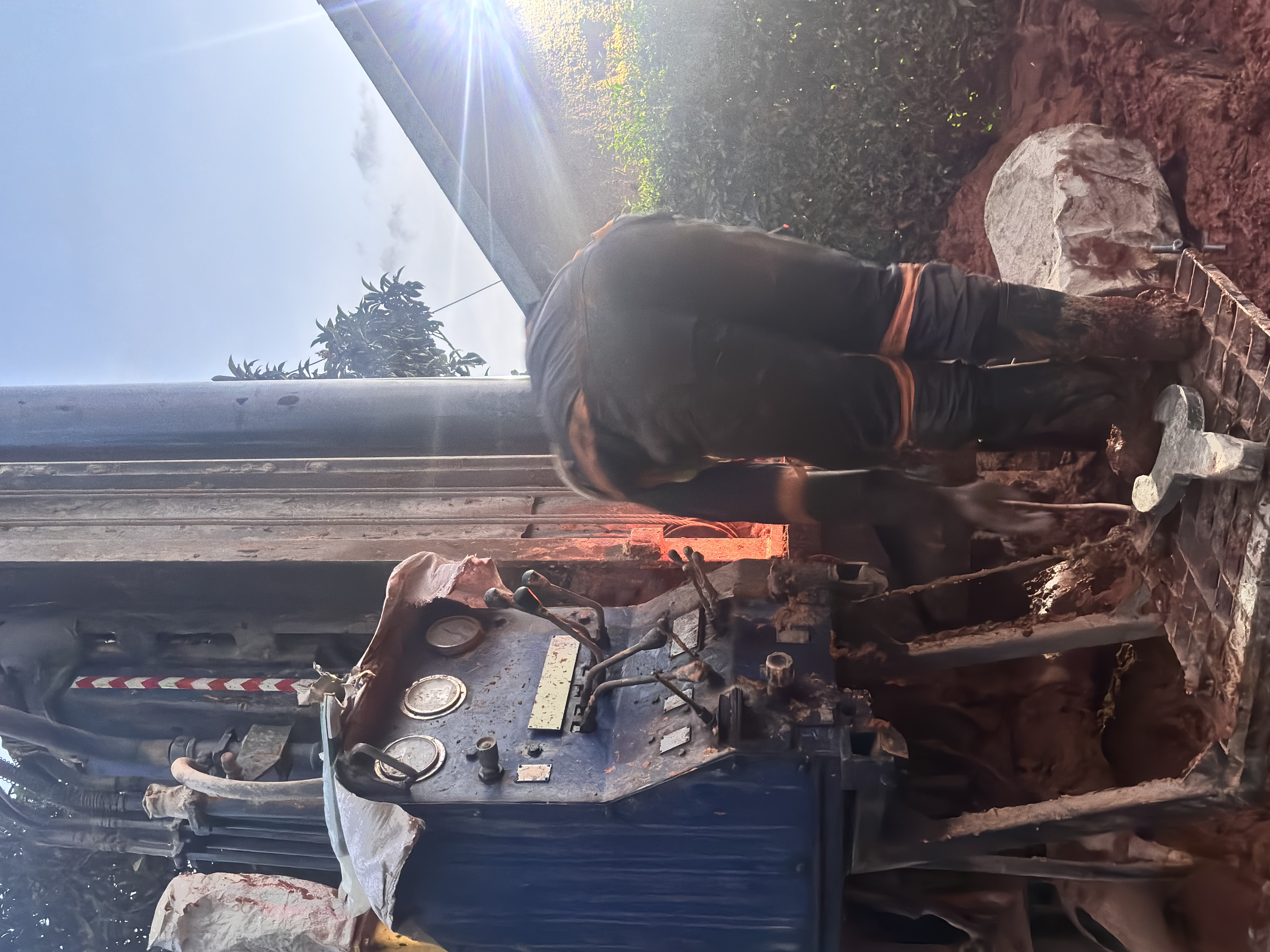 Crew
Crew
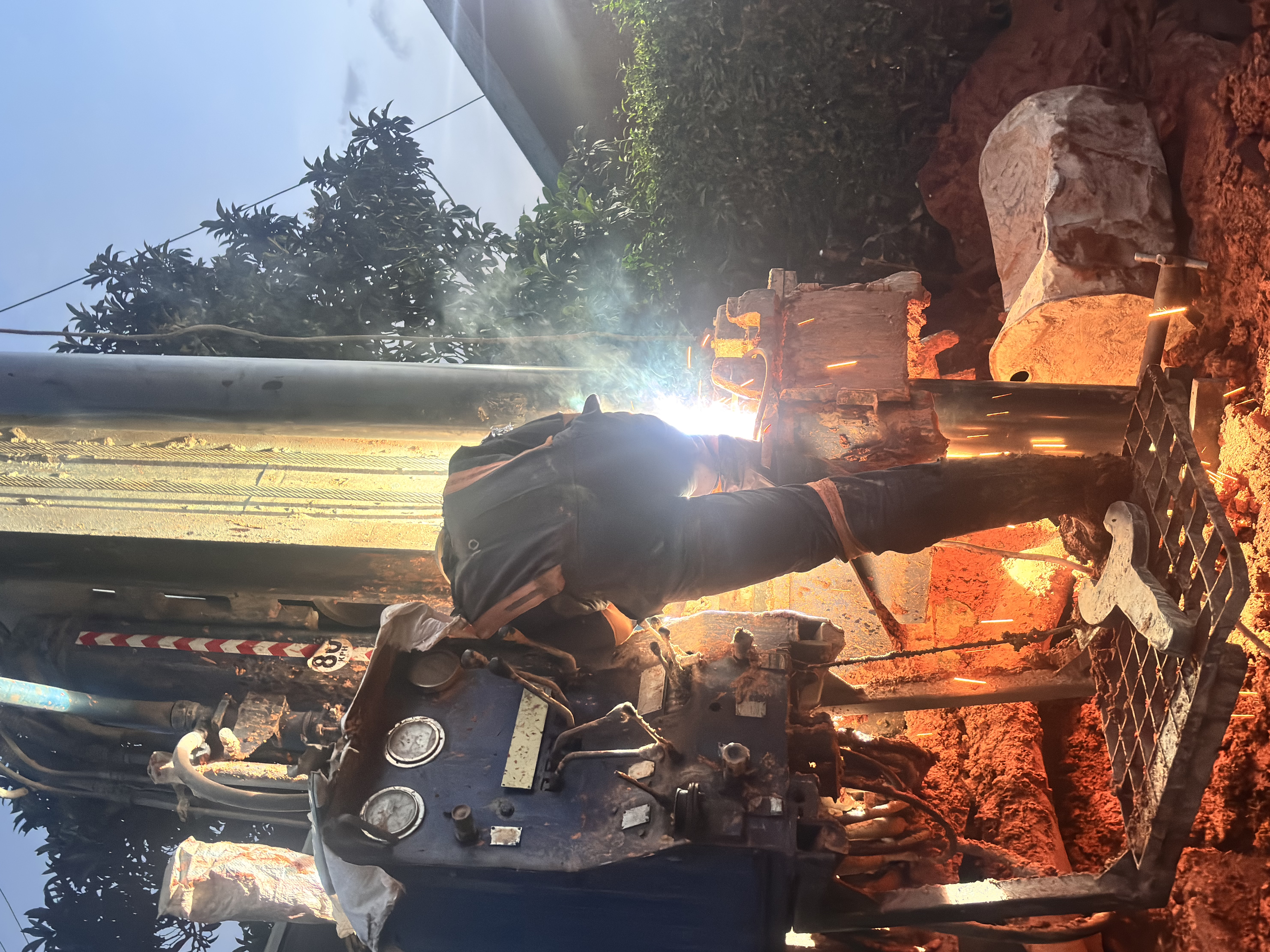 Progress
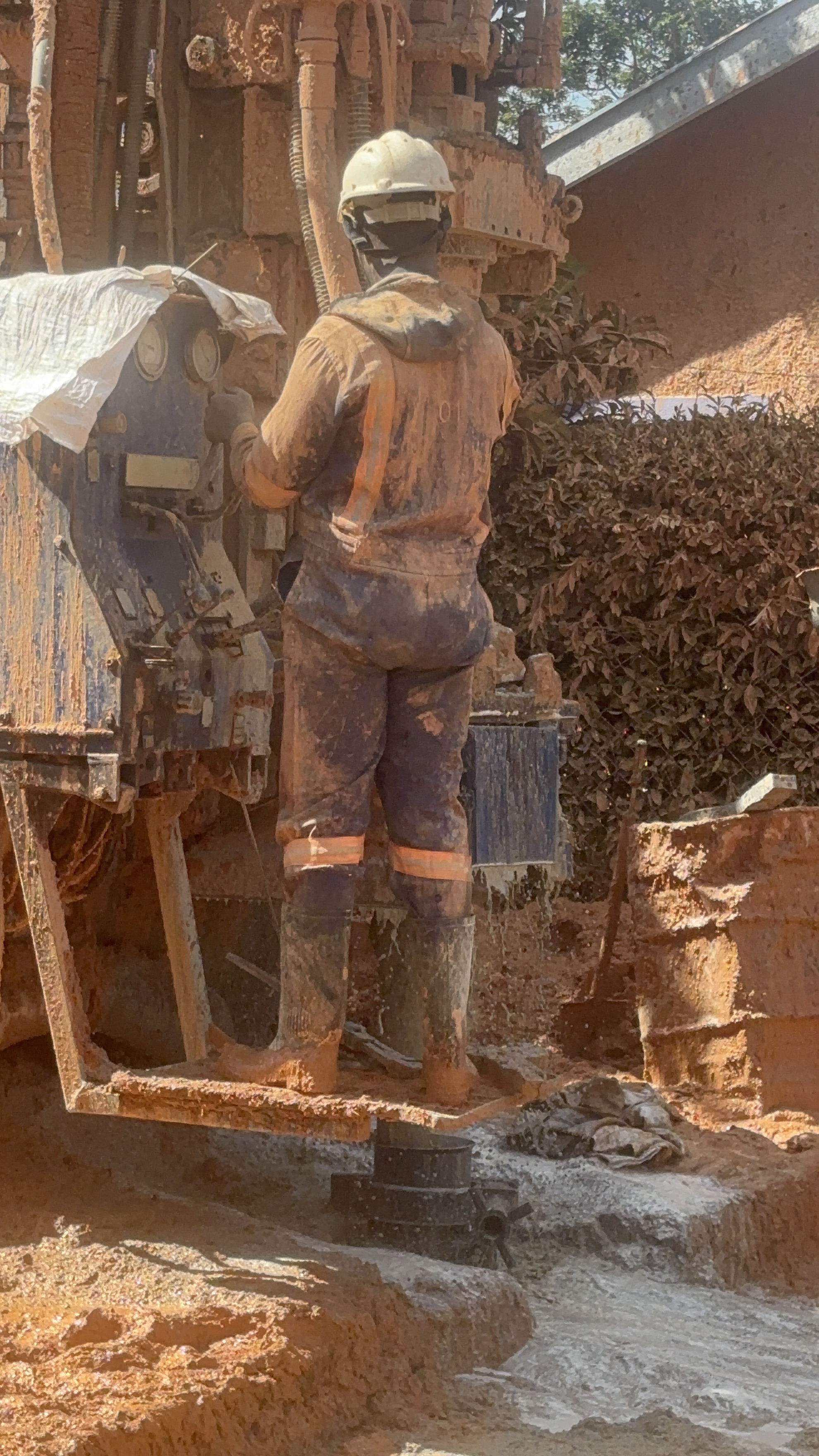 Complete
Every other borehole in our area gives red water. Ours is clean from the very first pour — Kisima knew the red soil here went deep and put in proper casing all the way. We finally have water we can drink straight from the tap.
If you're in Vihiga, Kakamega, Bungoma, Siaya, Kisii or anywhere on red tropical soils, the right casing length is the difference between a borehole you love and one you regret. Talk to Kisima before you commit to drilling.