6 m³/hr
Confirmed yield
At Pap Onditi, Kisumu County, the ground refused to commit. Every two or three rods, the formation switched between sticky clay and tough murram — forcing the rig to pull the entire string, swap the bit, and run back in, again and again. Kisima danced through the formation with constant hammer ↔ drag-bit alternation and delivered a strong 6 cubic metres per hour for a domestic client whose neighbours' shallow wells had all gone dry.
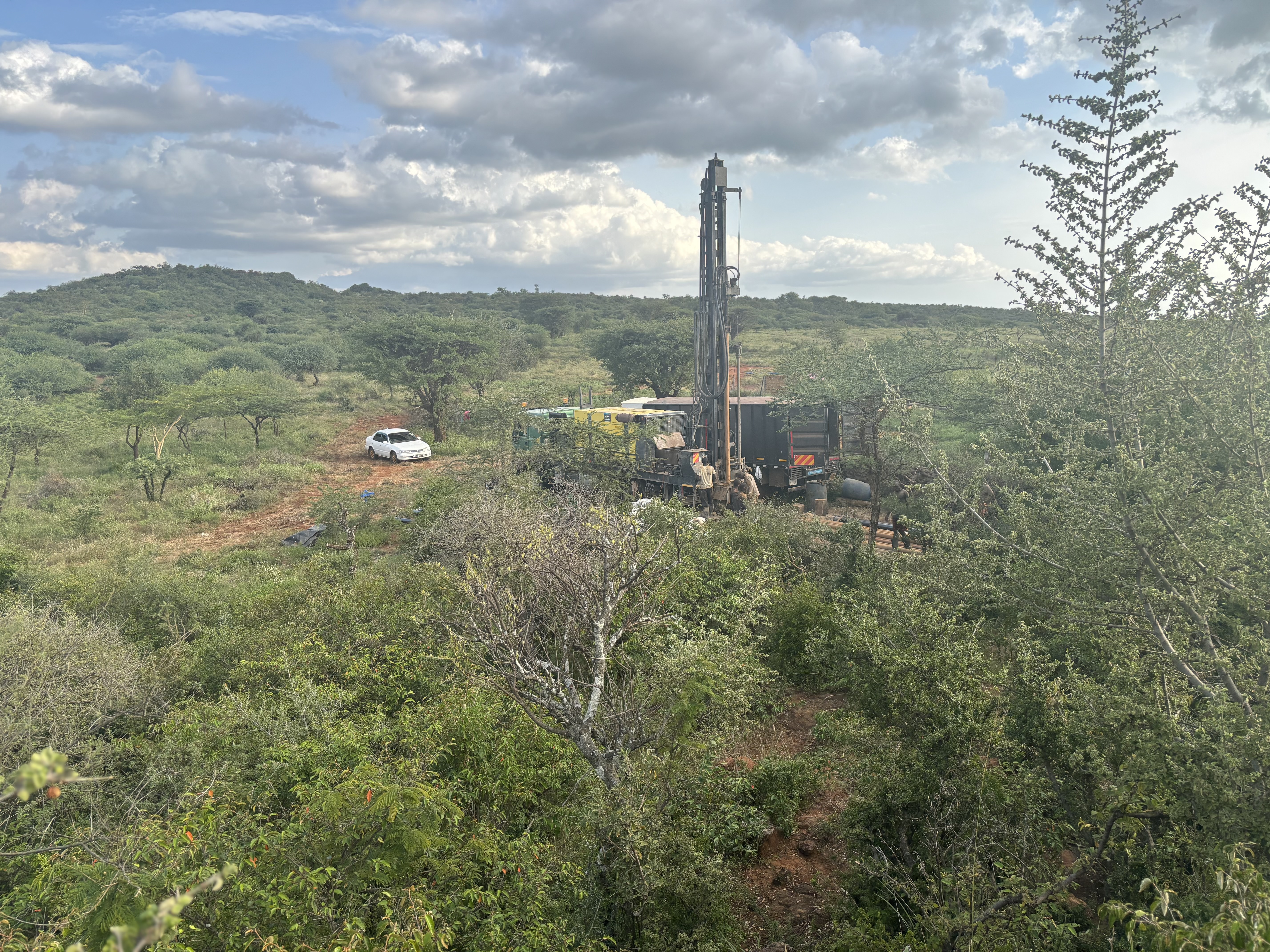
Pap Onditi sits in the lake-side Nyando hinterland — beautiful country, but the shallow hand-dug and machine wells in the area have a habit of going dry or silting up. The brief was for a proper, deep, sustainable domestic borehole. The formation had other ideas.
Pap Onditi's subsurface is a layered cake — soft sticky clay sandwiched with bands of hard murram, repeating all the way down. No single drilling tool handles both well. Clay wants a drag bit that cuts and clears it. Murram wants a DTH hammer that pounds and breaks it. Switch the formation, you must switch the tool — or you waste hours grinding the wrong cutter against the wrong rock.
This is the kind of formation that breaks inexperienced crews. The temptation is to force one tool through the whole column to save time — drag bit grinding uselessly against murram, hammer chattering and slipping in soft clay. The borehole goes nowhere, the rig burns fuel, and the client gets a quote for "extra days" with no extra metres to show for it.
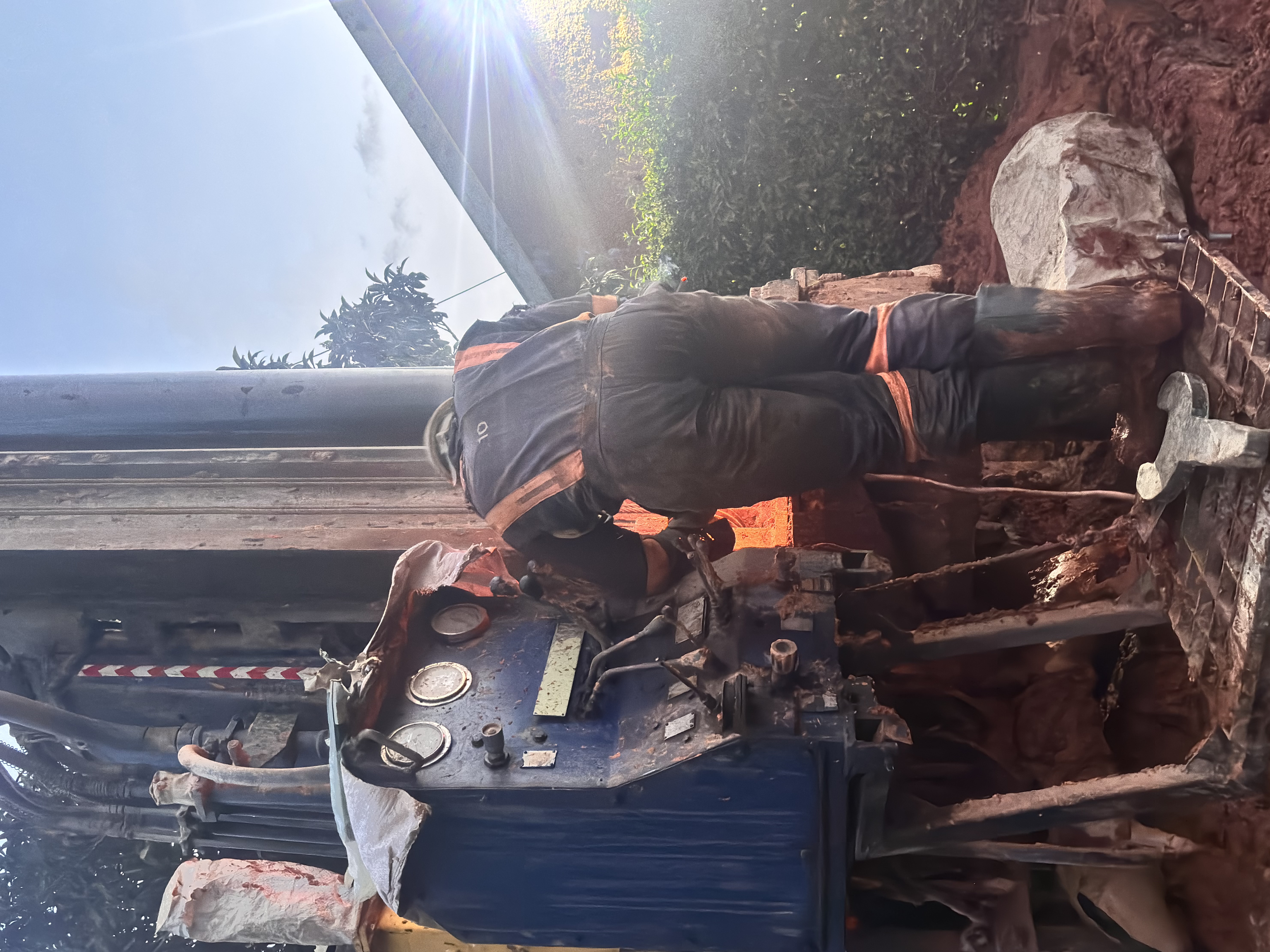
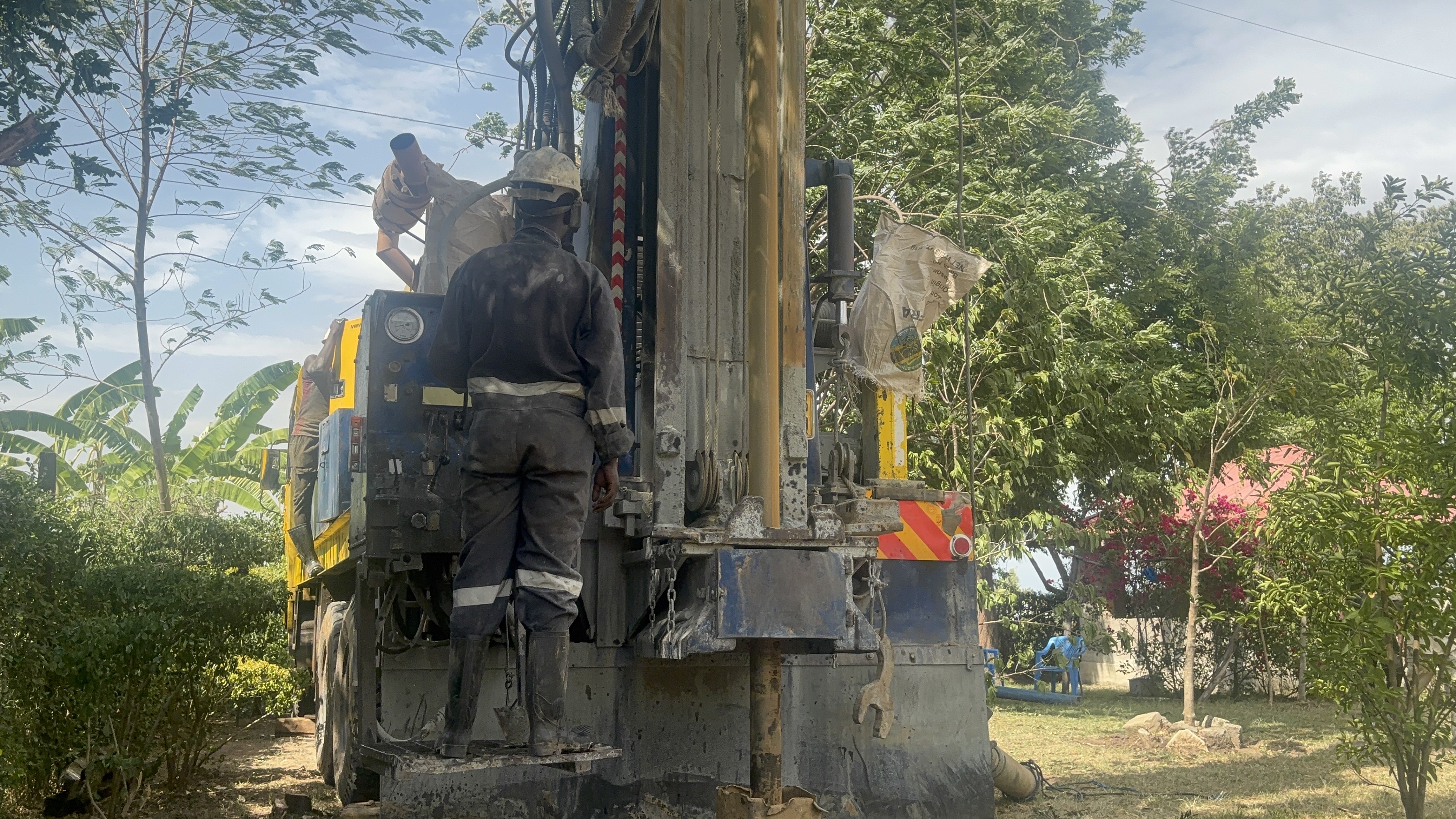
Kisima played it straight. Every time the cuttings changed character, we pulled the entire string, swapped the bit, and ran back in. Slower in the moment. Far faster overall — and the only honest way to drill Pap Onditi to a sustainable depth.
A tool swap is not trivial. It's three steps, every time. Multiply by six swaps and you have a full day of what looks like "no progress" — but it's actually the only progress that counts.
Trip the whole drill string back to surface, one rod at a time. The deeper you are, the more rods, the more time.
Break the bit at the bottom of the string, change to the tool the next formation actually needs, and re-thread the assembly.
Trip every rod back into the hole, re-establish circulation, find the bottom — and drill on, now with the right tool for the rock.
Pap Onditi is dotted with shallow hand-dug and machine wells that flatter the client for one season and then disappoint. A proper drilled borehole, through every clay and murram band the formation throws up, is the only way to land in an aquifer that actually keeps producing.
Shallow wells in Pap Onditi tap perched, weather-dependent water. Two good rainy seasons and you believe in it; one dry spell and the well silts, drops, or runs dry. The family is back to fetching.
Drilled past the shallow perched water, through clay and murram alike, into a deeper aquifer that carries volume across the dry months. The pump runs the same way in February as it does in April.
With proper storage, this kind of yield covers a household, a compound, a kitchen garden, and still has headroom for the unexpected. The pump runs short and rests long — exactly how a domestic borehole should live.
The rest of the time the pump is off, the borehole is recovering, and the storage tank is full. That is what "sustainable" actually looks like in a domestic setup.
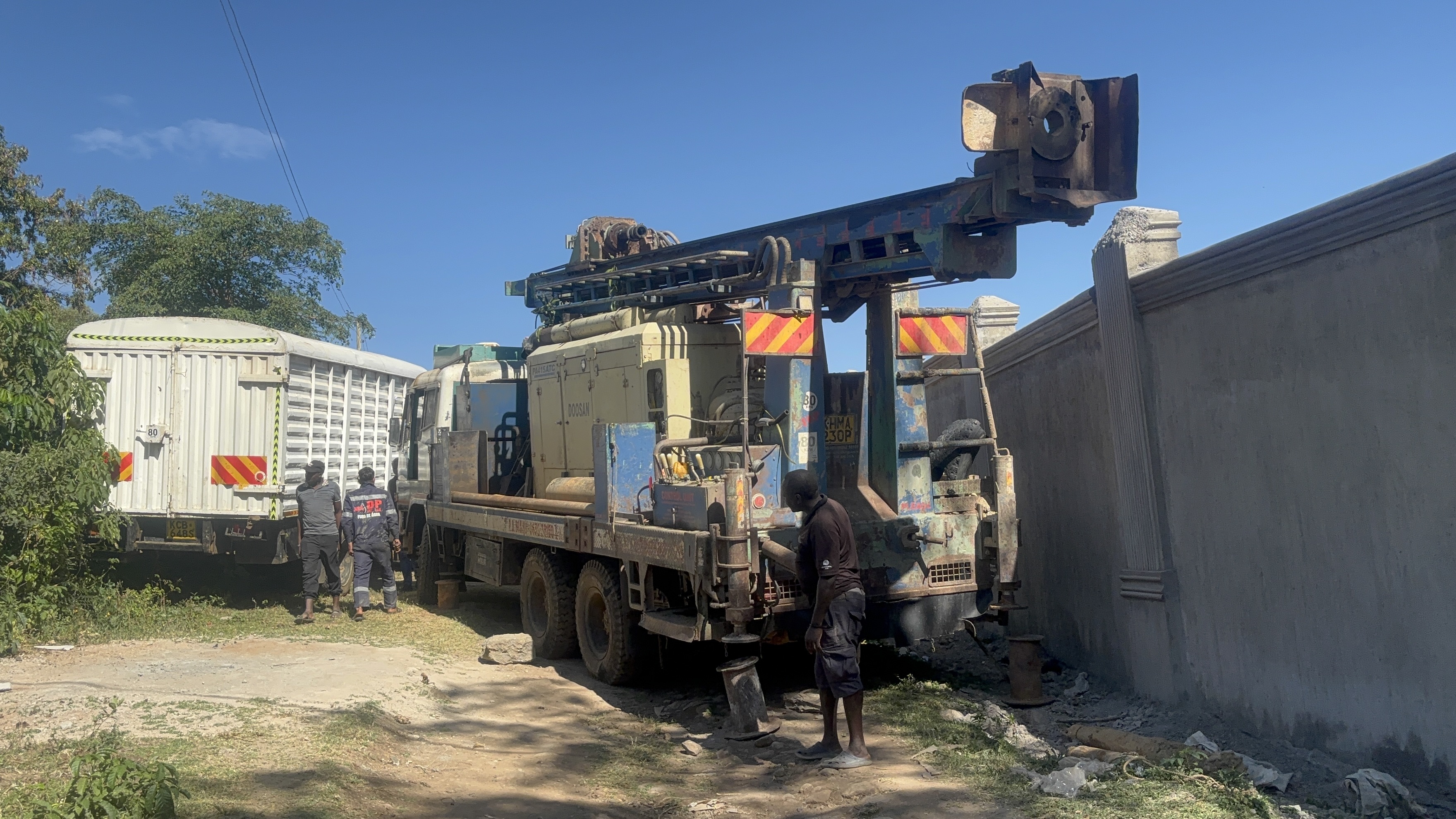
Real material from the Pap Onditi site — the rig in action, tool changes on the deck, and the lake-country setting that frames the project.
 Rig
Rig
 Crew
Crew
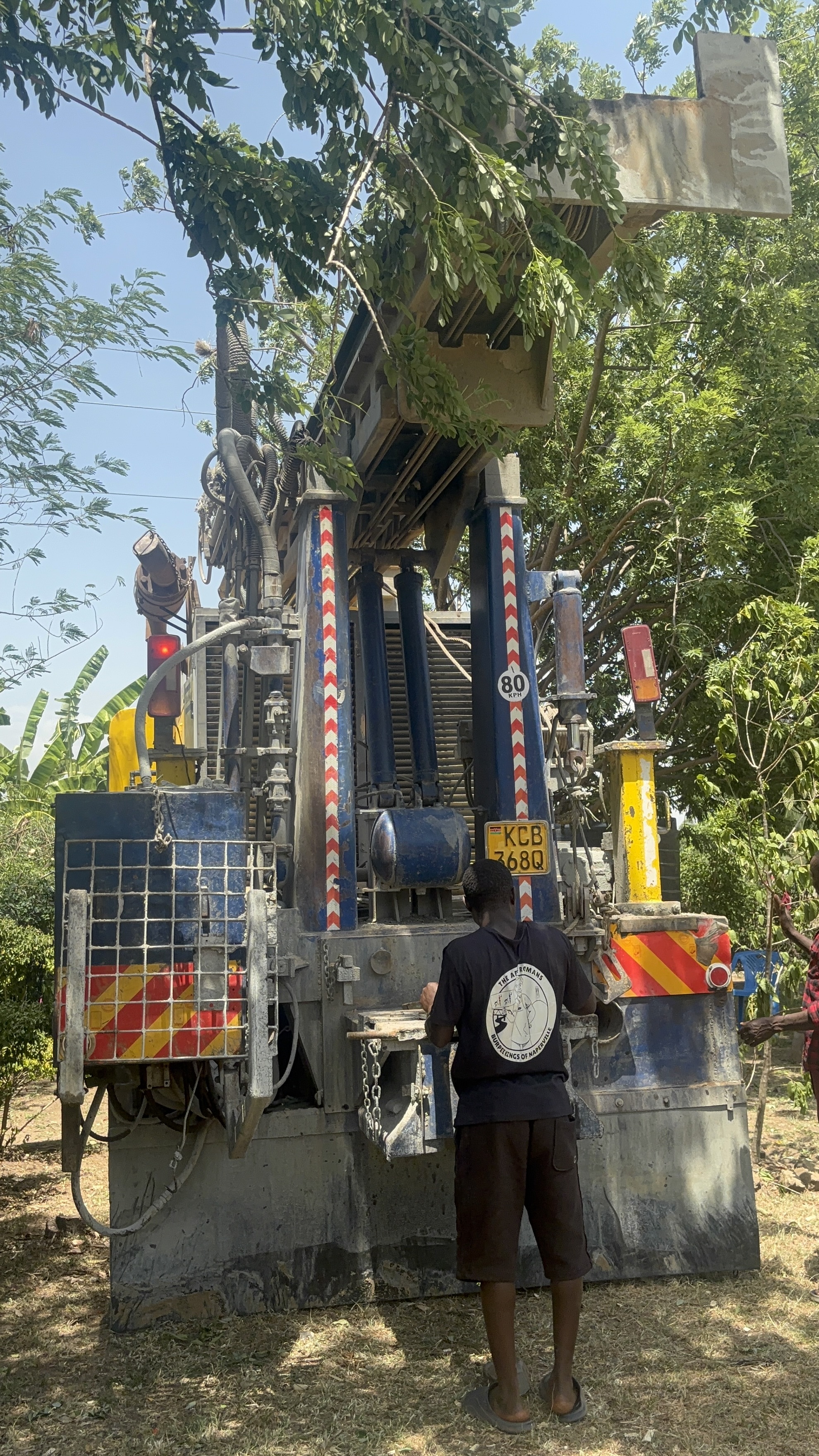 Site
Site
 Setup
Setup
 Tool swap
 Progress
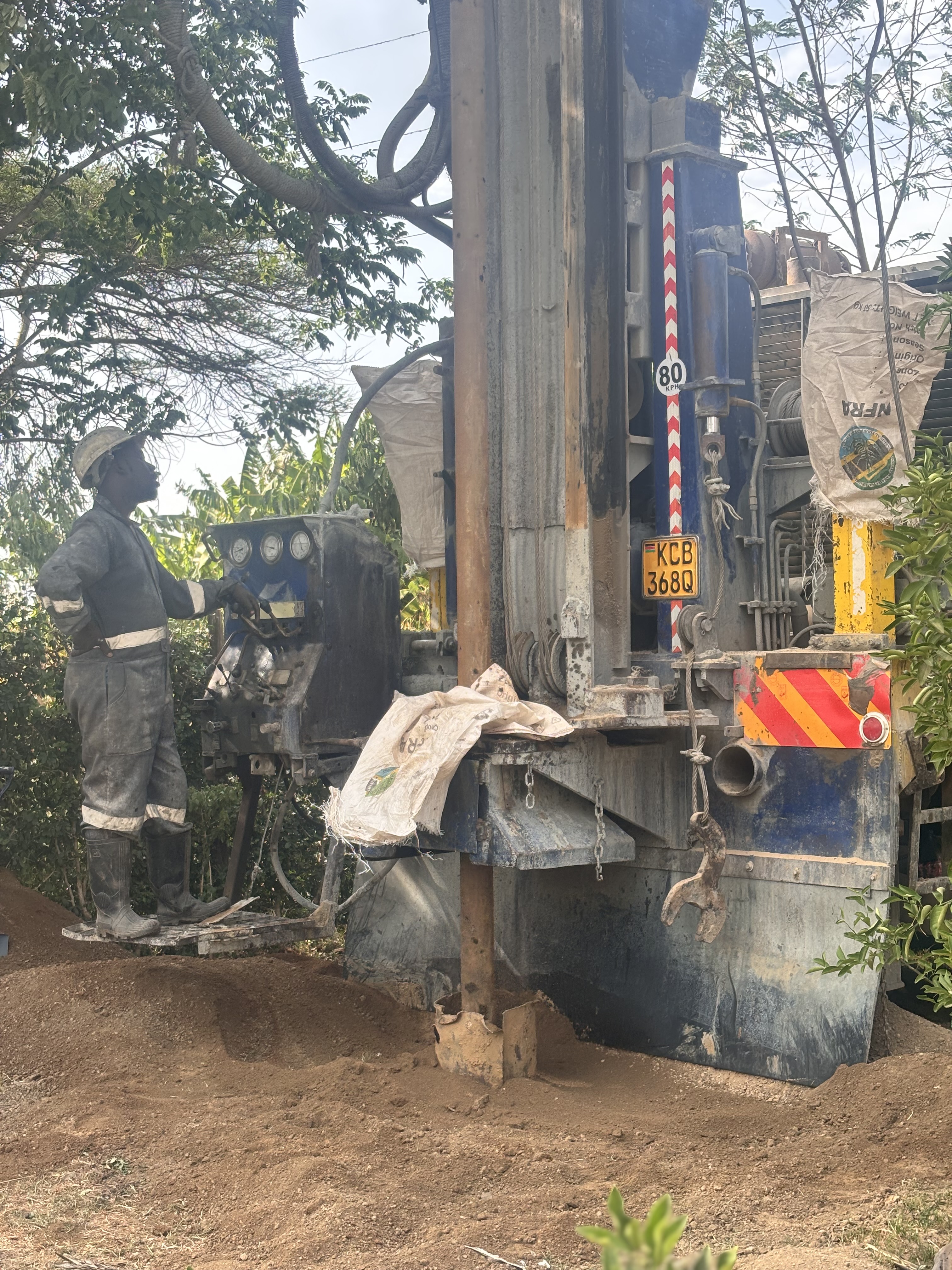 Complete
The shallow wells around us never lasted past the dry season. Kisima drilled through clay and murram, kept changing their tools without complaining, and gave us a borehole that has not slowed down. Six cubic metres an hour — we share with the whole road.
Clay one rod, murram the next — that's normal in Nyanza, parts of Western, and across Kenya's lake basin. Kisima rigs are equipped and crewed to swap tools as the formation demands. No forcing, no shortcuts, no half-finished holes.