Client daily need
~1,000 L/dayApproximately 10 cows at Kantafu — drinking and livestock use. Starting farming on the same plot.
In Kantafu, Machakos County, Kisima delivered the full package: hydrogeological survey, 150m borehole drilling through demanding clay formation (using 10,000 litres of water just to drill), and borehole equipping with a simple direct-current (DC) pump — sized to the client’s real need: about 1,000 litres a day for 10 cows, not an oversized system he did not want to pay for. The borehole tests at 4 m³/hr. He is starting livestock keeping and wants to move into farming.
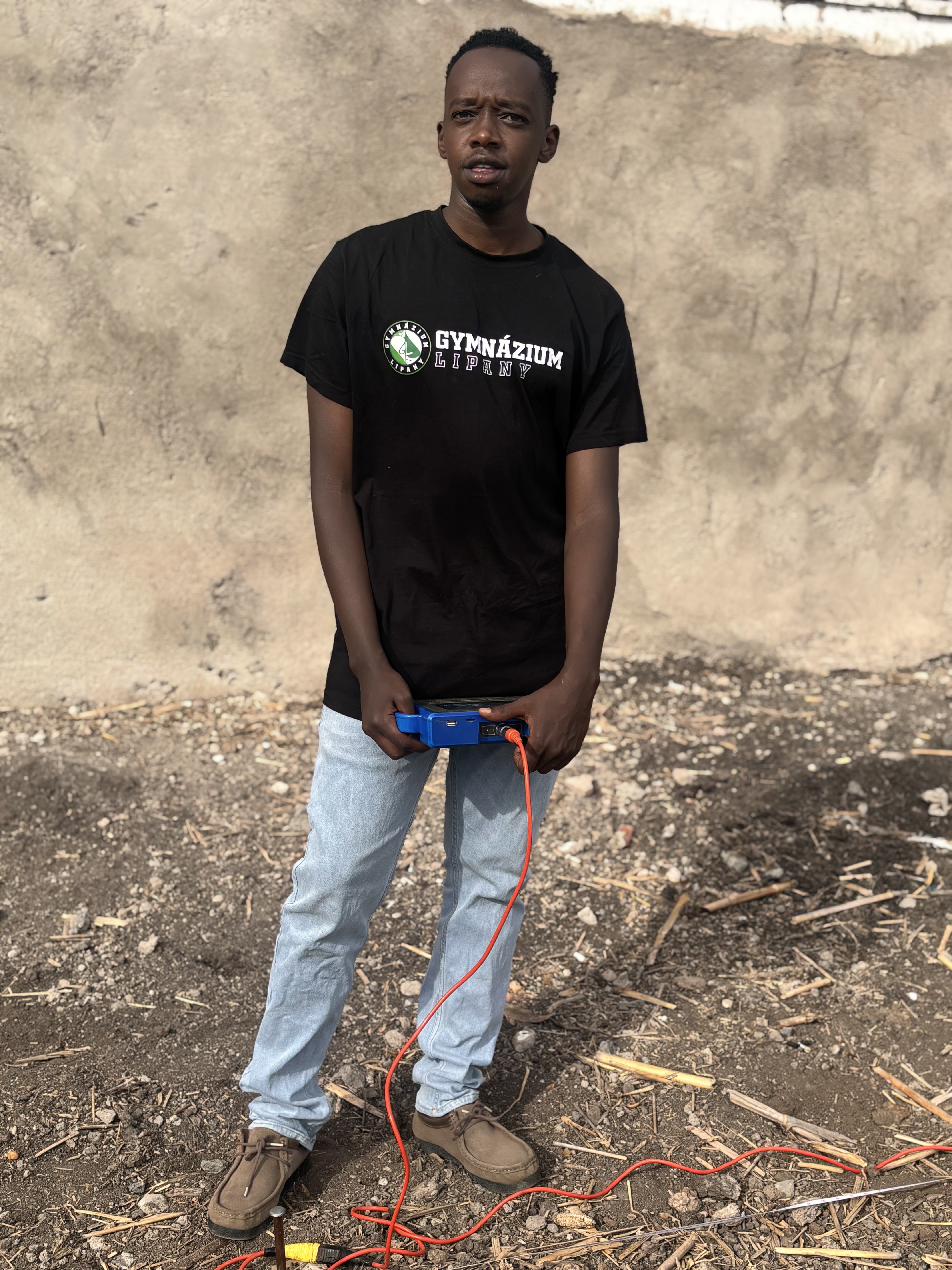
Finding where to drill before the rig arrives — essential in clay country.
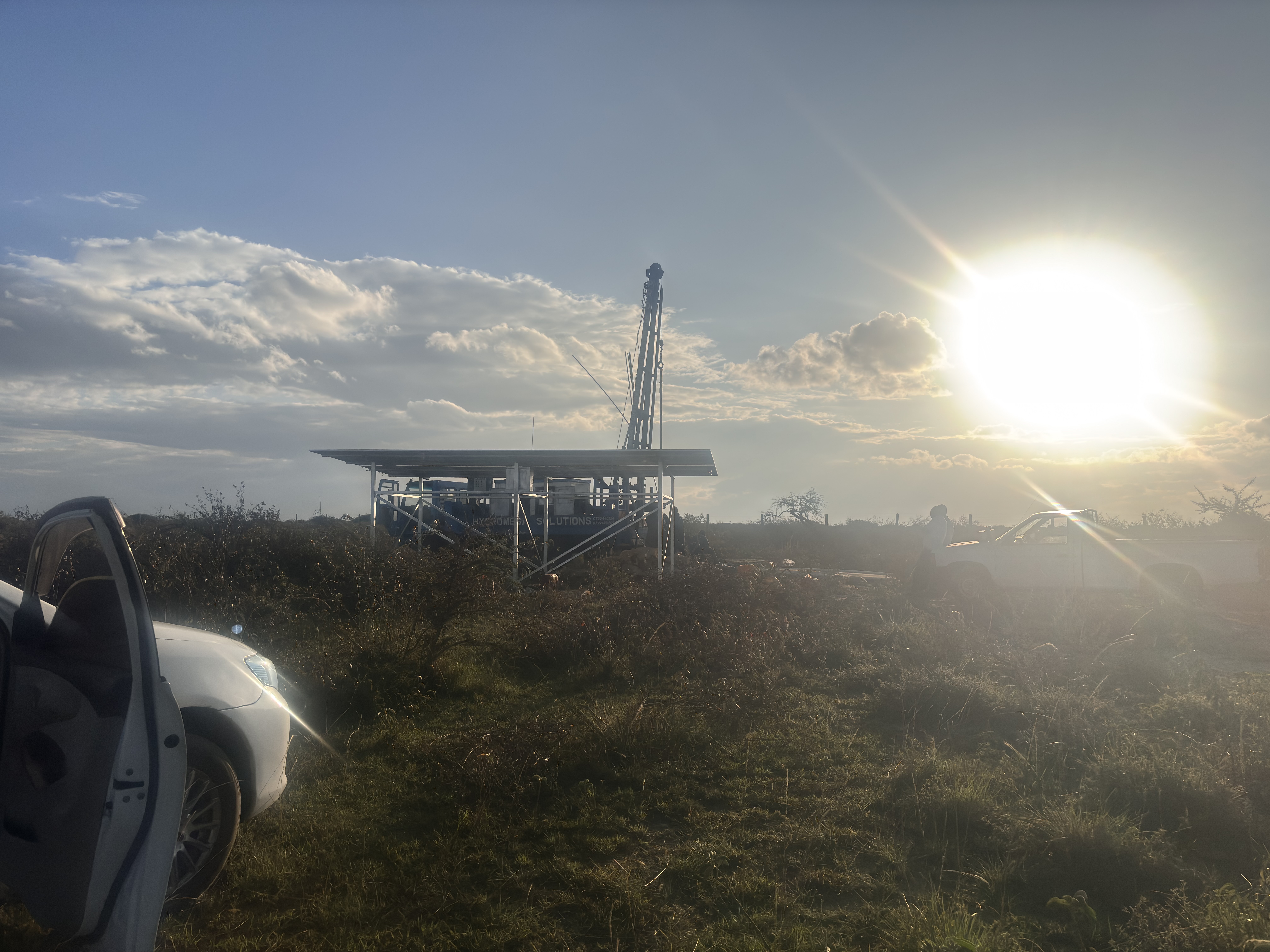
Every successful Kantafu borehole starts with survey, not guesswork. Our team carried out a hydrogeological survey on the client’s plot to identify the best drill point, expected depth to water-bearing formation, and the risks of clay swelling or collapse during drilling.
In Machakos, shallow trial pits and neighbour experiences often mislead. Survey data gave us confidence to plan for 150 metres, adequate casing strategy, and realistic expectations for livestock water — before committing to mobilisation and the large water volumes clay demands.
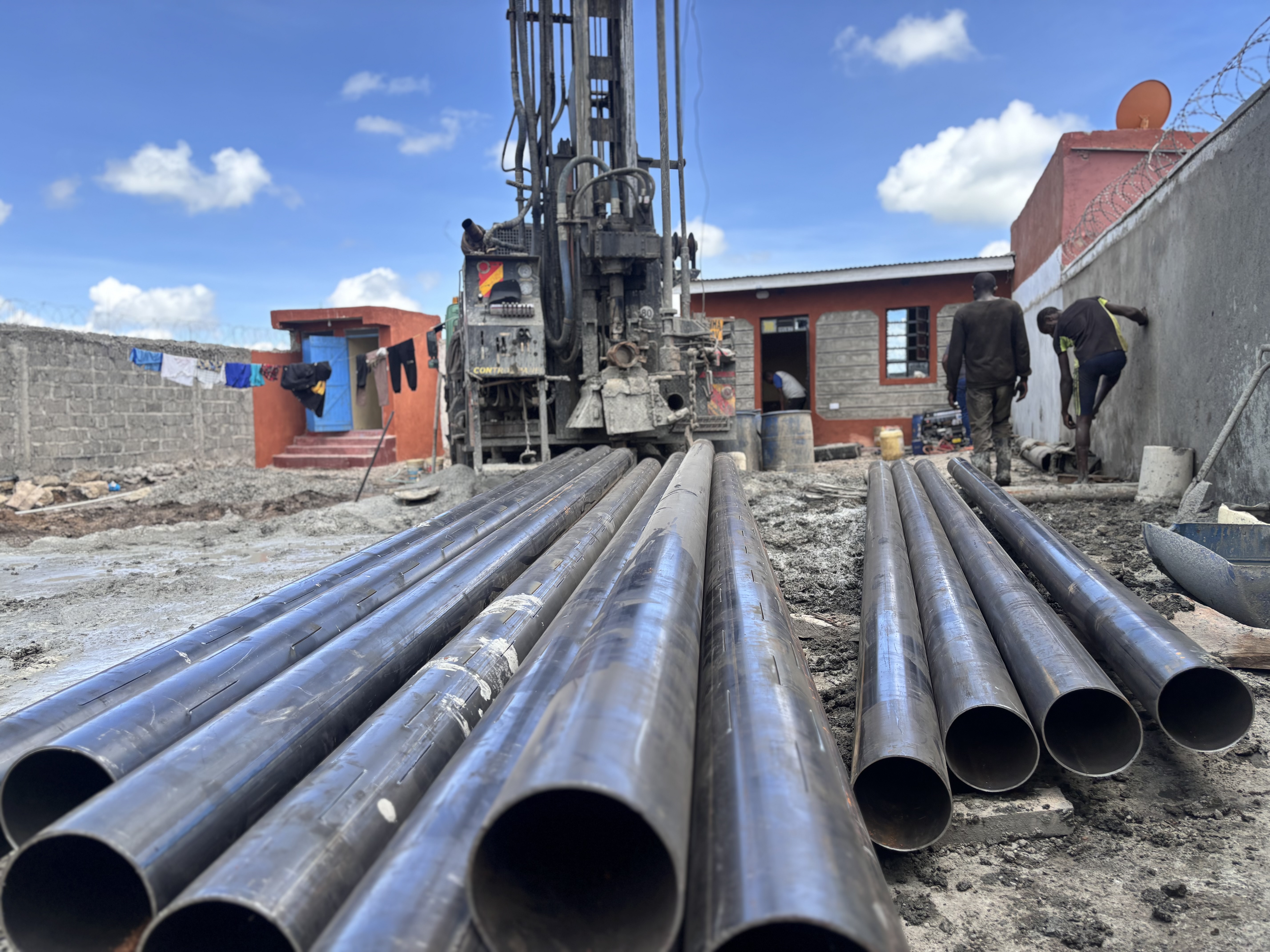
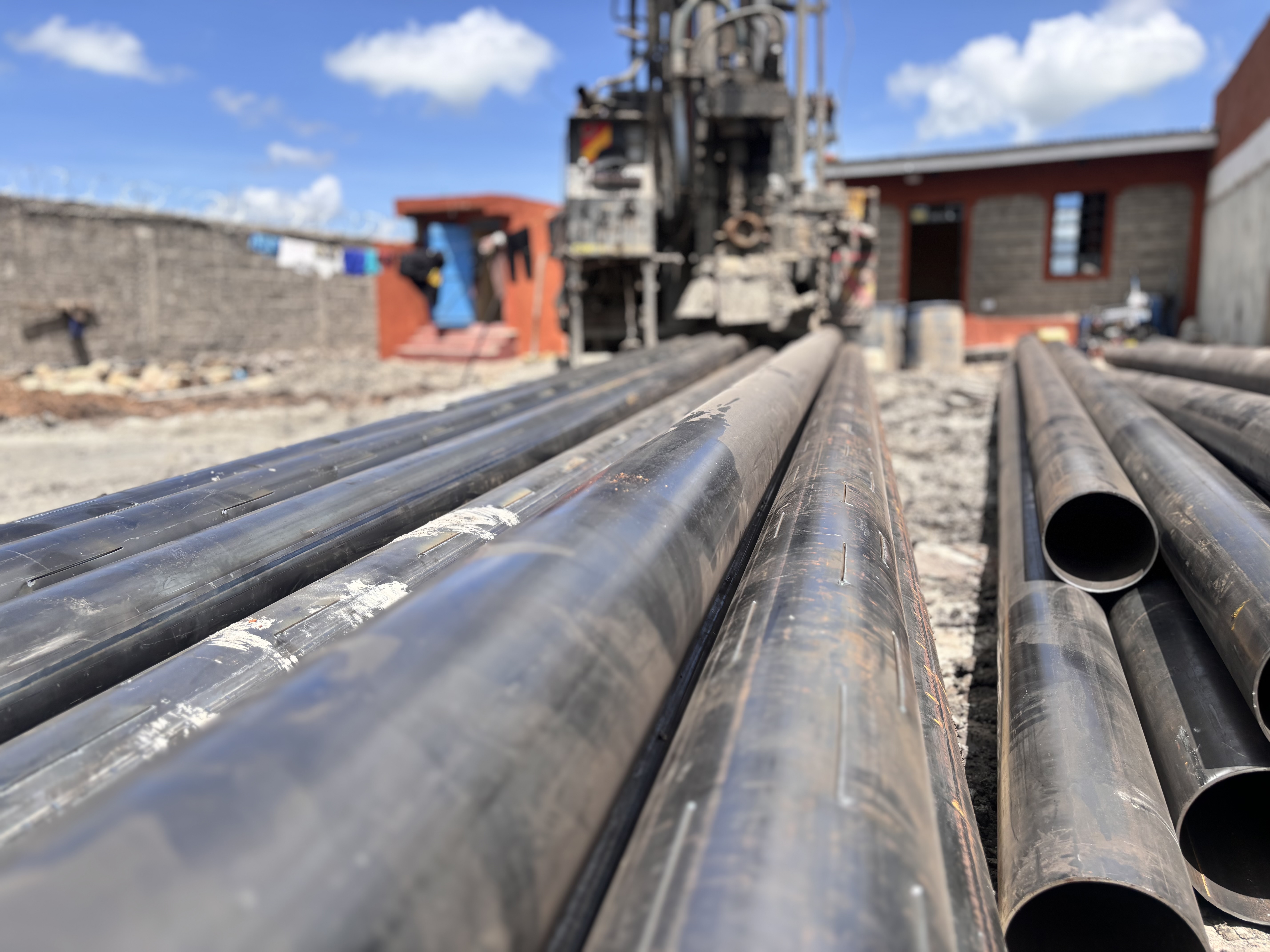
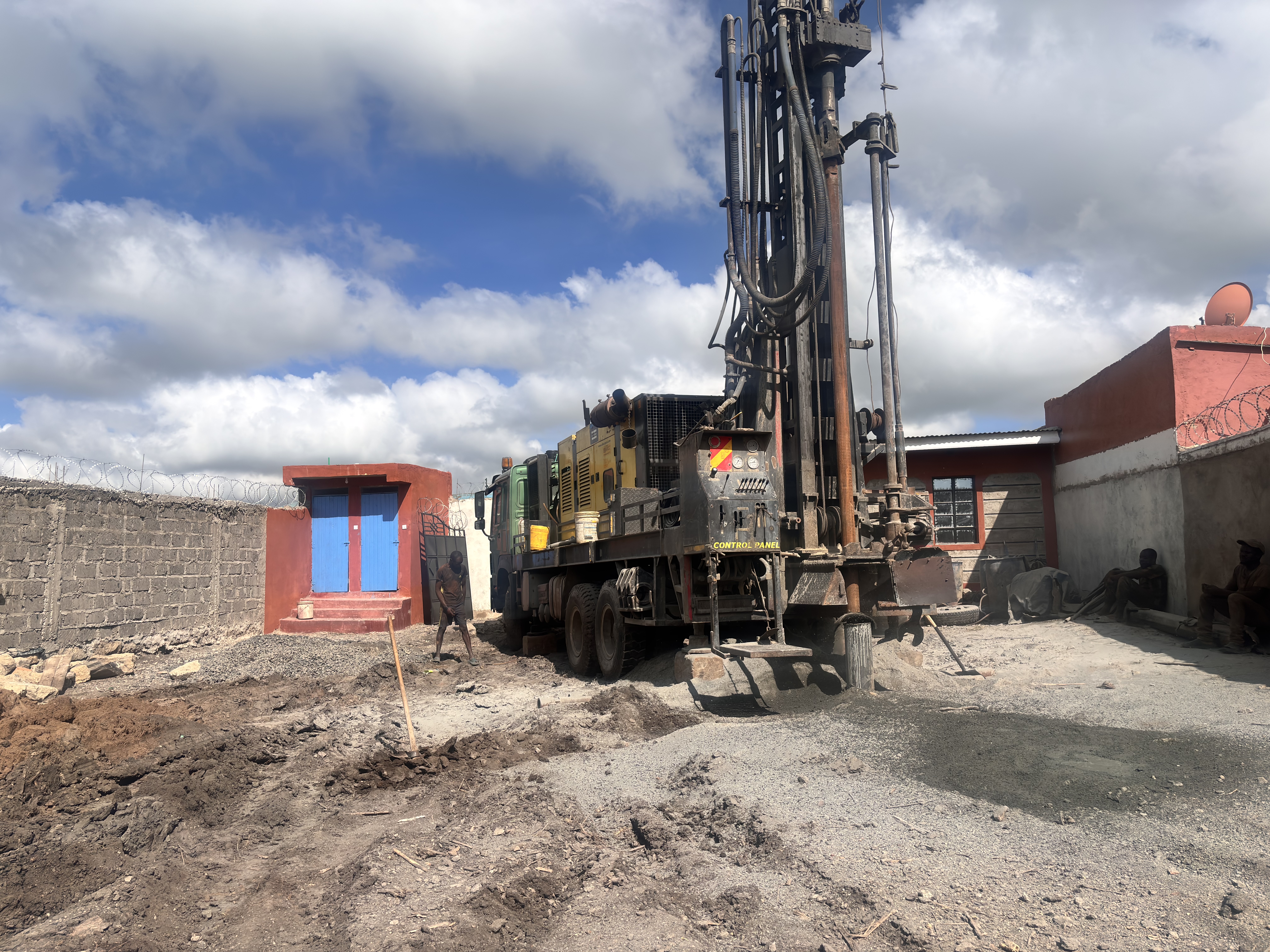
The hardest phase: sticky clay, constant water demand, depth to 150 metres.
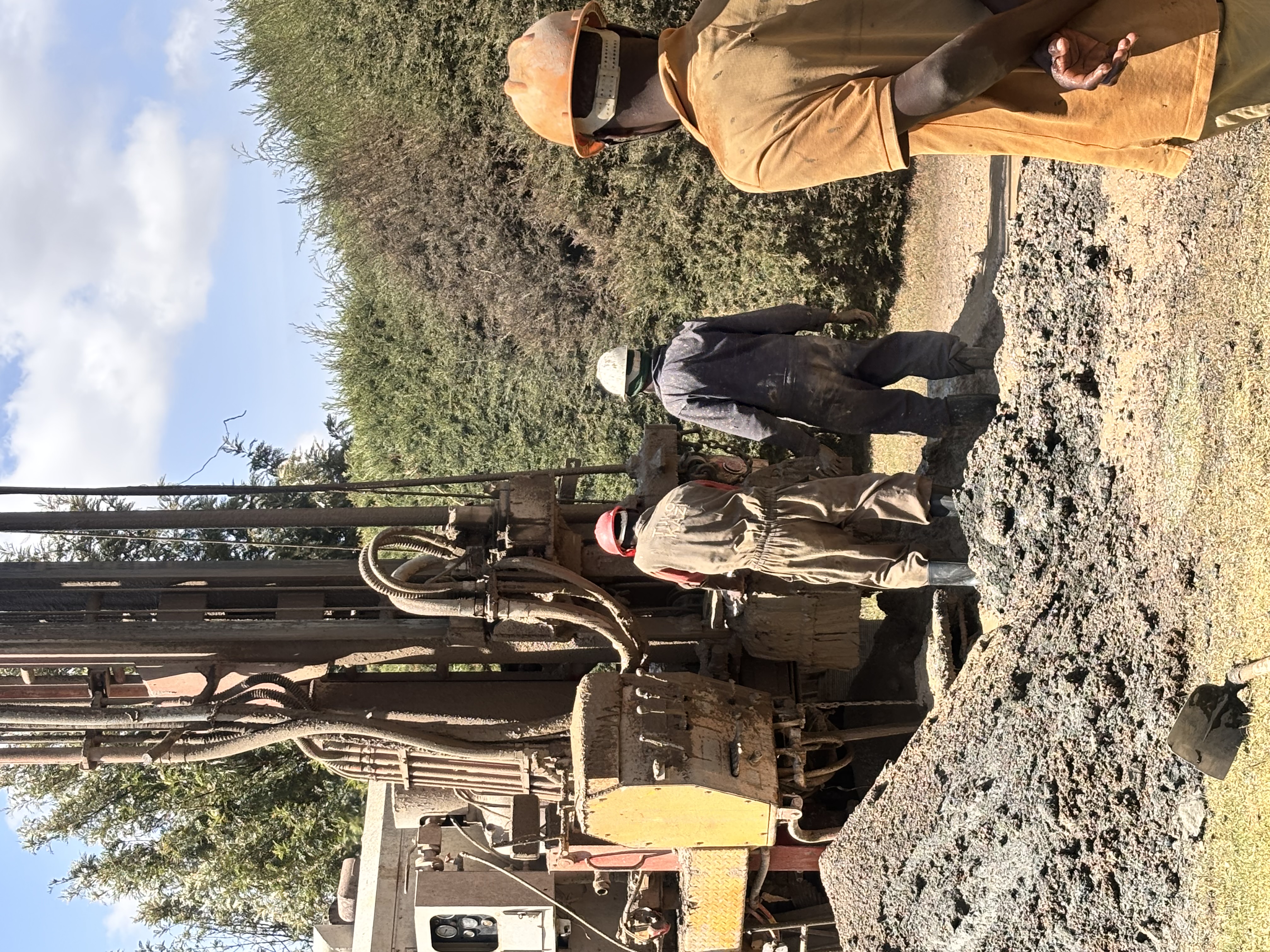
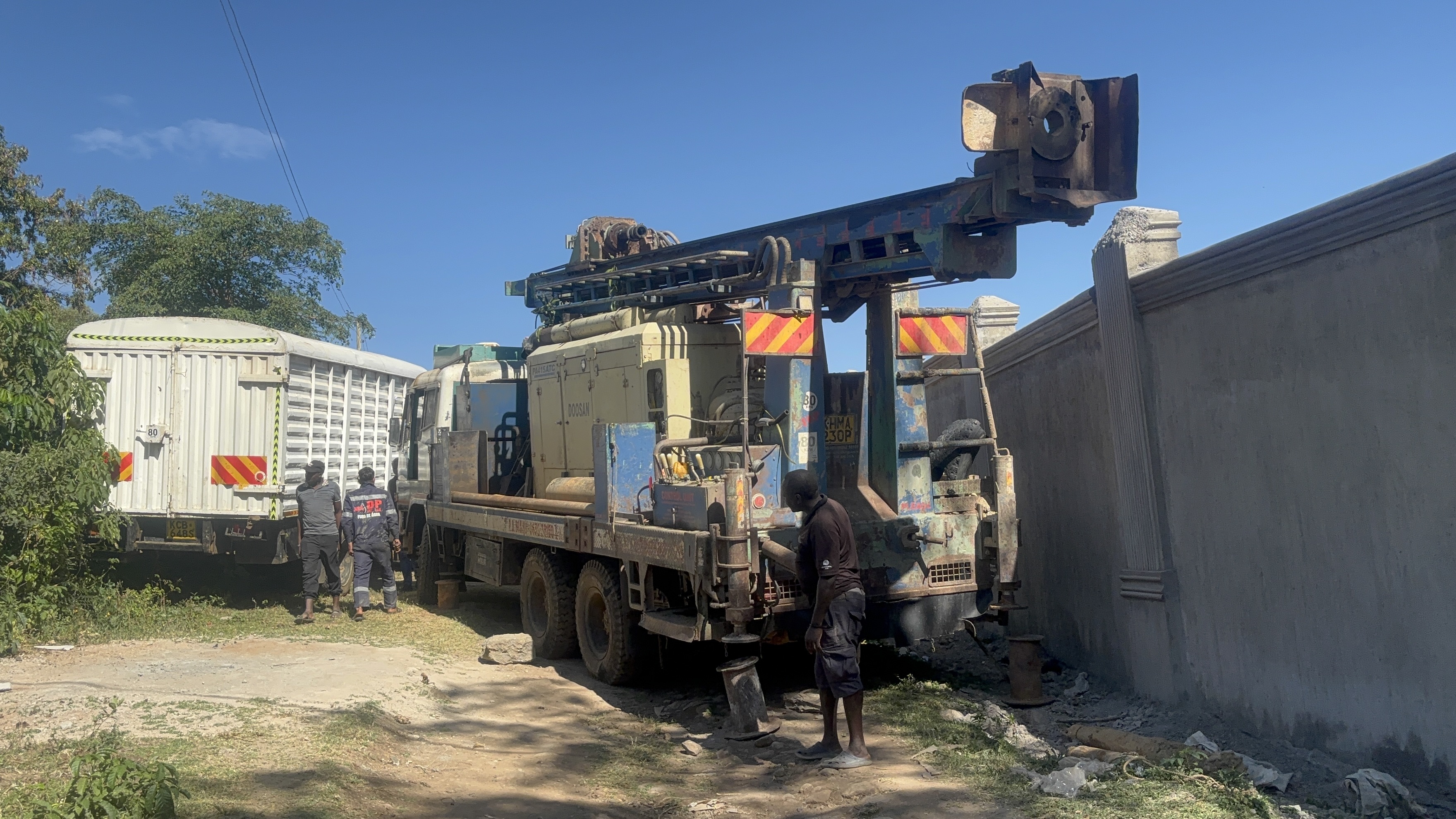
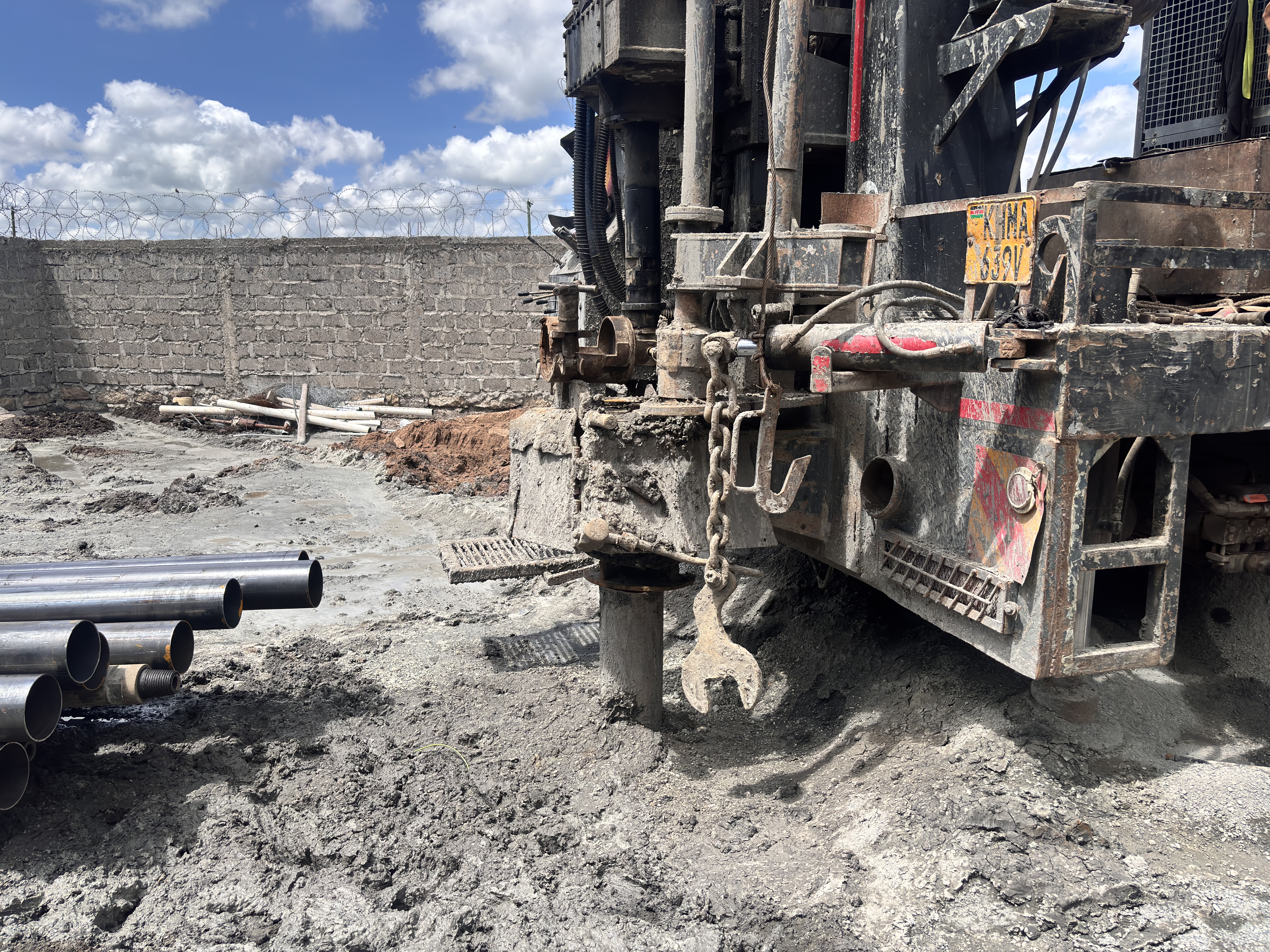
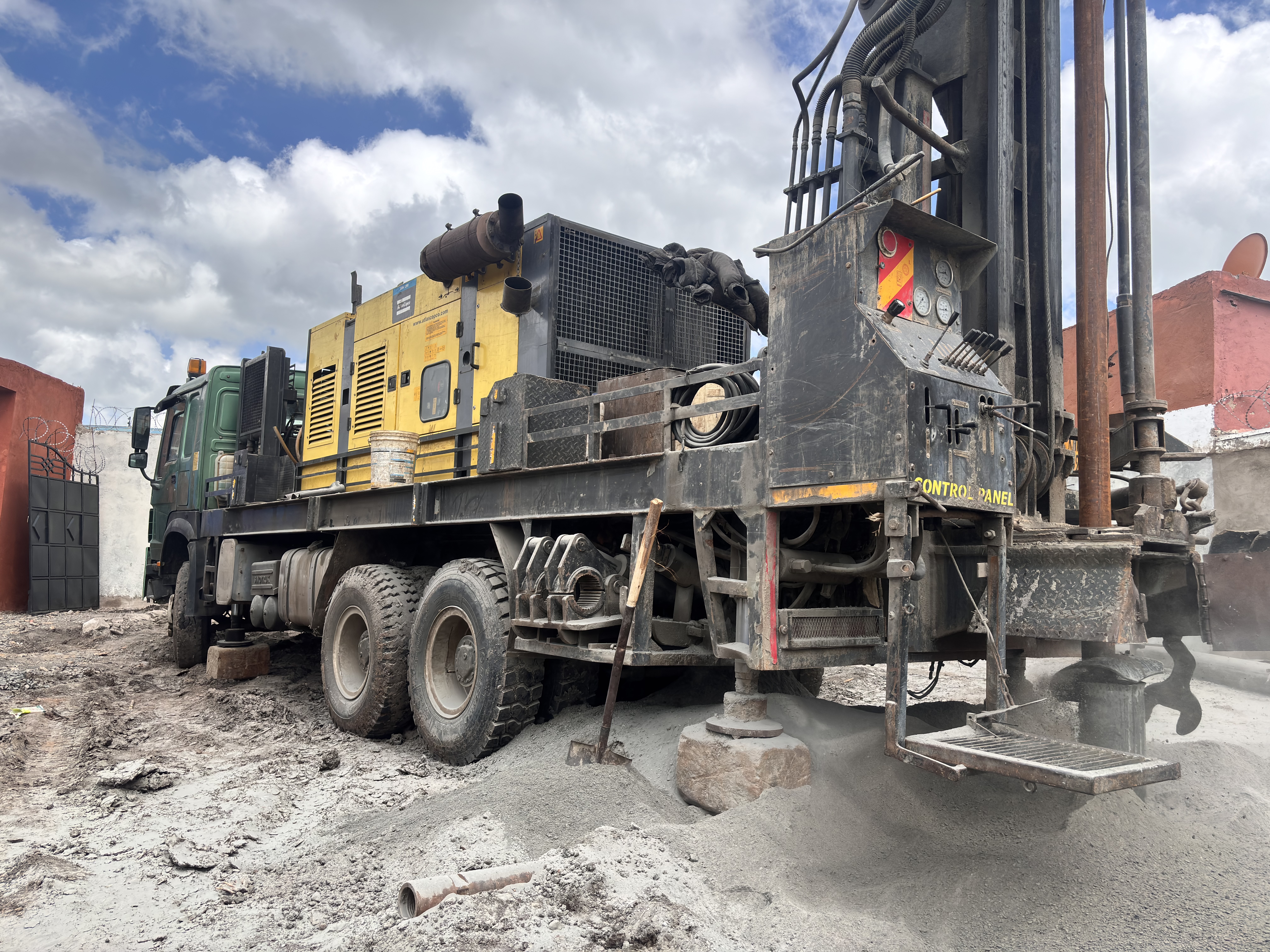
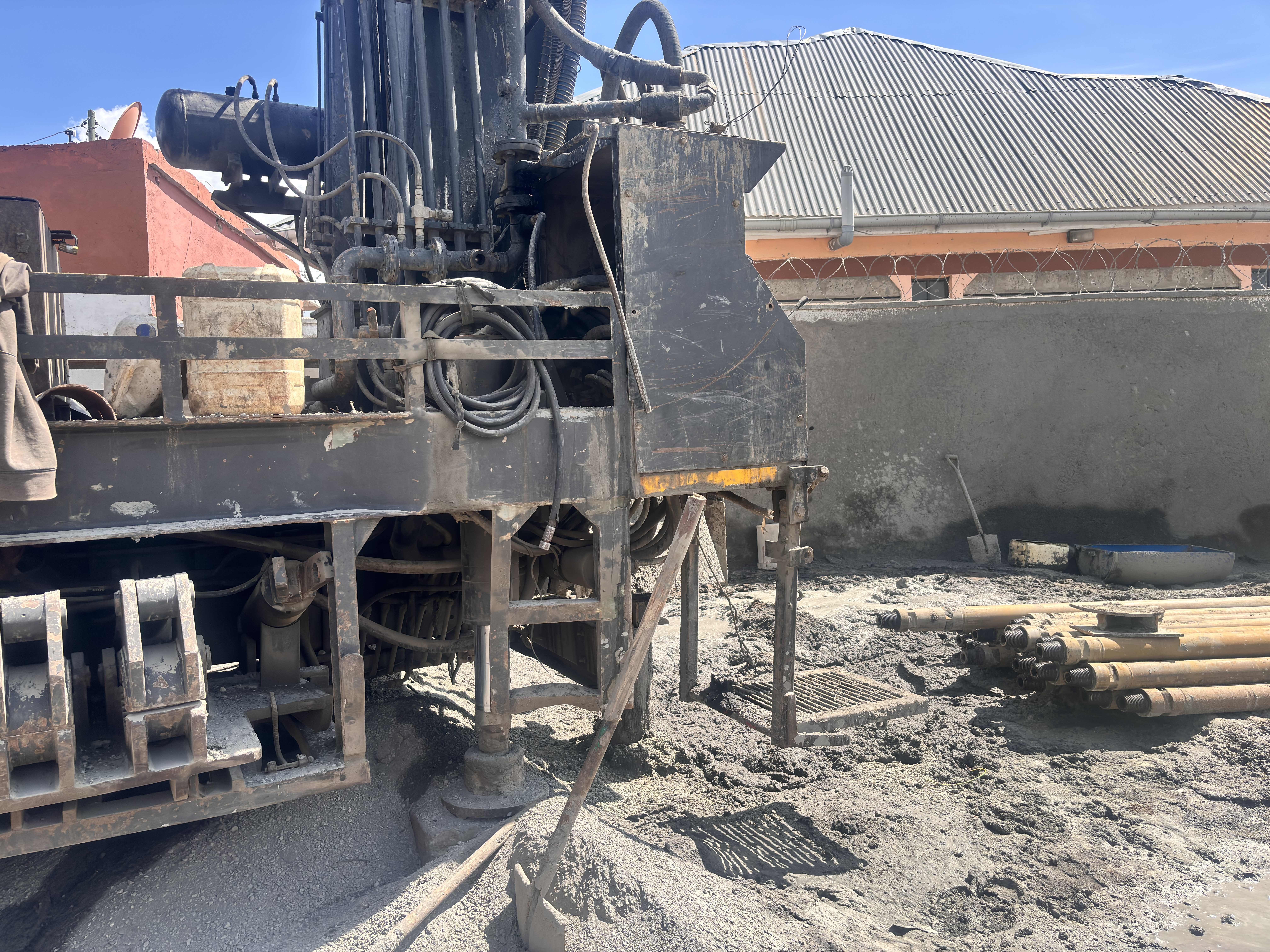
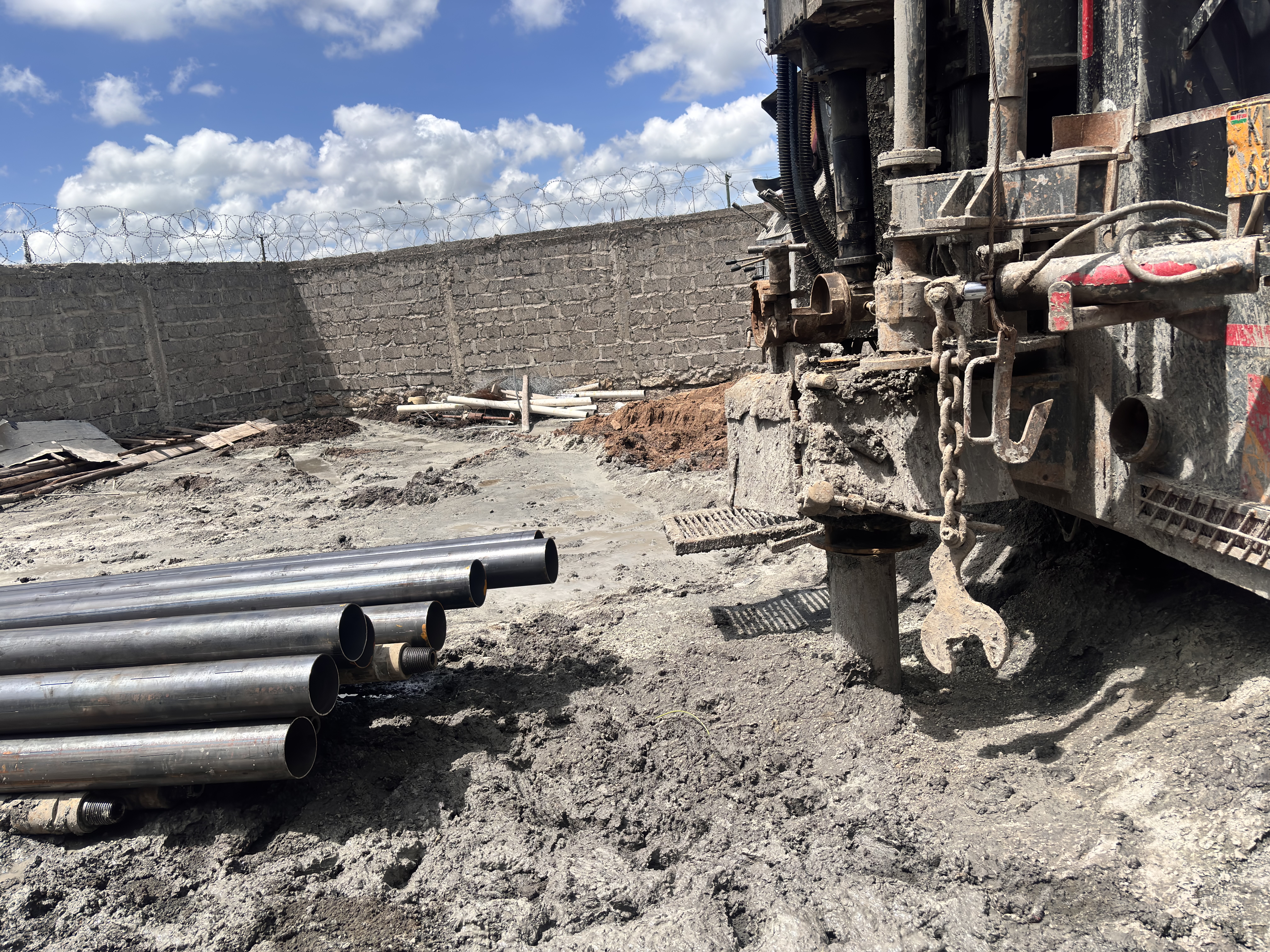
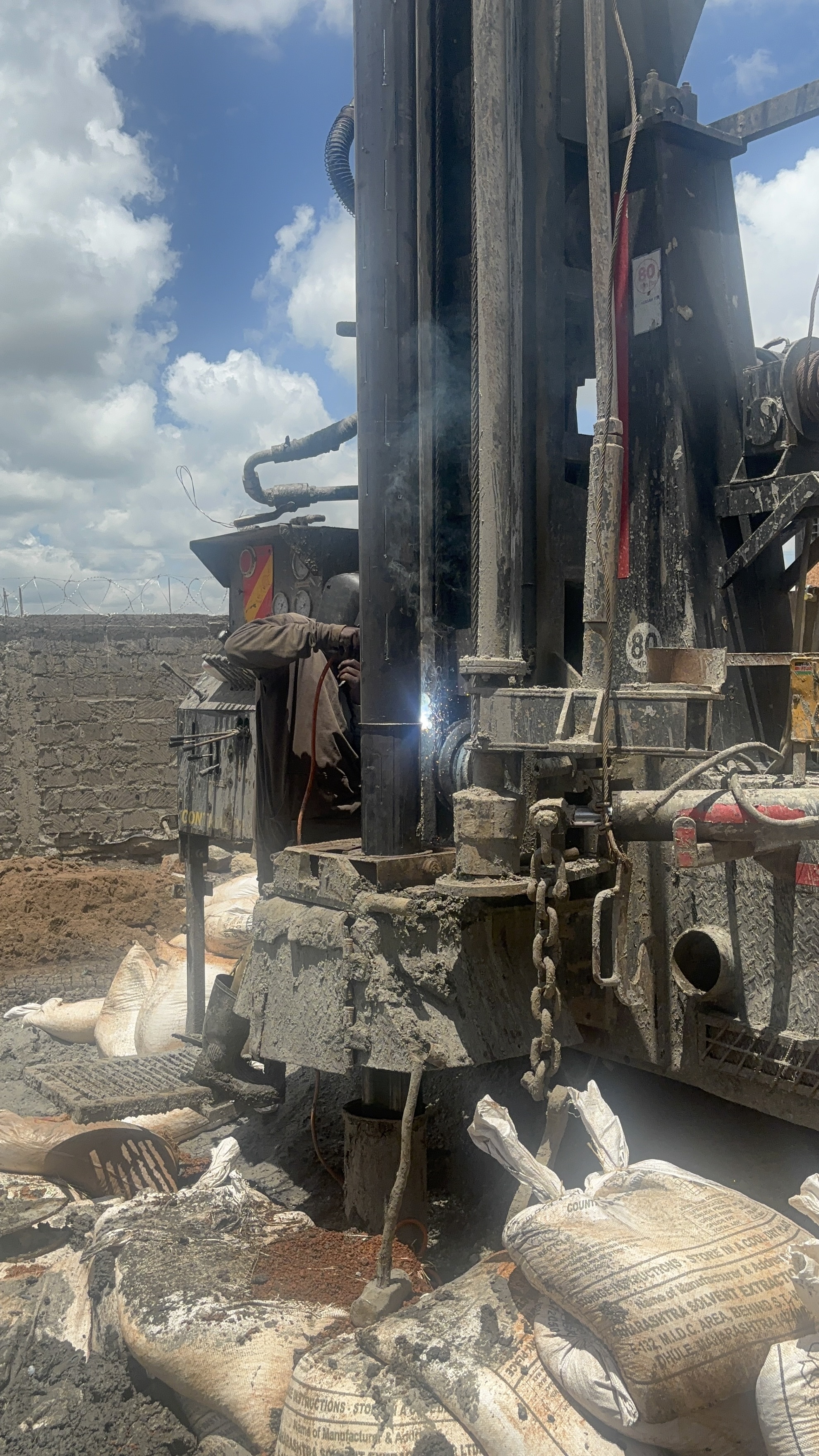
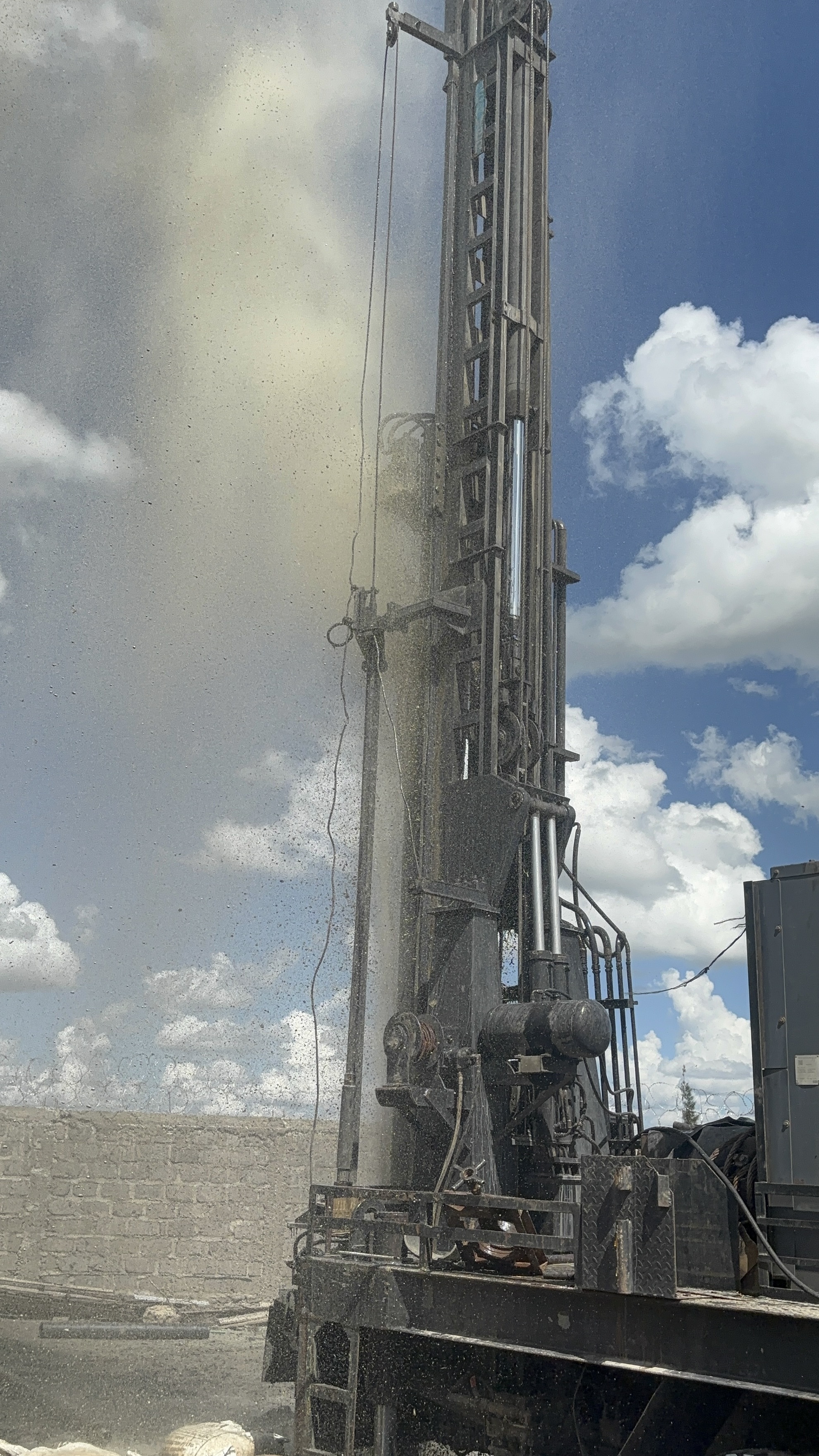
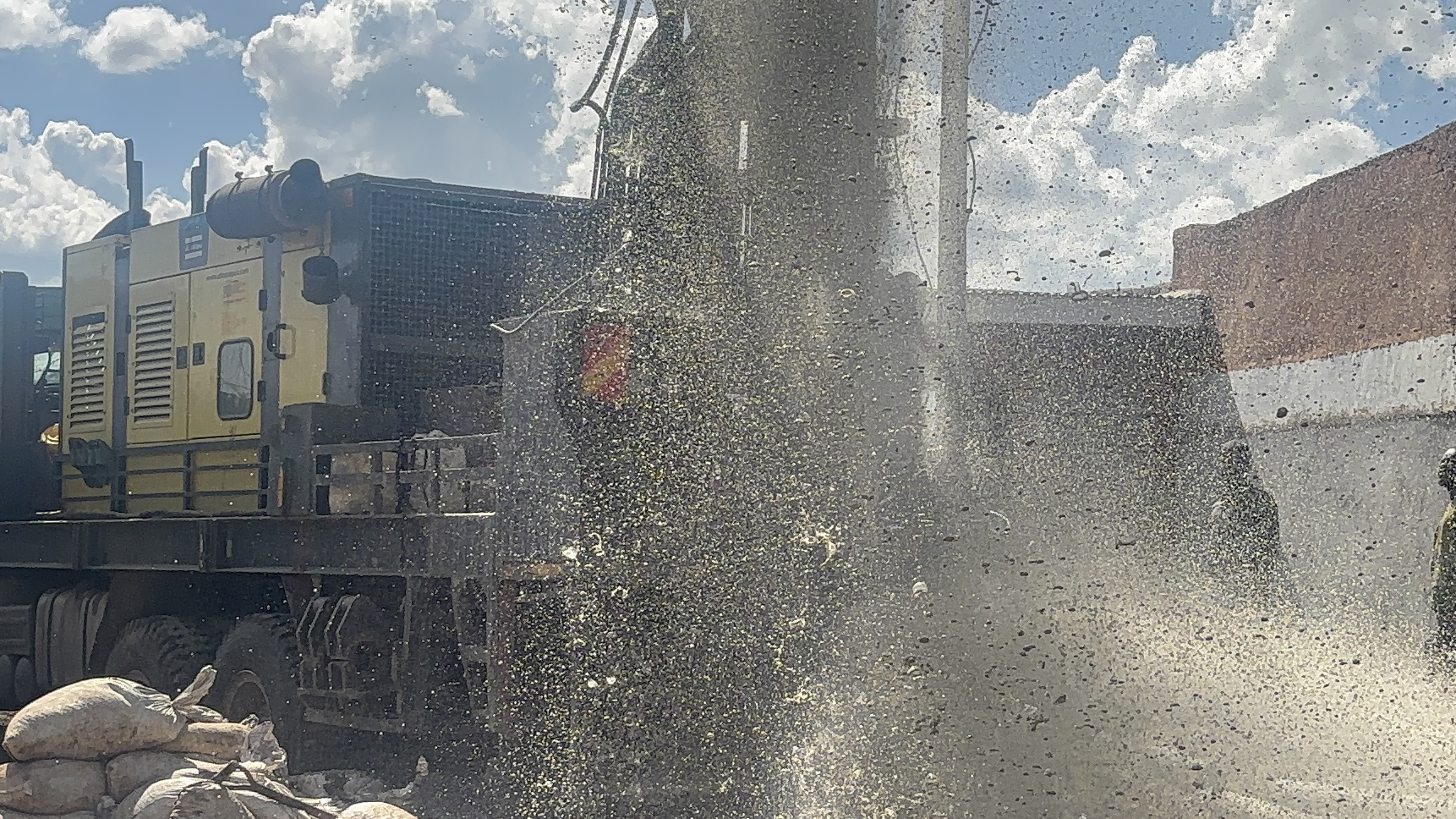
Drilling at Kantafu meant fighting clay formation from early metres to final depth. Clay sticks to the bit, swells in the hole, and slows progress. Without enough water for circulation and hole stability, the project stalls — or the hole tightens and tools bind.
Kisima used approximately 10,000 litres of water on site dedicated to drilling operations — refilling tanks, maintaining mud circulation, and flushing cuttings in clay. That is normal for this geology but surprises clients who expect rock drilling with minimal water. Here, water is part of the drill programme.
We completed the borehole at 150 metres for animal keeping. Yield testing gave 4 cubic metres per hour (4 m³/hr) — far more than the client’s daily need for 10 cows, but valuable headroom as he expands into farming.
Right-sized for ~1,000 litres a day — not the expensive system he did not need.
After drilling and testing, the client was clear: he did not need huge volumes or a costly solar–battery–AC package. He has 10 cows and needs roughly 1,000 litres of water per day for drinking and basic livestock care — with room to grow as farming starts.
Kisima equipped the borehole with a simple direct-current (DC) submersible pump — affordable, straightforward to run, and matched to modest daily demand. A 4 m³/hr borehole with a small DC pump is deliberate right-sizing: the aquifer can deliver more; the client chose not to pay for more pump than his cows require.
DC equipping keeps capital cost down, works well where grid power is limited, and pairs with solar later if he scales up — but today, the priority was cheap, reliable water for livestock.
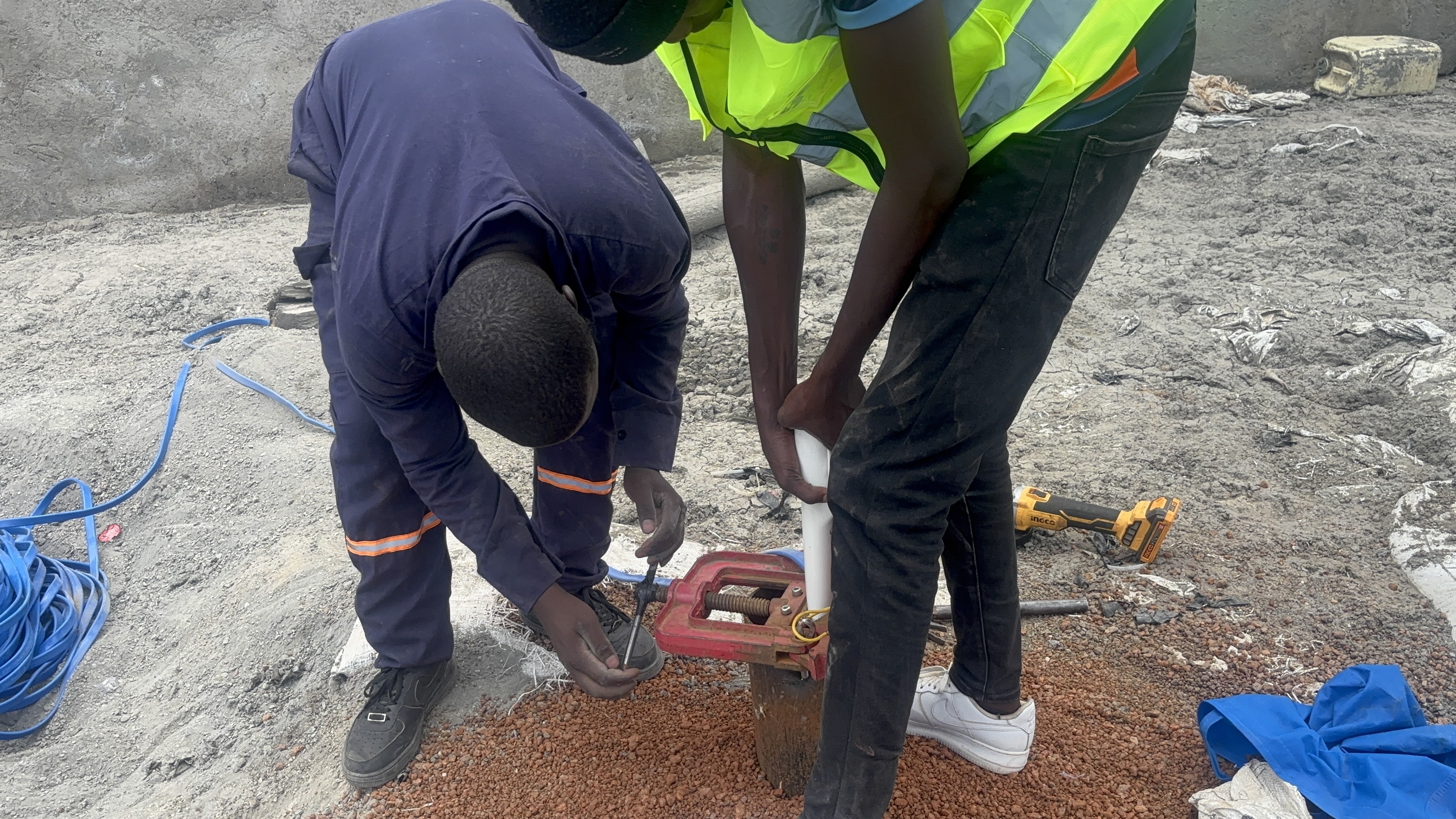
The client asked for the cheapest practical equipping because his immediate need is modest: water for 10 head of cattle, not irrigation of tens of acres. We recommended and installed a DC pump suited to that duty — low capital cost, simple operation, easy maintenance.
Installing a large AC pump or full solar array would have overspent his budget for no benefit on day one. When farming expands, yield and pump capacity can be reviewed — the 150m / 4 m³/hr source is already there.
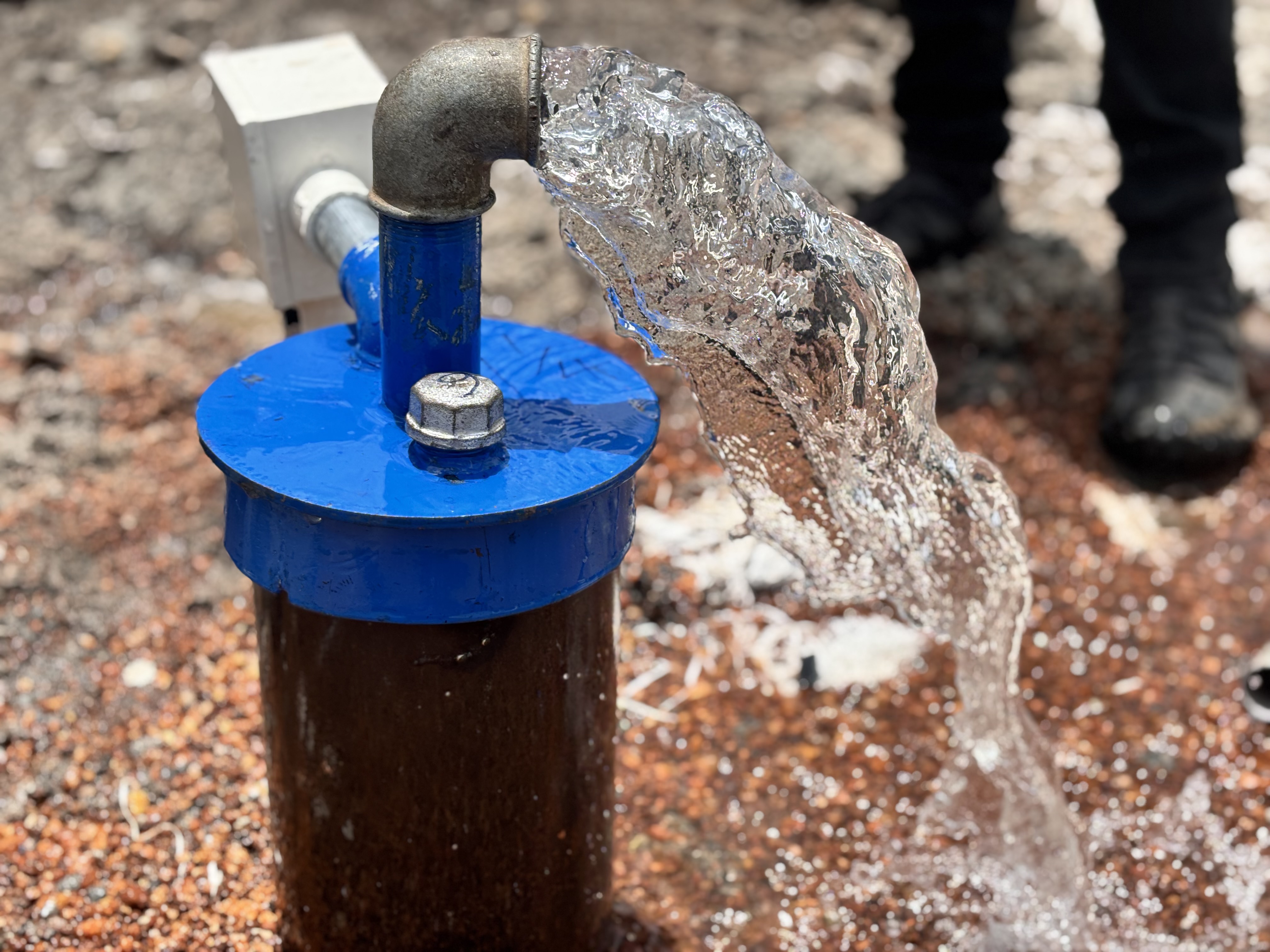
Good equipping is not always the biggest pump — it is the pump that matches the farm.
Approximately 10 cows at Kantafu — drinking and livestock use. Starting farming on the same plot.
Test yield at 150m — 96,000 litres per day if pumped continuously. Huge reserve vs current need.
Kisima’s approach: Drill and test for a sustainable aquifer (4 m³/hr here), then equip to what the client will actually use today — a simple DC pump for ~1,000 L/day — so he is not paying for solar panels, VFDs, or oversized motors he does not need yet.
This Kantafu project is anchored in animal keeping. Reliable borehole water means the client can run 10 cows without hauling from seasonal streams or buying tanker water in dry months.
He also wants to start farming on the land. With survey, a deep 150m source, and equipping in place, he has infrastructure to add small-scale crop irrigation later — without redoing the borehole.
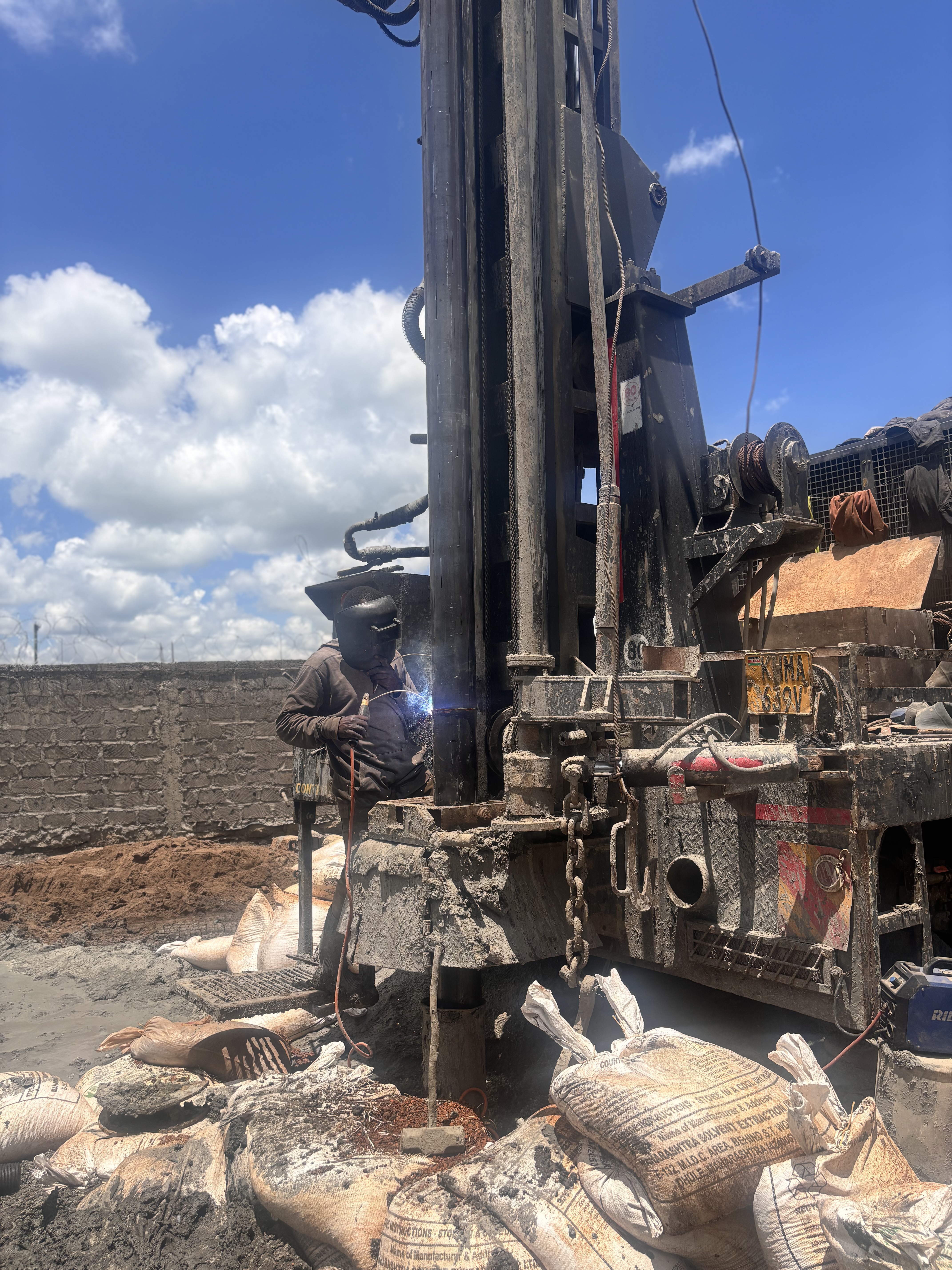
Survey, clay drilling, and DC equipping — all phases from the Kantafu folder.
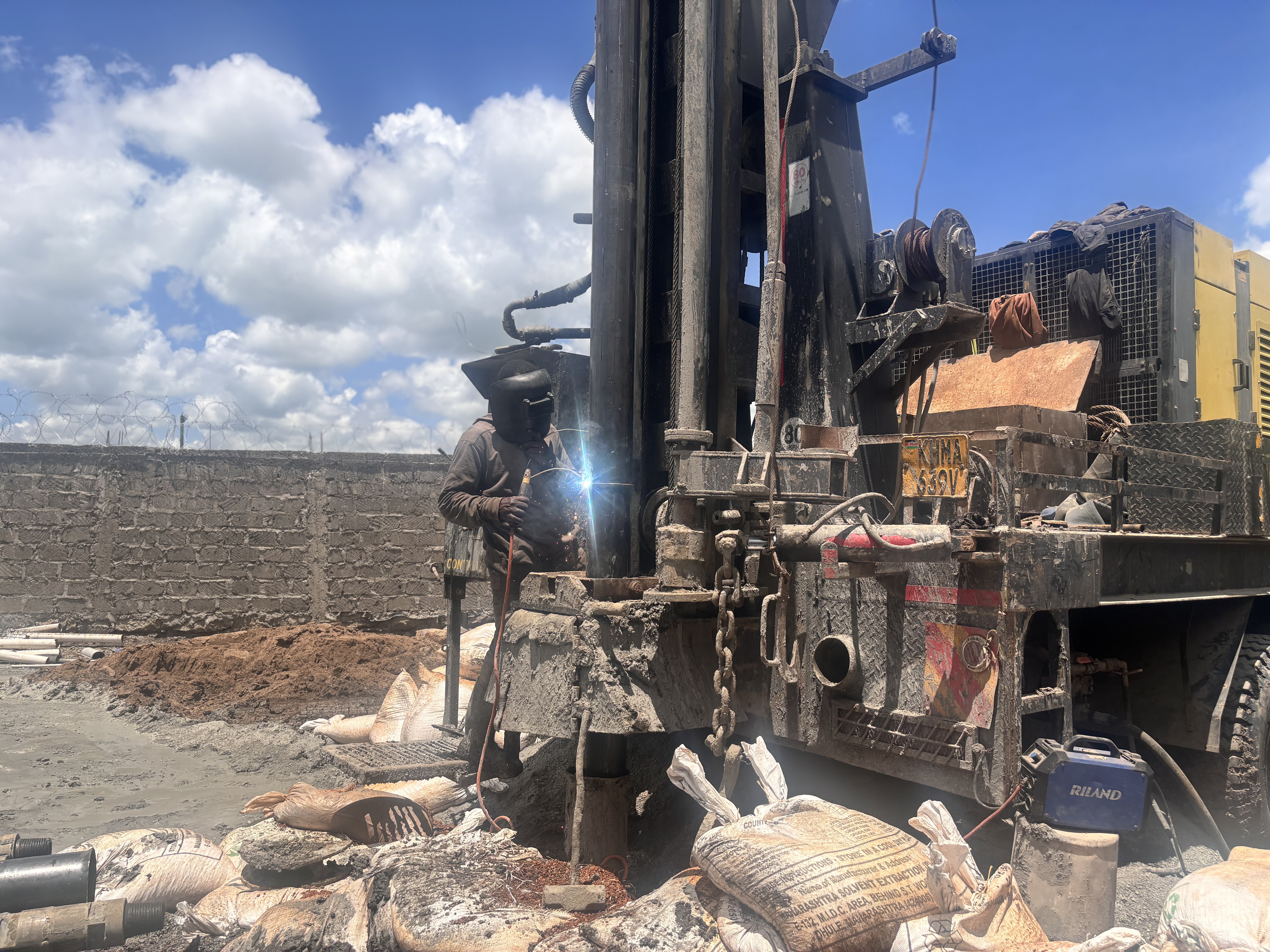
I only needed water for my cows — not a big expensive pump. Kisima surveyed, drilled through the clay to 150 metres, and put a simple DC pump I can afford. Now I can keep my animals and start farming.
Clay formations, livestock water, budget-conscious pumps — tell us your animals, your litres per day, and we will size the whole project honestly.