Why not just a tank on the ground?
A ground tank stores water — but it does not push water uphill to upstairs taps, distant blocks, or sprinklers. A water tower lifts the tank high on a steel structure so gravity creates pressure in your pipes. The higher the tank (and the water level inside it), the stronger the flow at the bottom of the hill or the top floor.
Most borehole owners pump for many hours because they have no storage or no height. A tower lets you pump into a large tank in the morning (often on solar), then use water all day with the pump off.
What Kisima builds (steel tower package)
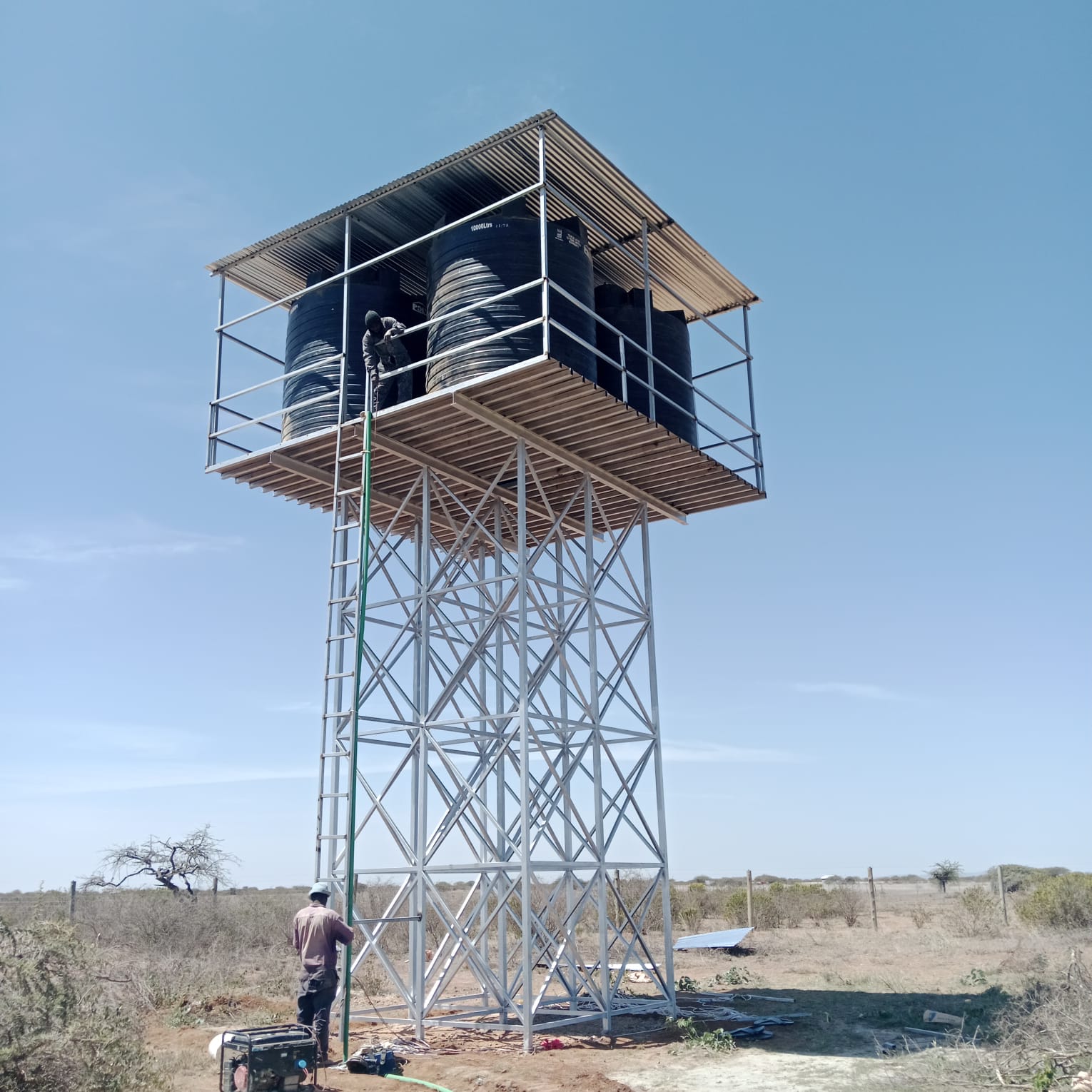
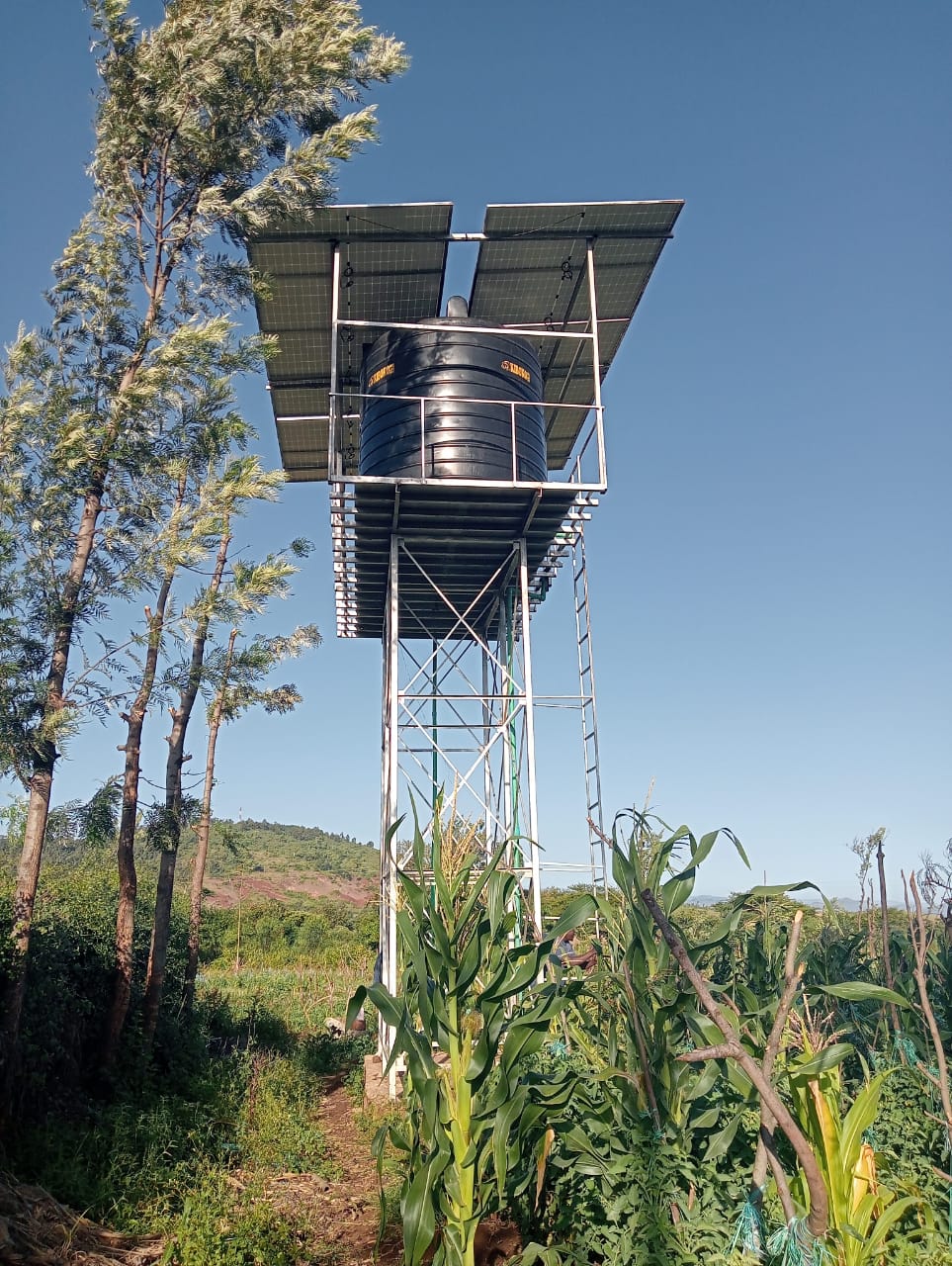
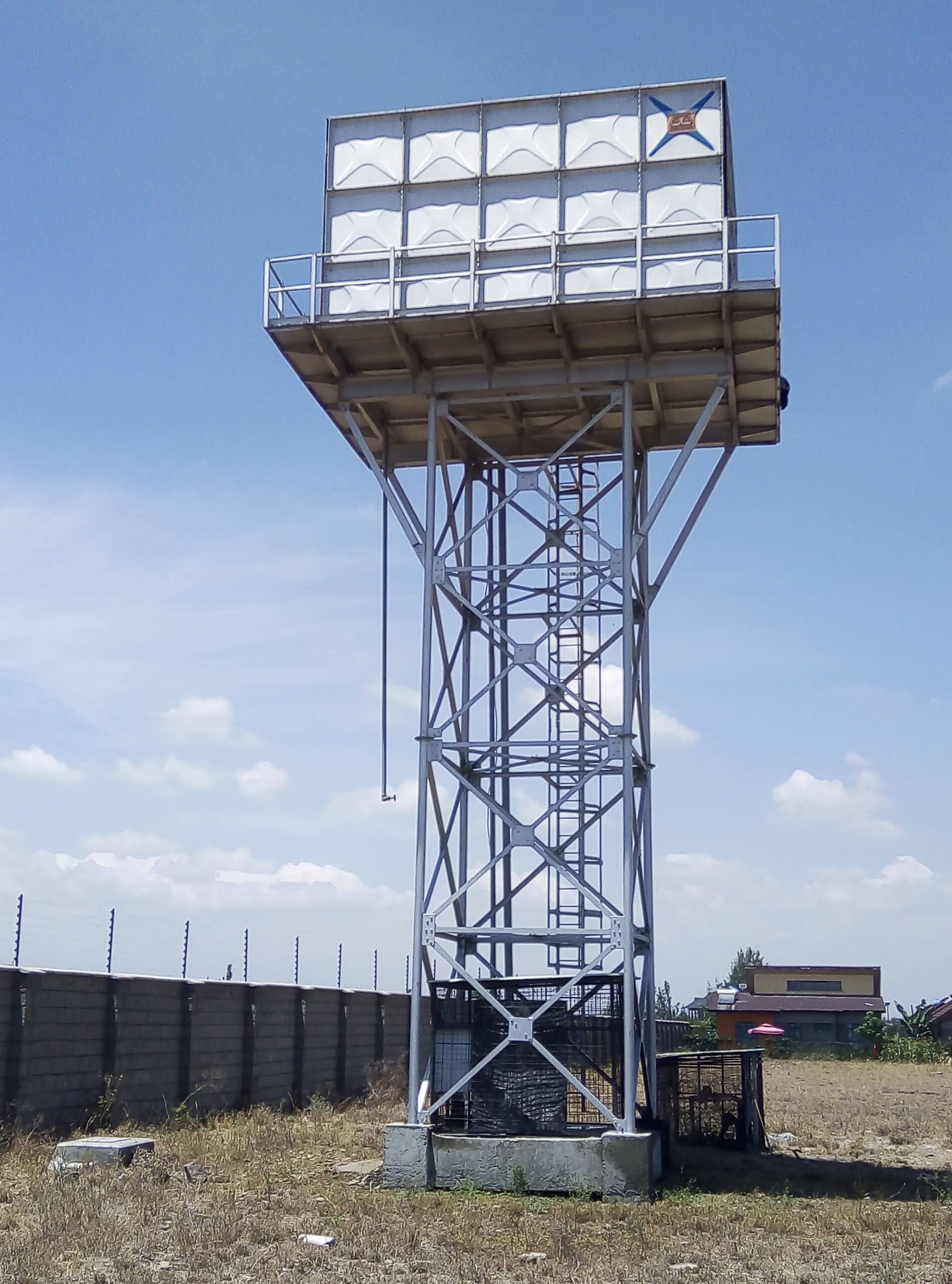
Our water tower construction service is the full elevated system — not only a tank on the ground:
- Steel lattice or column tower — galvanized structural steel sized for tank weight, wind, and local codes
- Elevated tank — polyethylene (plastic) or steel tank at the top (we help you choose capacity)
- Foundations — concrete pad or piles designed for your soil
- Pipework — inlet from borehole pump, outlet to distribution, overflow, washout, and level indication
- Safety — ladders, handrails, lightning protection where required
This is different from steel tank fabrication alone (supplying a tank) and different from concrete tower construction (cast reinforced shaft). Steel towers deploy faster and suit most farms, lodges, and commercial sites.
How we size height and volume
- Tank capacity (litres)
- Based on peak daily use — e.g. 50 people × 100 L/day = 5,000 L minimum storage; farms and schools often need 10,000–50,000 L.
- Tower height (metres)
- Sets pressure at your furthest tap. Rough guide: every 10 m of water level ≈ 1 bar pressure. We calculate for your site layout.
- Pump fill rate
- Must match borehole yield from test pumping — tower is useless if the pump cannot fill the tank in available sun or power hours.
- Outlets
- One line to a house, several zones, or irrigation headers — sized at design stage.
We design as one system: borehole yield → pump → tower volume → pipe pressure. Kisima can handle survey, drilling, equipping, and tower under one programme.
Steel tower vs concrete tower — quick guide
- Choose steel (this page) — faster install, modular, cost-effective for farms, camps, factories, and most commercial plots.
- Choose concrete — permanent institutions, very large volumes, maximum prestige and seismic mass — longer build programme.
- Choose tank only — you already have a structure or ground-level pad and need a fabricated steel tank.
What happens during construction
- Site survey — levels, access for lorries and crane/lift, soil for foundations
- Foundation pour — cure time before steel erection
- Tower assembly — bolted galvanized sections; typically days, not months
- Tank lift & mount — plastic or steel tank secured on top
- Plumbing & tie-in — connect to your pump line; pressure test
- Handover — fill schedule, overflow checks, basic maintenance briefing
Savings you should expect
Clients with solar boreholes often cut pump running time by 70–80% — pump only to fill the tower, then gravity supplies the site. Smaller solar array, longer pump life, fewer power bills.