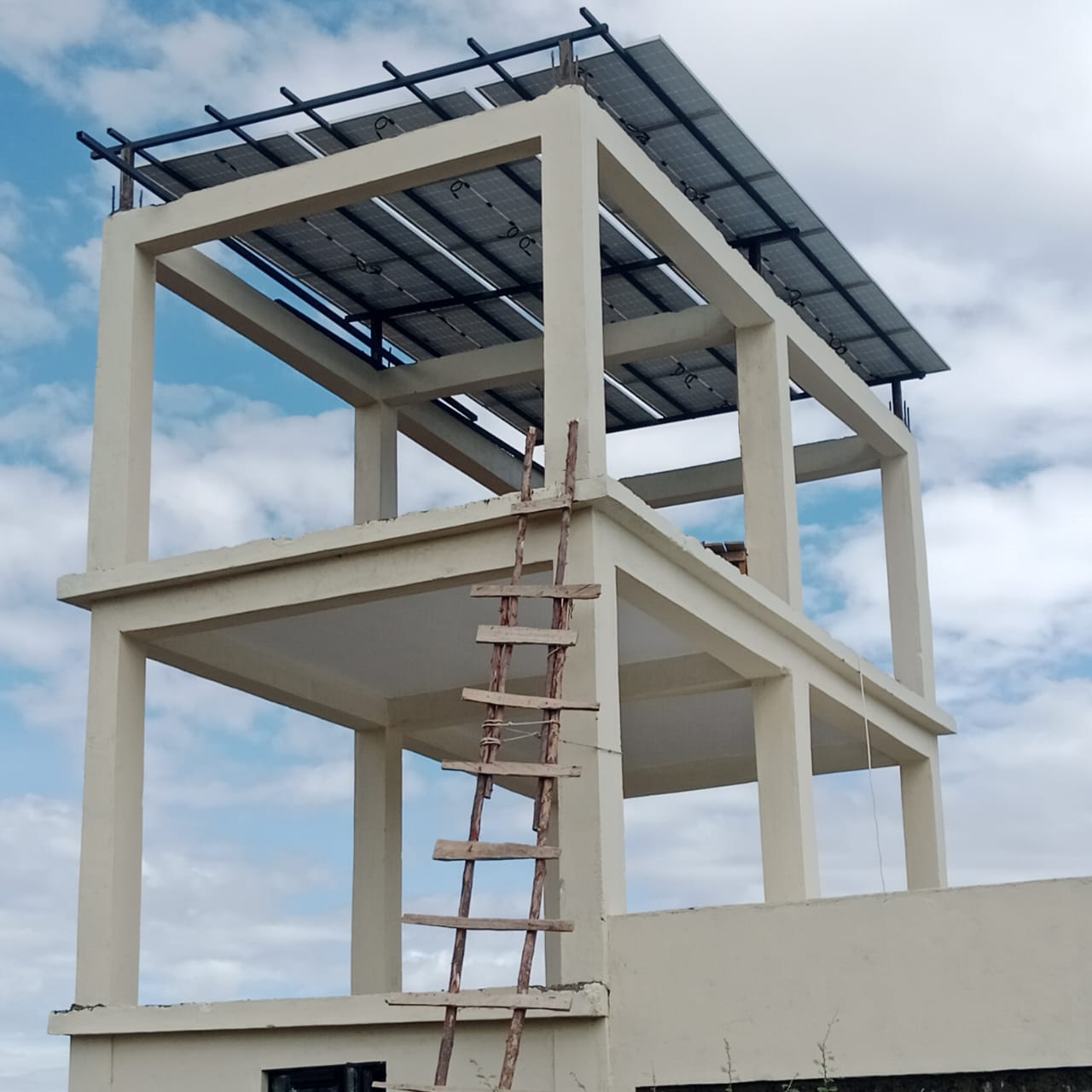
Concrete tower vs steel tower — what is the difference?
A concrete water tower uses a reinforced concrete shaft (and often a concrete tank chamber or deck) cast on site — not a bolted steel frame. The water is stored high above ground; gravity sends it to your buildings.
Steel towers are faster to erect and cost less for many farms and commercial plots. Concrete towers suit projects where permanence, very large volume, institutional standards, or architectural presence matter — schools, county water projects, estates, hospitals, and factories with long horizons.
What are we building, in plain language?
- Foundations — reinforced pad or piles designed for soil bearing and overturning from wind with a full tank
- RC shaft / columns — climb to design height (often 12–25 m or more for large schemes)
- Tank structure — concrete tank bowl, or concrete deck supporting a steel/FRP tank — per approved drawings
- Pipe gallery — inlet from borehole, outlets to zones, overflow, drain, instrumentation
- Access & safety — stairs, landings, guardrails, maintenance access to fittings
Every element is calculated for dead load (empty + full water), wind, and sometimes seismic effects — not built “by eye” like informal masonry tanks.
Typical clients for concrete towers
- Schools & colleges
- Dormitories, kitchens, and labs need reliable pressure across a large campus — one tower feeds many blocks.
- Residential estates
- Developer-led water reticulation with metered zones and fire reserve volume.
- Hospitals & hotels
- 24/7 demand peaks; storage buffers pump failure and power cuts.
- Industrial & agro-processing
- High daily litres, wash-down pressure, and compliance with internal HSE standards.
Engineering you should expect (and ask any contractor for)
- Structural drawings signed off for height, tank mass, and wind speed for your county
- Concrete mix design, cube tests, and curing records
- Rebar schedule, cover, and joint detailing — especially at base and tank junction
- Waterproofing or lining strategy for the wet zone
- Hydraulic design — inlet float, overflow height, minimum reserve volume
Not the same as a brick tank on a roof: Informal block tanks crack, leak, and collapse under fill-load. RC towers are designed like bridges — load paths are calculated.
How concrete towers connect to your borehole
Concrete storage sits after drilling and equipping:
- Pump fills the elevated tank on a timer or level switch (often solar during the day)
- Tank level drops as students, guests, or processes draw water
- Pump restarts when level hits a set point — protecting the borehole from 24/7 over-pumping
We coordinate tower hydraulics with pump curve and borehole sustainable yield from test pumping — so the tower is not oversized beyond what your aquifer can refill overnight.
Build programme — what to expect
Concrete work takes longer than steel erection but lasts exceptionally well:
- Weeks 1–2 — surveys, geotechnical input, structural design approval
- Weeks 3+ — foundations, then staged pours for shaft and tank elements
- Curing — critical waiting periods before loading the structure
- Finishing — plumbing, ladders, coatings, commissioning fill tests
Programme length depends on height, weather, and tank configuration — we provide a written schedule before mobilization.
Risks of unengineered concrete tanks
- Collapse or cracking when full — lives and property at risk
- No calculated wind resistance — failure in storms
- Leakage through poor waterproofing — wasted water and corroded rebar
- Rejected by insurers, banks, or county engineers on institutional projects